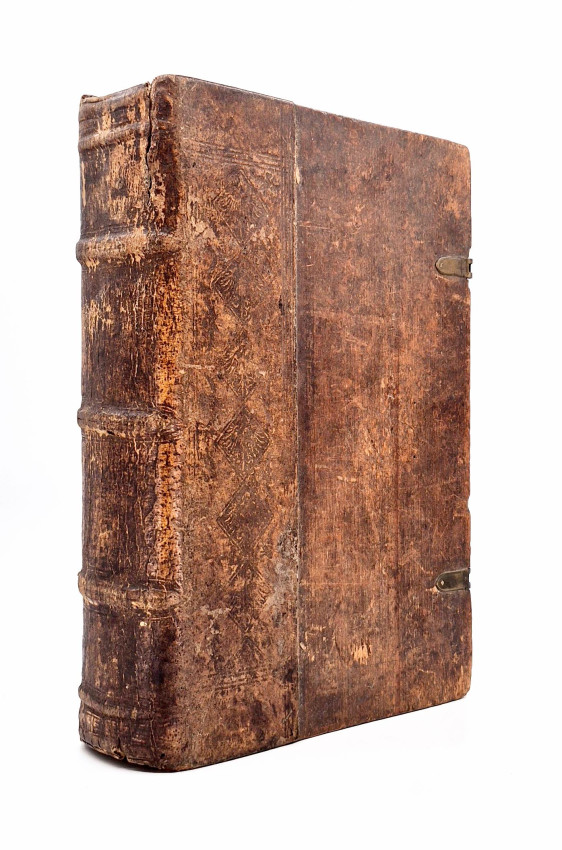
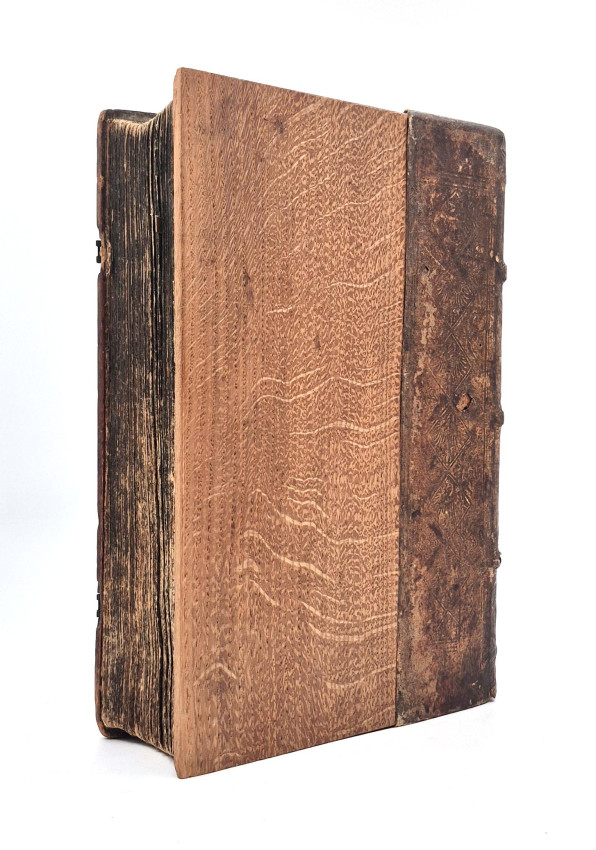
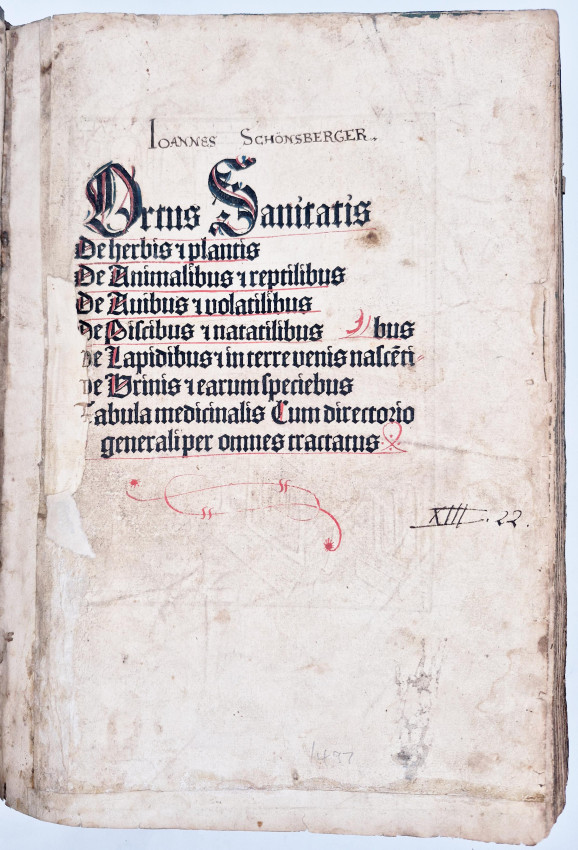
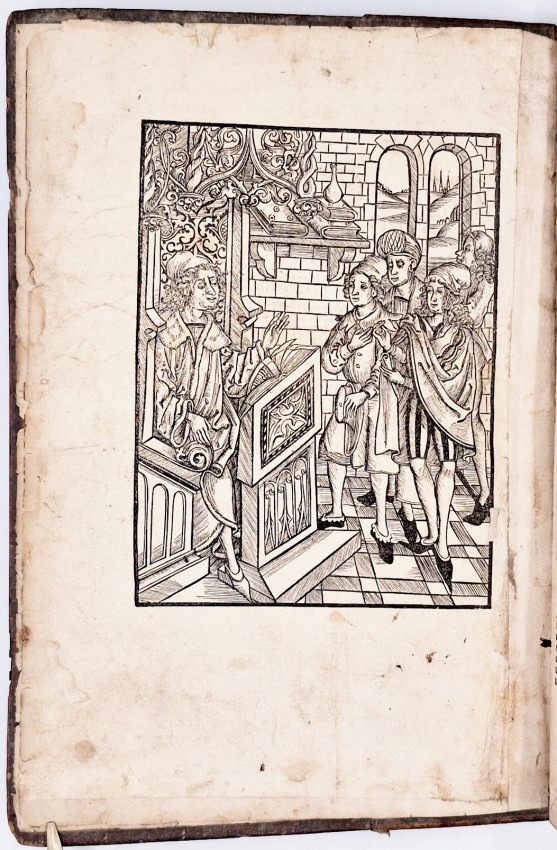
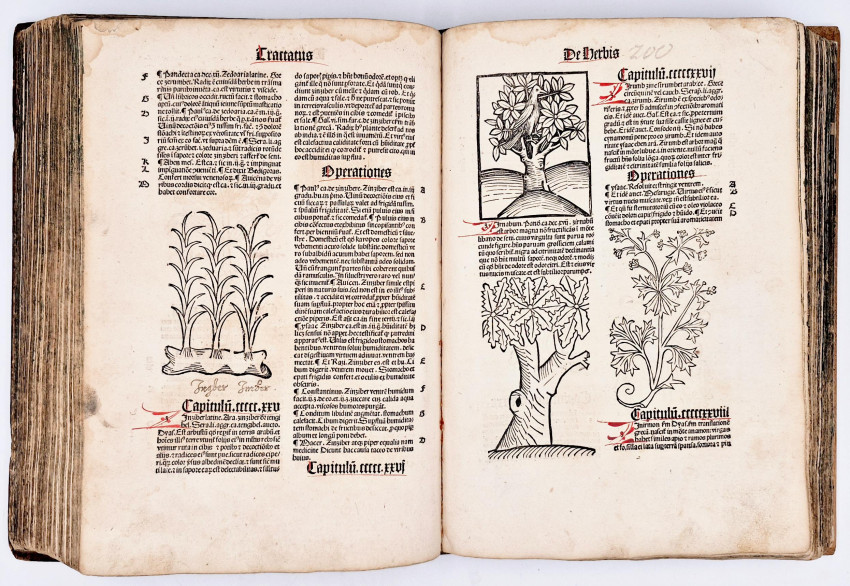
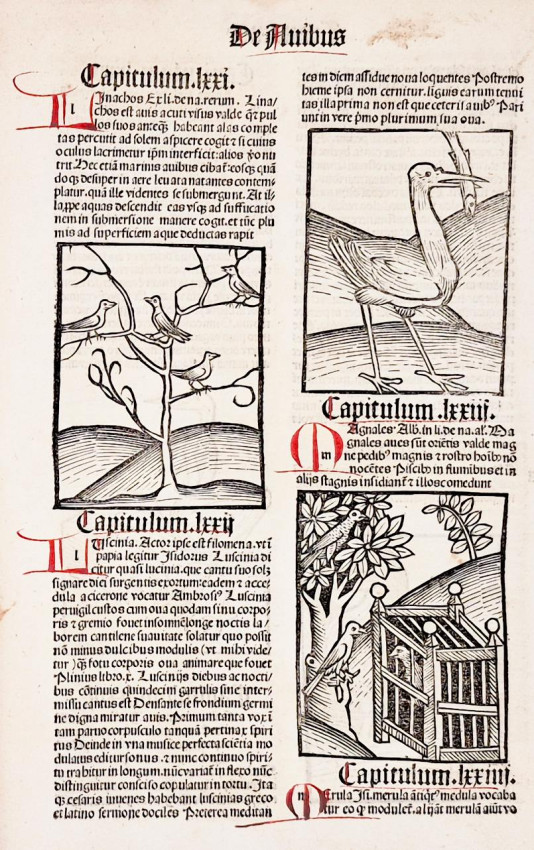
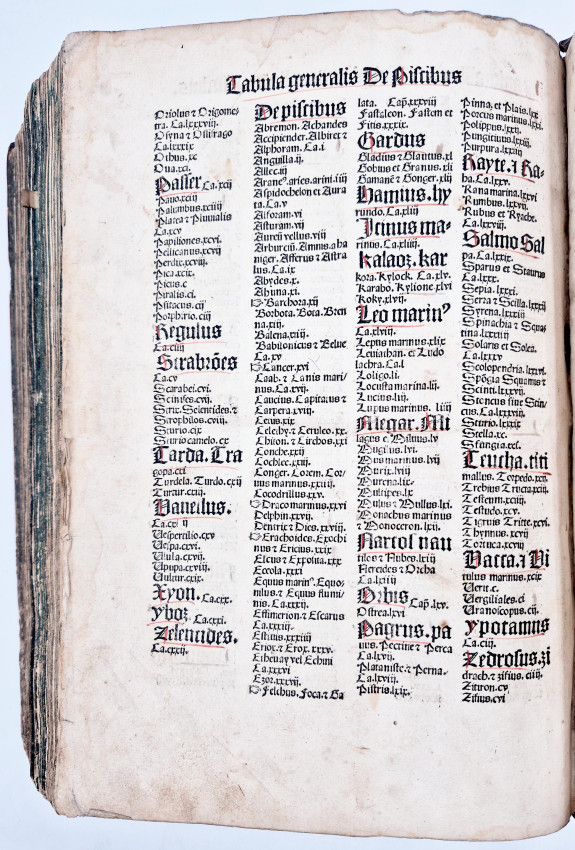
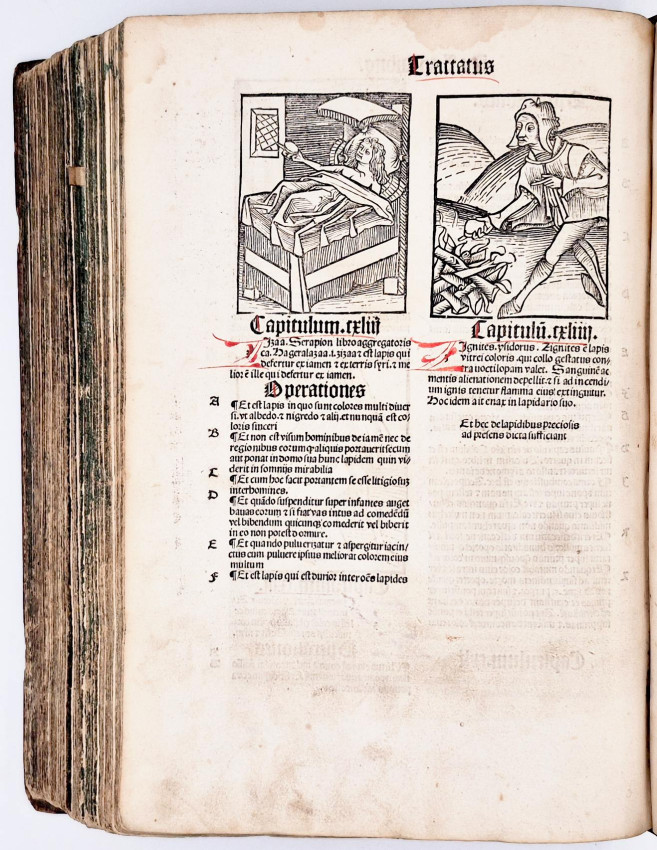
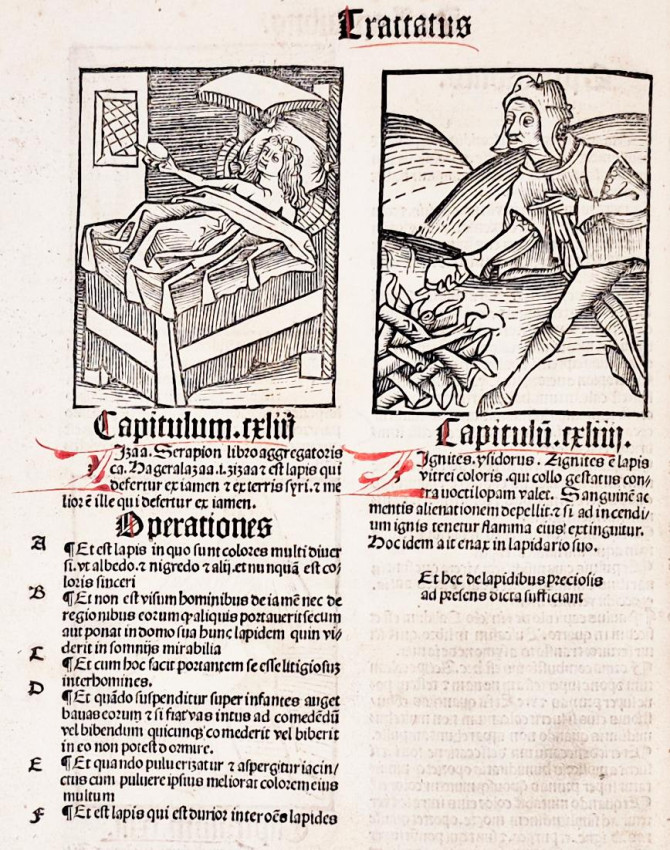
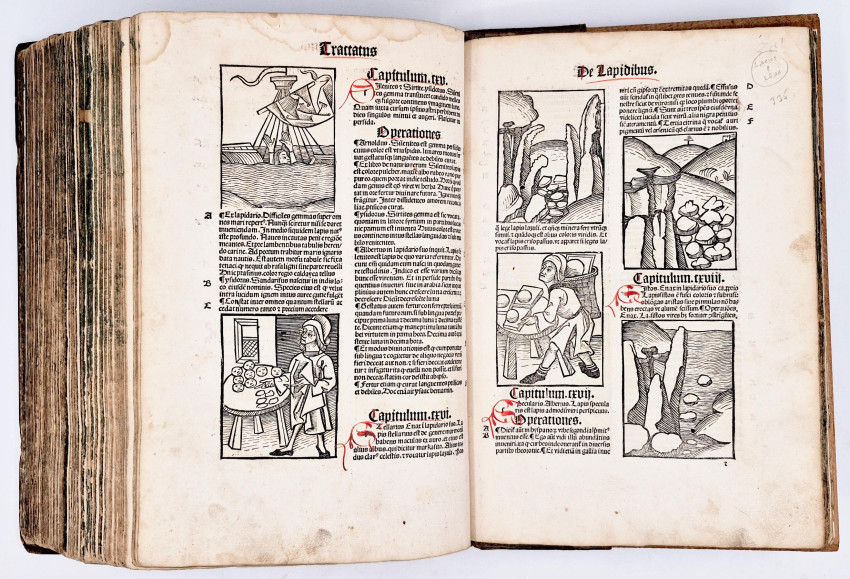
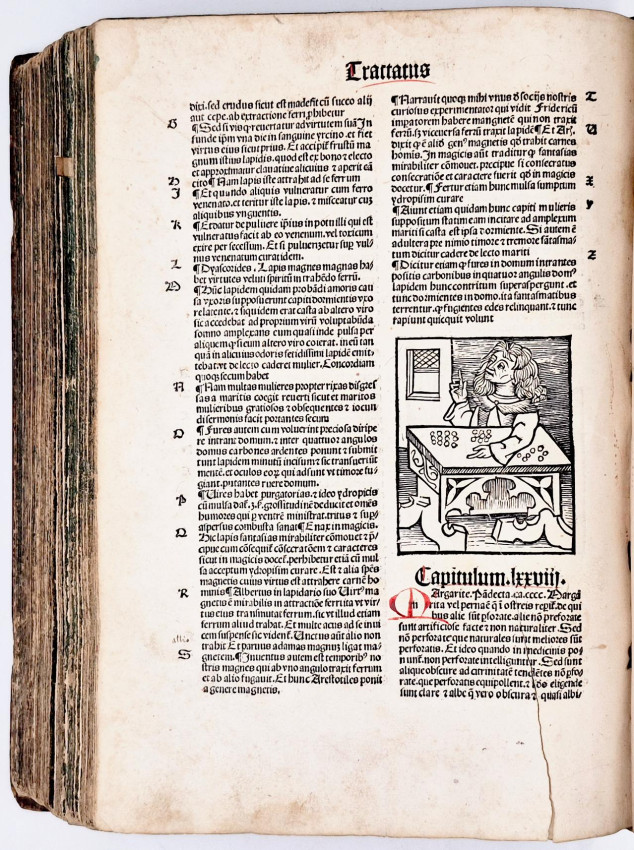
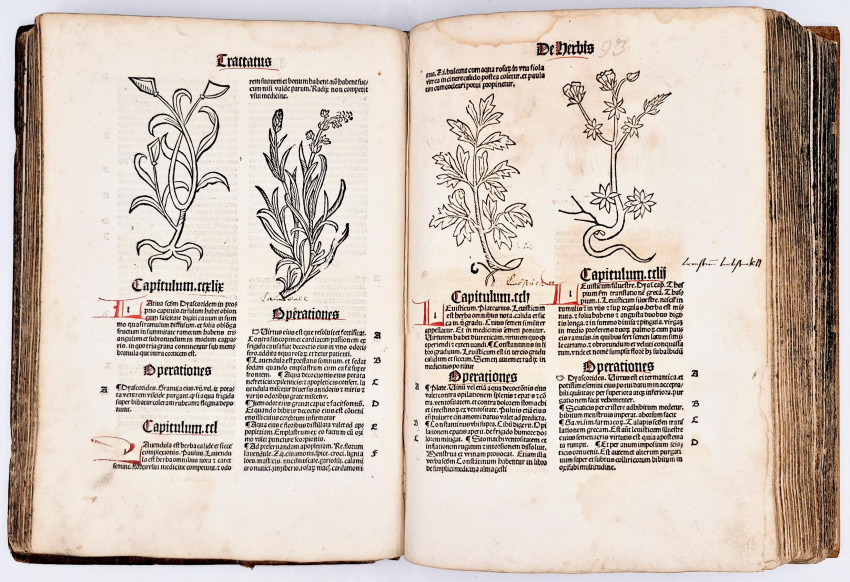
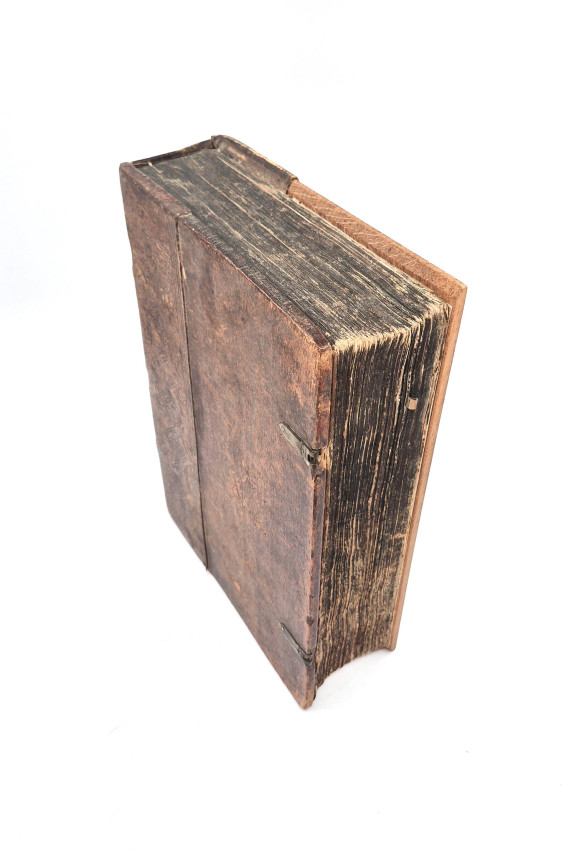
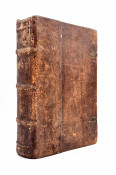
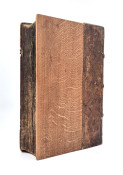
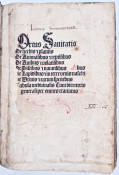

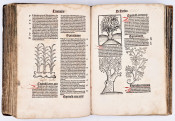
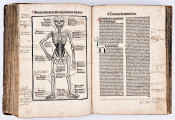
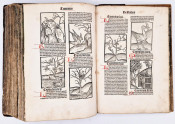
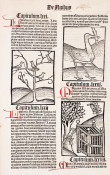
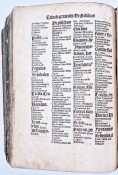
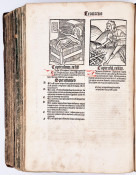
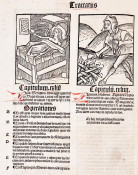
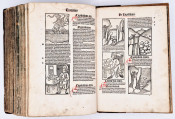
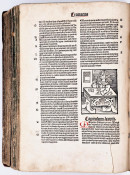
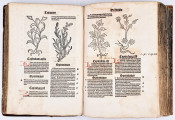
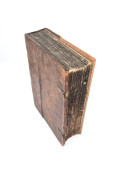
350 leaves (lacks 1 leaf with the full page engraving of an apothecary seated in his shop and without the section on the diagnostic qualities of urine - De Urinus), printed in 2 columns, 55 lines of text per column, profusely illustrated with over 1000 wood engravings in the text, 2 full-page engravings, initials in red, title page repaired, contemporary wooden upper board, the lower board has been renewed, contemporary quarter leather spine with simple blind stamps, annotations in an old hand - often describing and naming a plant, some staining and soiling and two leaves torn without loss, final leaf of the Tabula repaired, no colophon leaf.
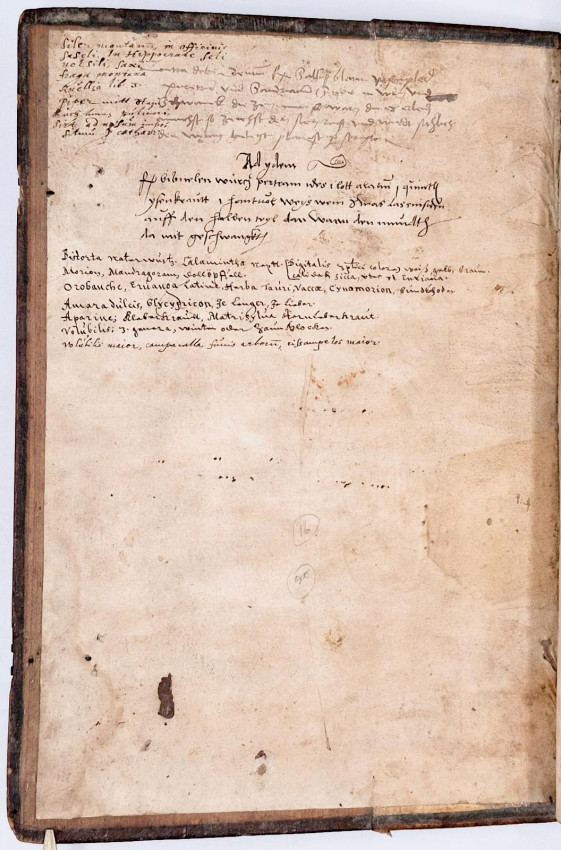
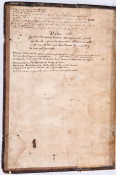
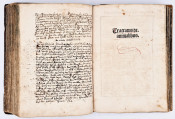
Annotations in German in several old hands on the front paste-down endpaper giving botanical names, a recipe for a compress (pimpernel root powdered and mixed in potash alum, given in smooth/sweet wine if someone [suffers from inflammation/sores], reduced to half the volume, then rinse the mouth while it is warm. Also a reference catalogue matching classical Latin names with their historical German vernacular equivalents.
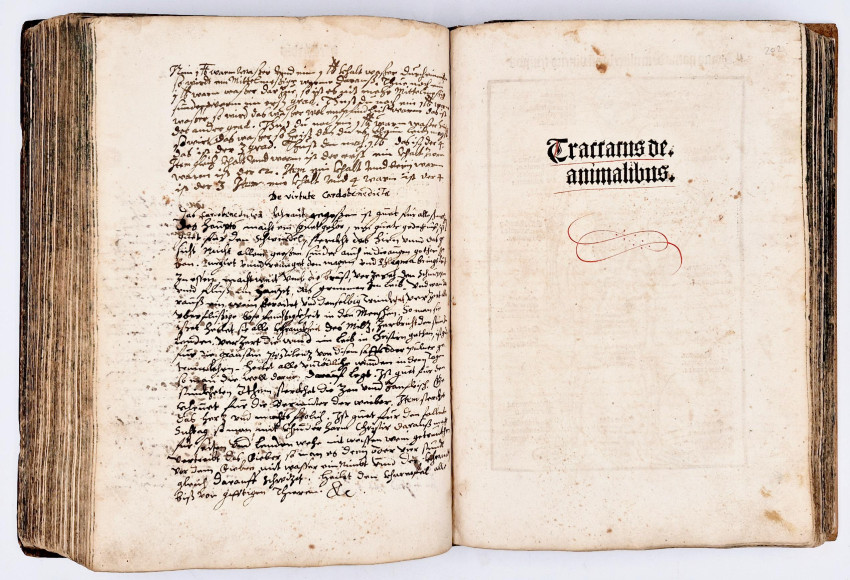
Also at the end of the De Herbis section: On the virtue of Cardobenedict. (transcribed and translated by Claude AI) Cardobenedict, distilled [?] / poured, is good for all [kinds of ailments?]. For the head, it gives good hearing and a good memory; it is good for dizziness and strengthens the brain and the eyesight. [...] also, put into the eyes, it [helps?]. It purges and cleans the stomach and phlegm, gives an appetite for food, benefits the chest, and drives away pain and rheum [catarrh] in the head. If one makes a wine from it and drinks it, it drives out all superfluous, bad humours in a person. [...] It heals all diseases of the spleen and breaks the stone. [...] Used in clysters [enemas], it is good against the terrible pestilence [plague]: use this juice or powder. It heals all [deep/stubborn] wounds in three days, if one lays wool [dressing] soaked in it on them. [...] It strengthens teeth and gums. [...] for women’s [complaints]. Likewise it strengthens the heart and makes it cheerful. It is good for the falling sickness [epilepsy], when a clyster is made from it with clear urine [?]; for pains in the sides and loins, drunk with white wine. It drives away fever if taken in water three or four hours before the attack, followed straight afterwards by sweating. It heals scurvy [?] and all bites from poisonous animals. Etc.
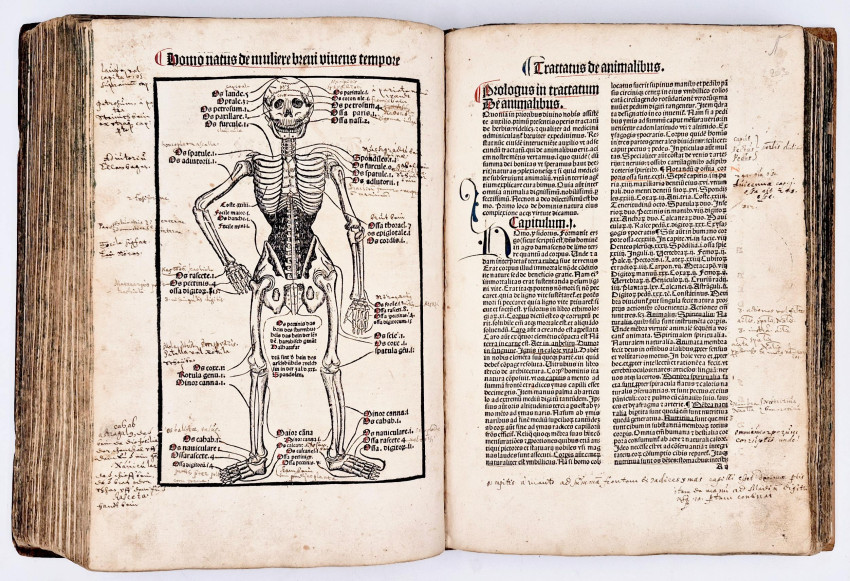
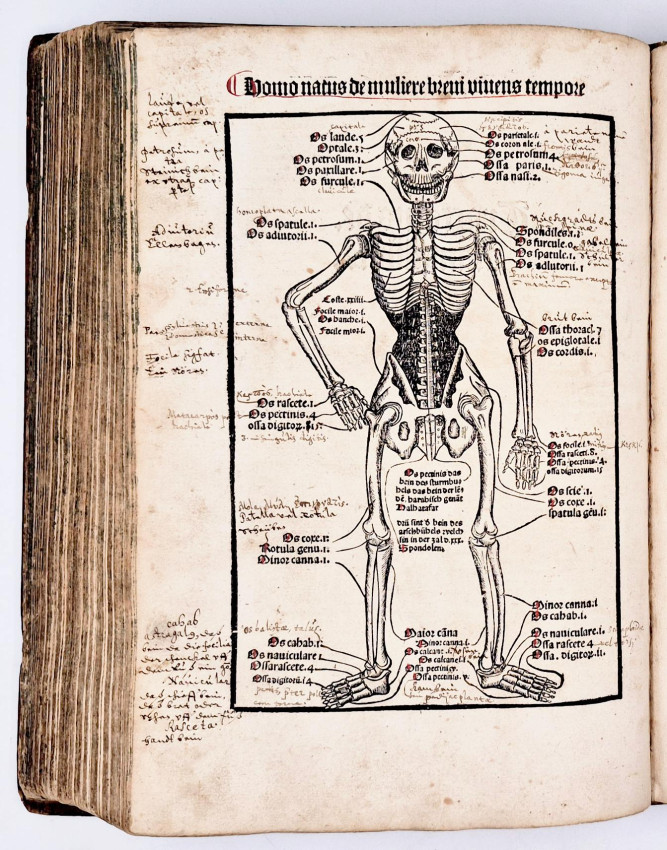
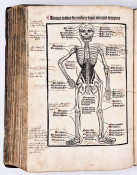
Hunt: Catalogue of Botanical Books, Volume 1, Printed Books 1477-1700, numbers 8 & 10, ‘Perhaps the most important medical woodcut book printed before 1500…. Klebs (Catalogue of Early Herbals) identifies this as likely Prüss's first reprint of Meydenbach's 1491 Latin Hortus. A notable woodcut of a human skeleton debuts here in the Herbals and appears in most subsequent editions, representing superior graphic quality prior to Vesalius. Additionally, the genre scenes uniquely depict contemporary Alsatian costumes.
The Hortus Sanitatis (also written Ortus; Latin for The Garden of Health), a Latin natural history encyclopaedia, was first published by Jacob Meydenbach in Mainz, Germany in 1491.
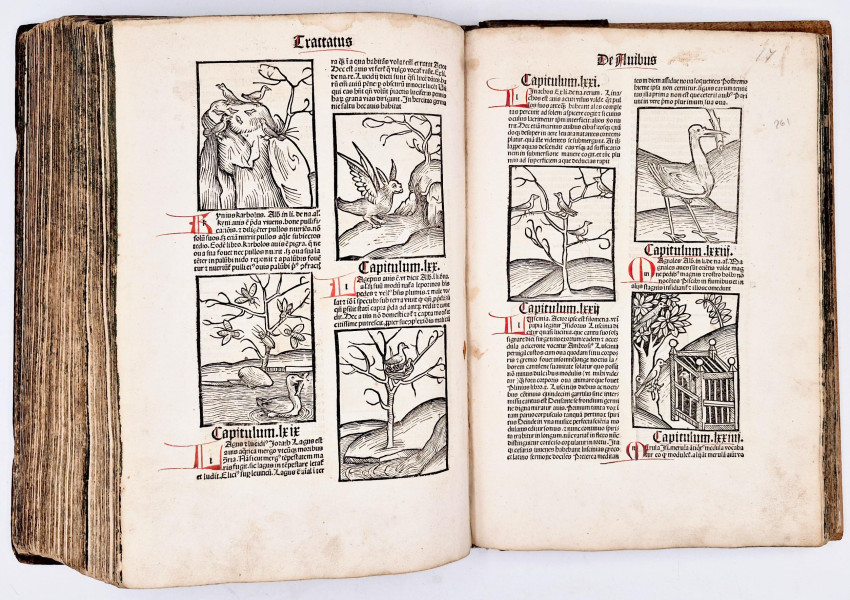
It describes species in the natural world along with their medicinal uses and modes of preparation. It followed the Latin Herbarius moguntinus (1484) and the German Gart der Gesundheit (1485), that Peter Schöffer had published in Mainz. Unlike these earlier works, besides dealing with herbs, the Hortus sanitatis deals with animals, birds, fish and stones too. Moreover the author does not restrict himself to dealing only with real creatures, but also includes accounts of mythical animals such as the dragon, harpy, hydra, myrmecoleon, phoenix, and zitiron. (https://en.wikipedia.org/wiki/Hortus_Sanitatis)
- Overall Condition: Very good
- Size: 304 x 212 mm