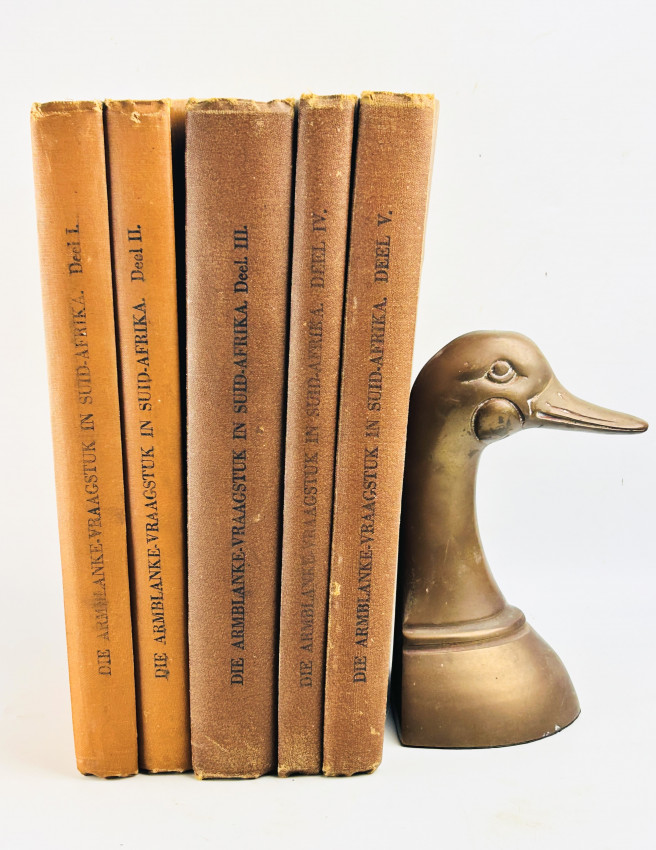
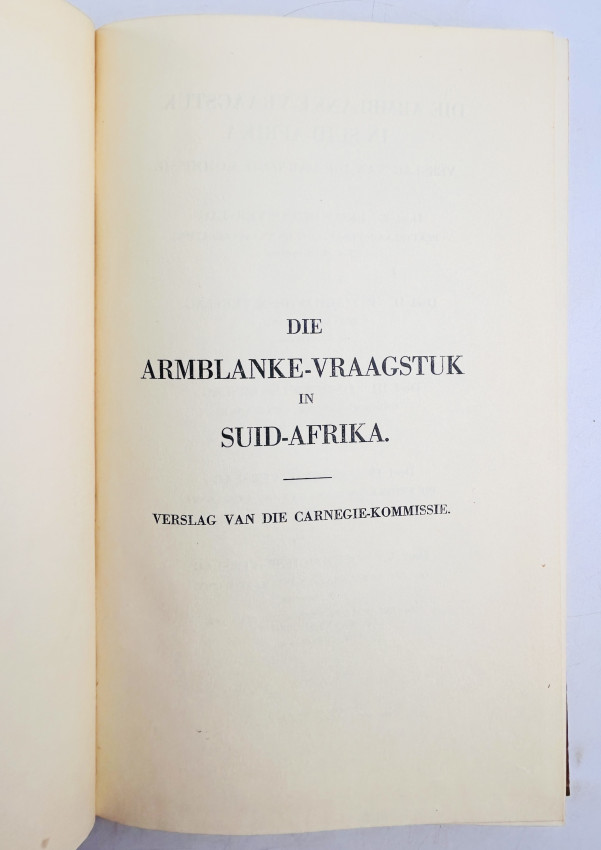
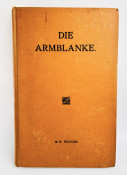
Die Armblanke-Vraagstuk in Suid-Afrika: Verslag van die Carnegie-Kommissie
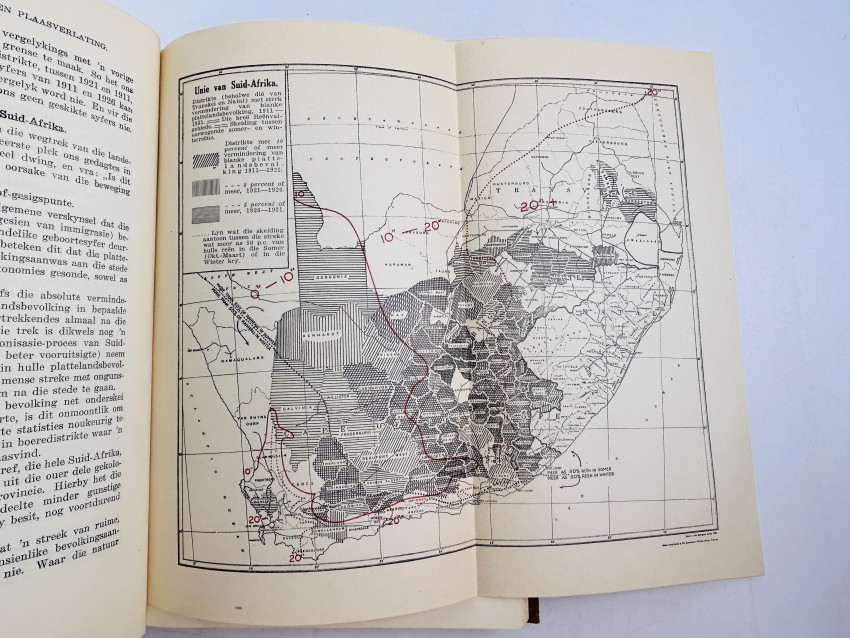
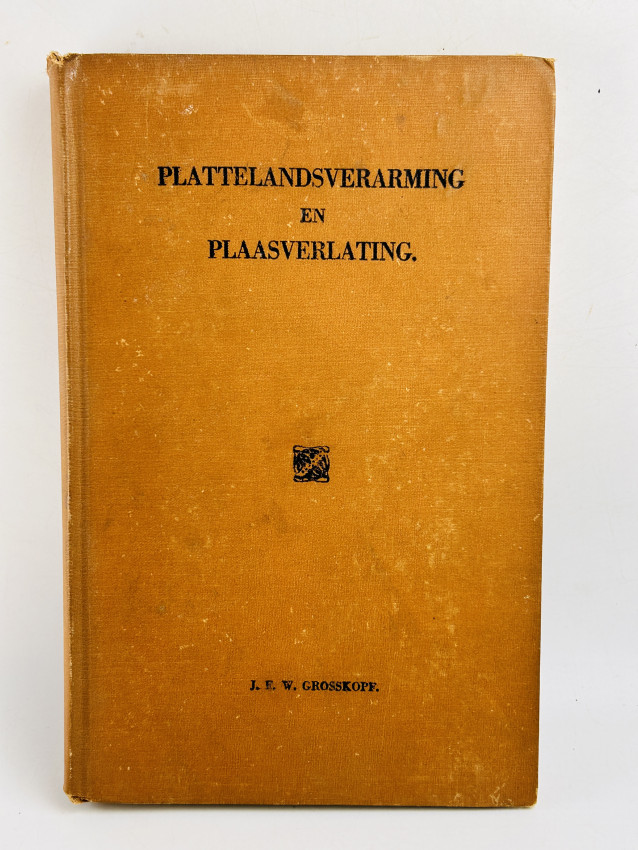
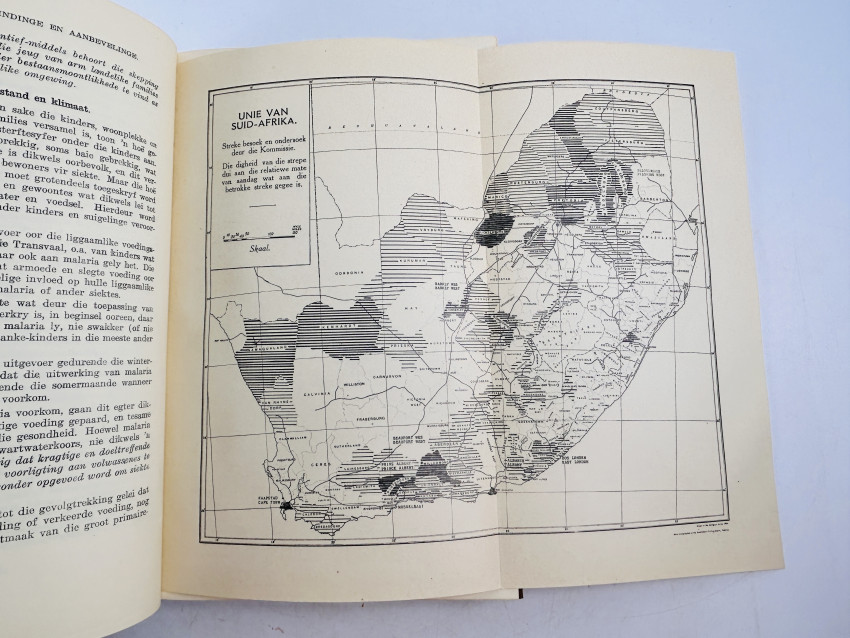
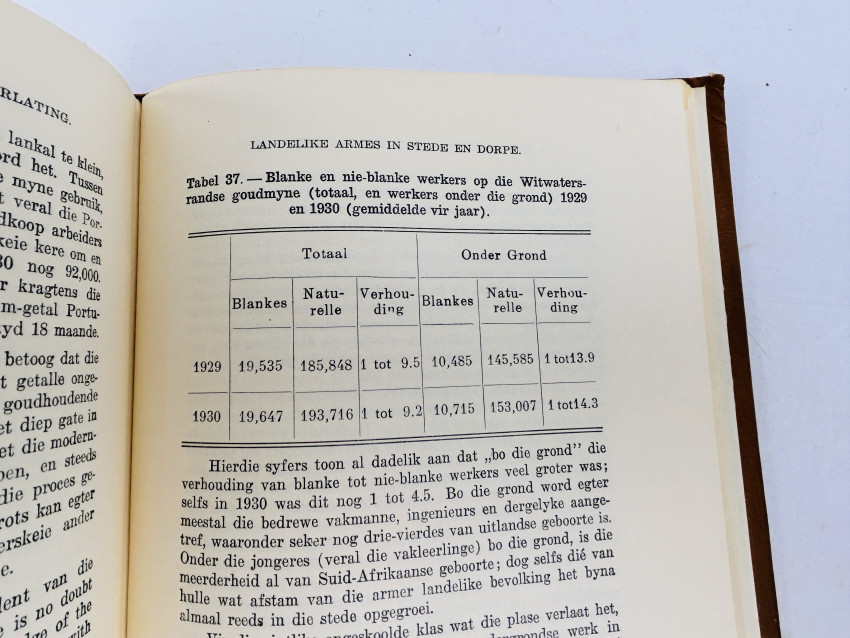
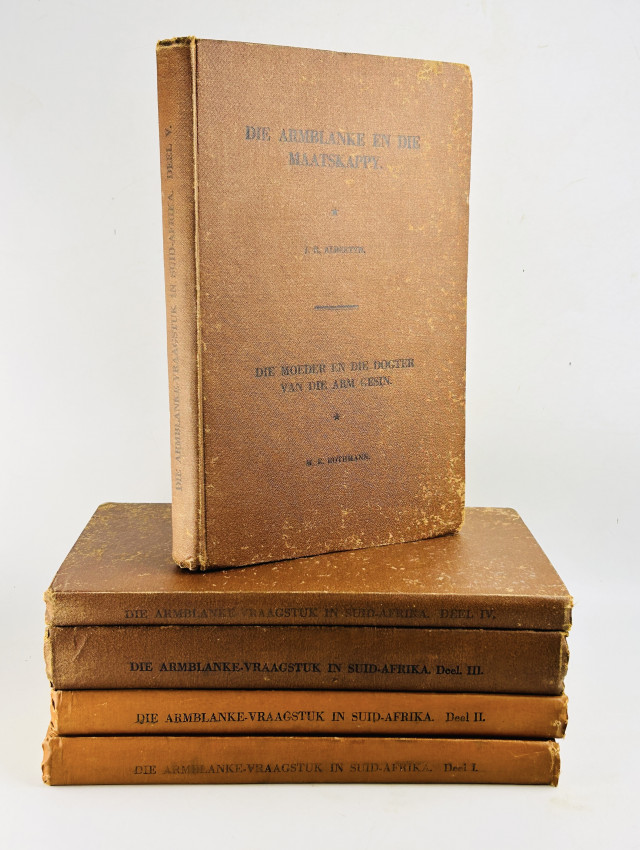
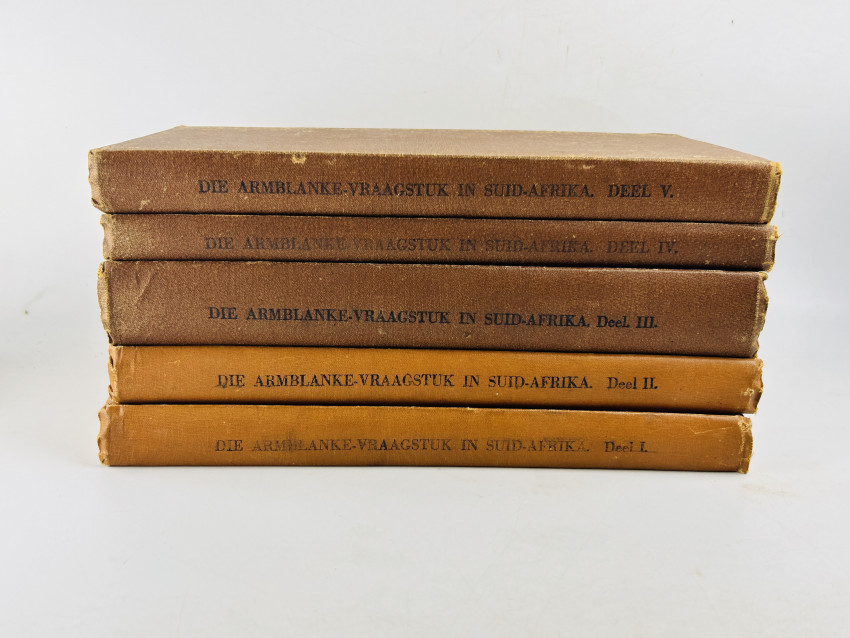
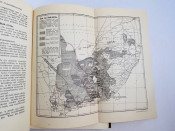
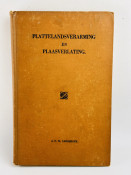
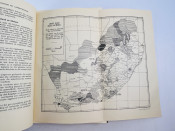
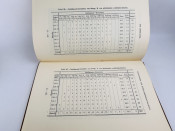
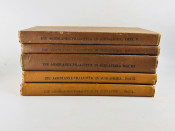
- Deel I: Ekonomiese Verslag: Plattelandsverarming en Plaasverlating (J.F.W. Grosskopf) xxxiii + 237pp. + w fold-out maps
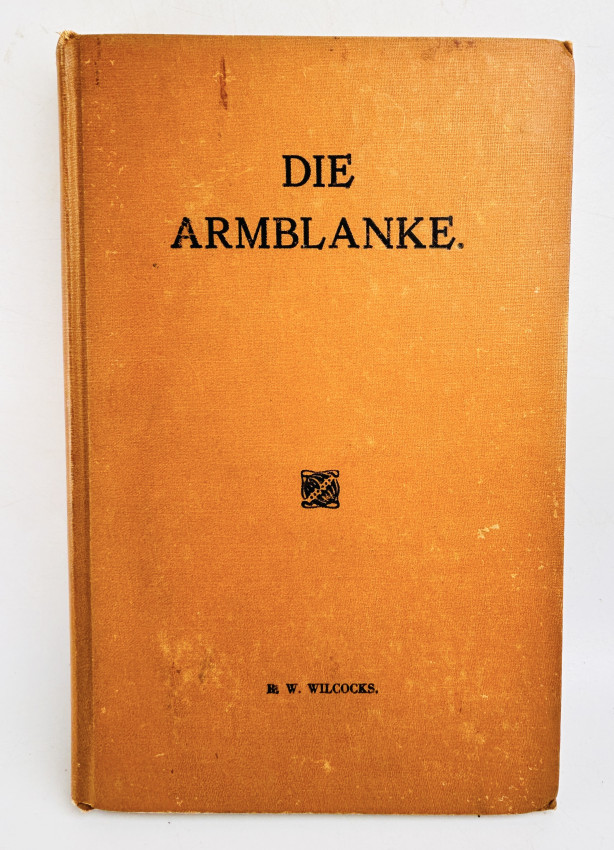
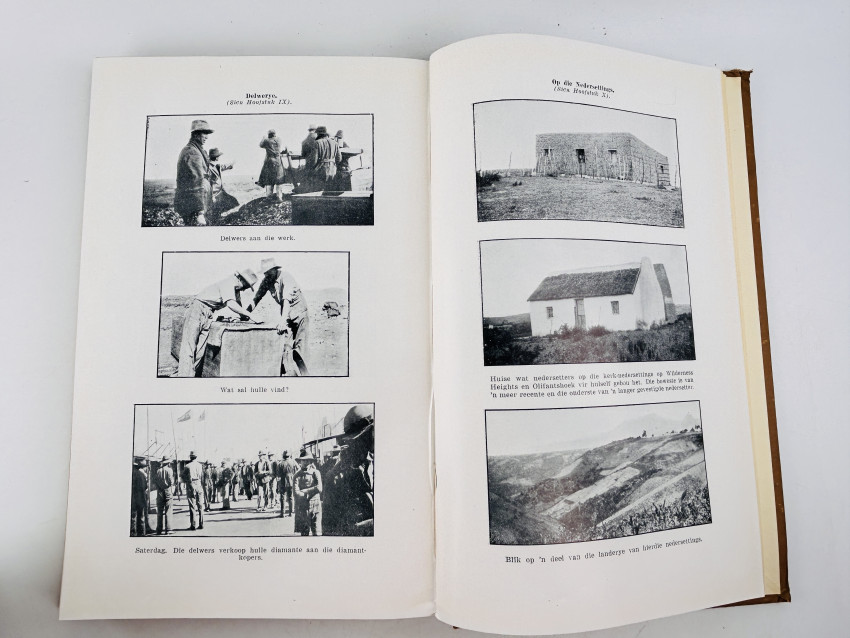
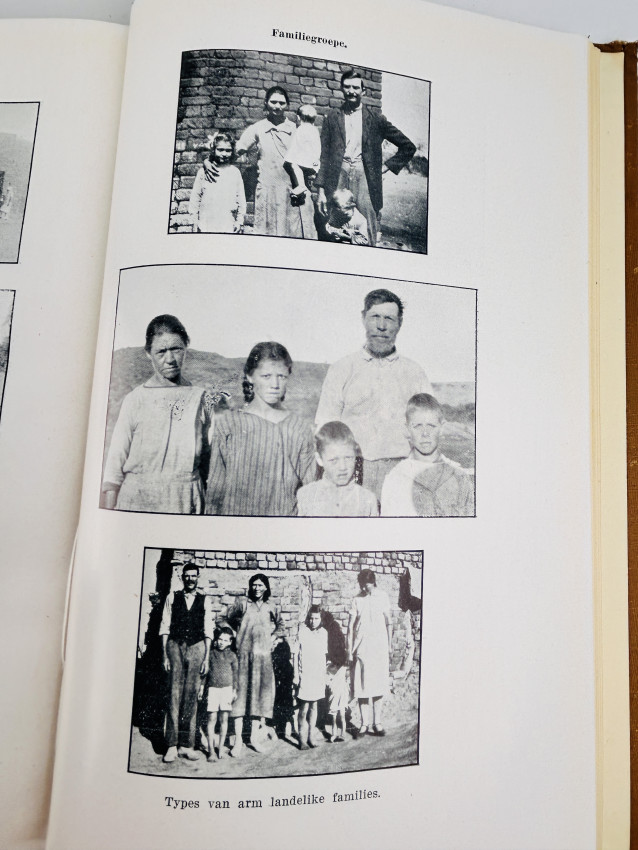
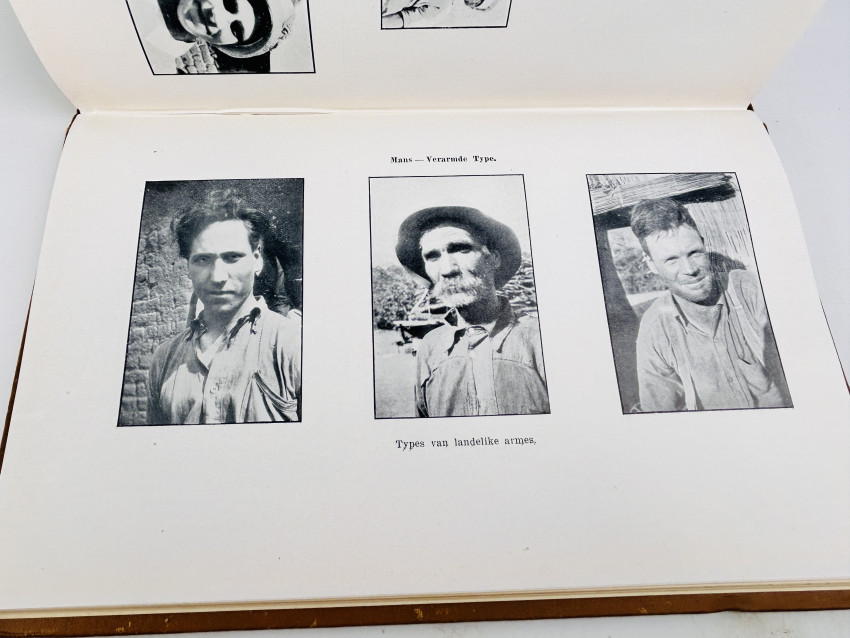
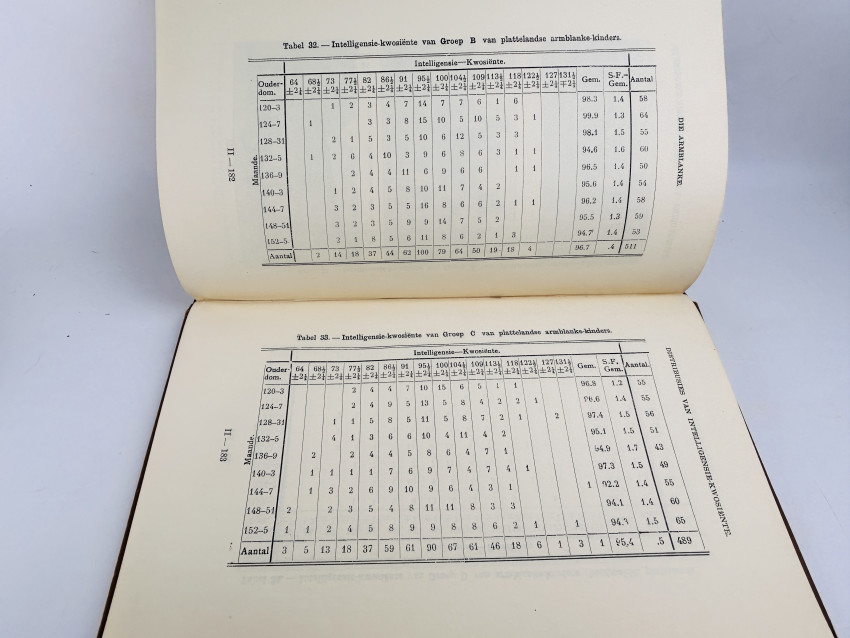
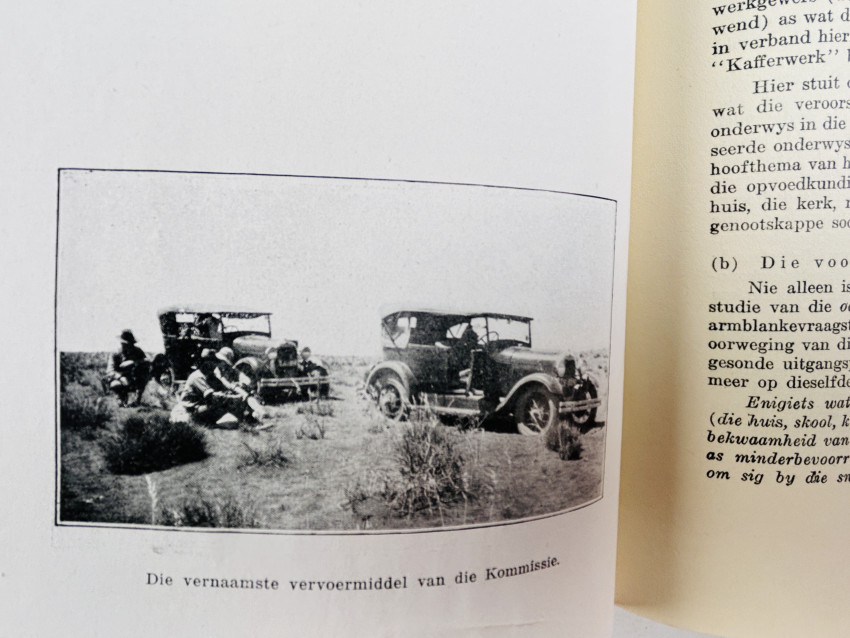
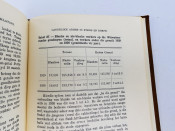
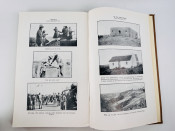
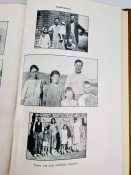
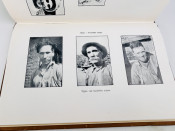
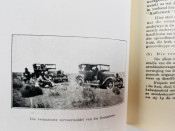
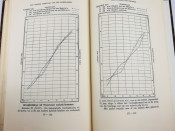
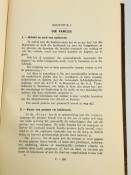
- Deel II: Psigologiese Verslag: Die Armblanke (R.W. Wilcocks) xxxiii + iv + 202pp. + many b/w plates
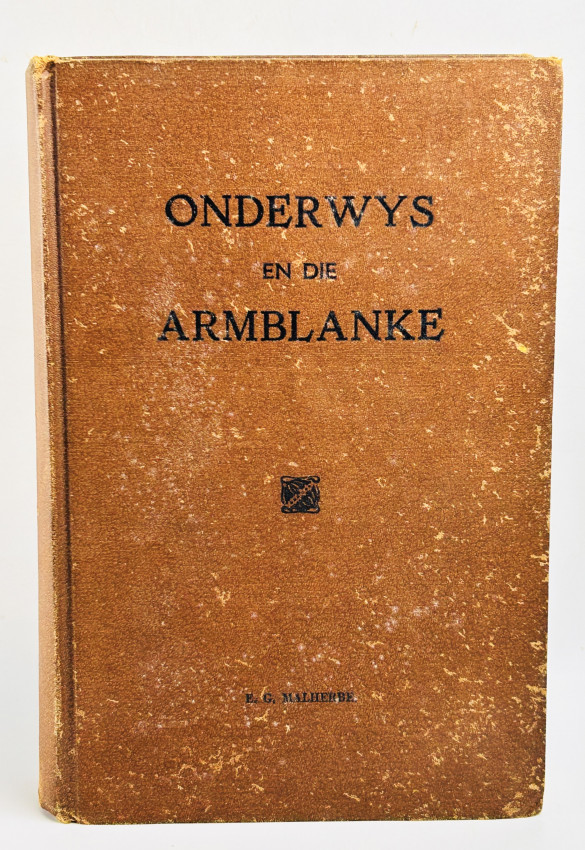
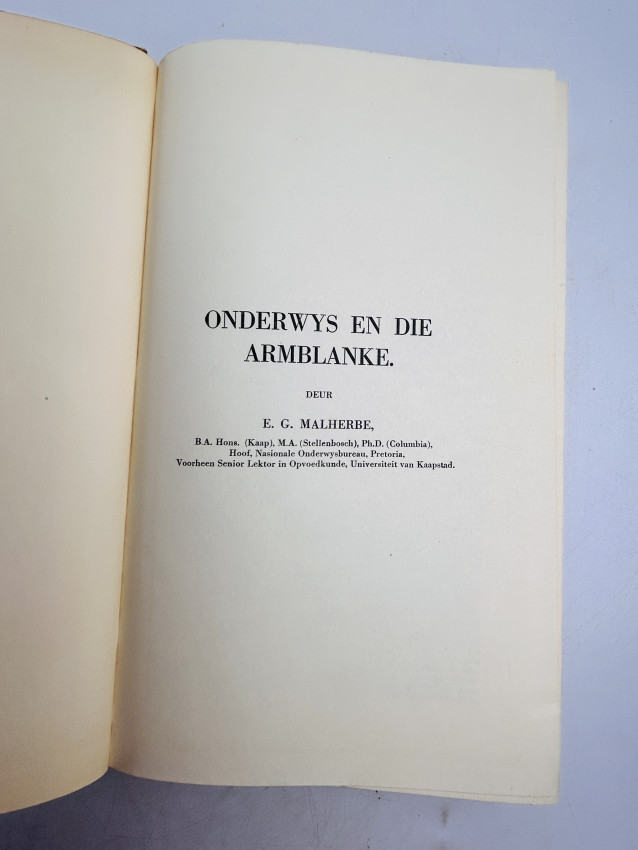
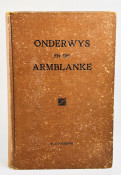
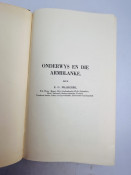
- Deel III: Onderwys-verslag: Onderwys en die Armblanke (E.G. Malherbe) xxxiii + 383pp.
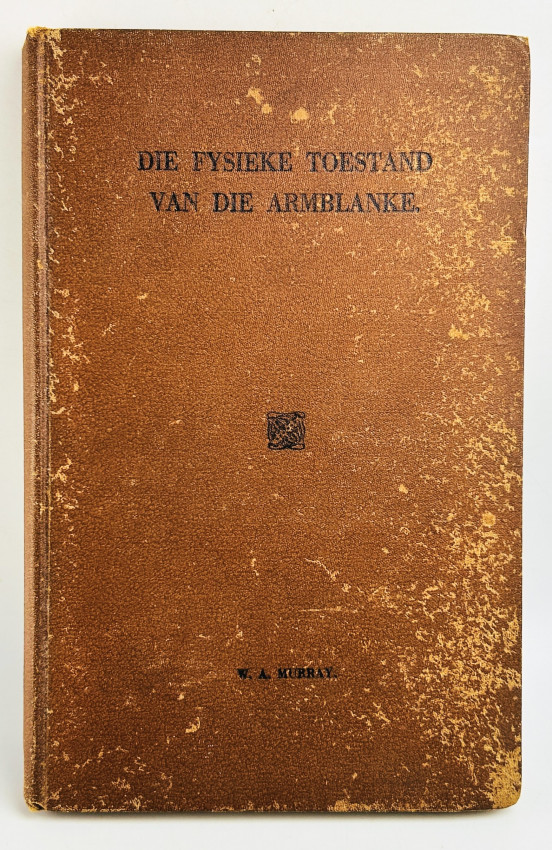
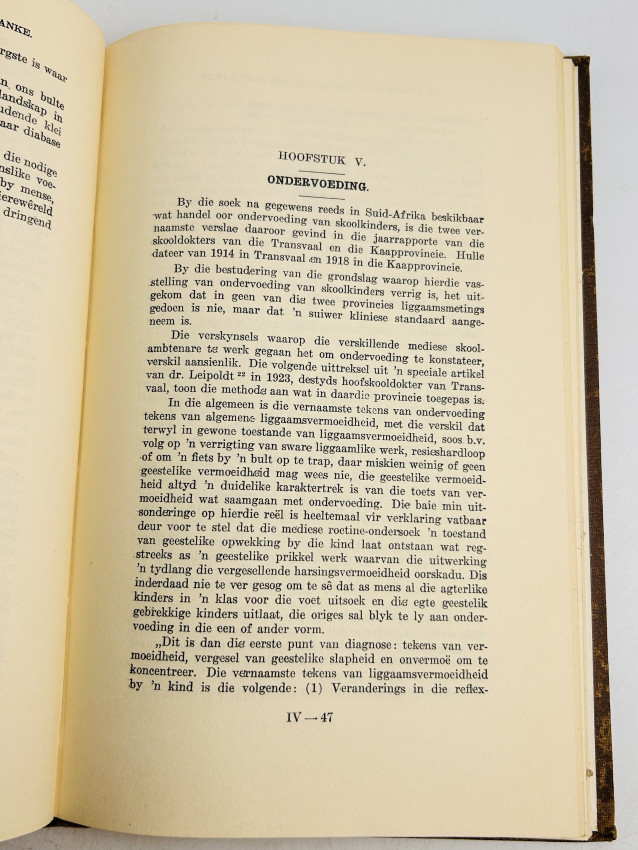
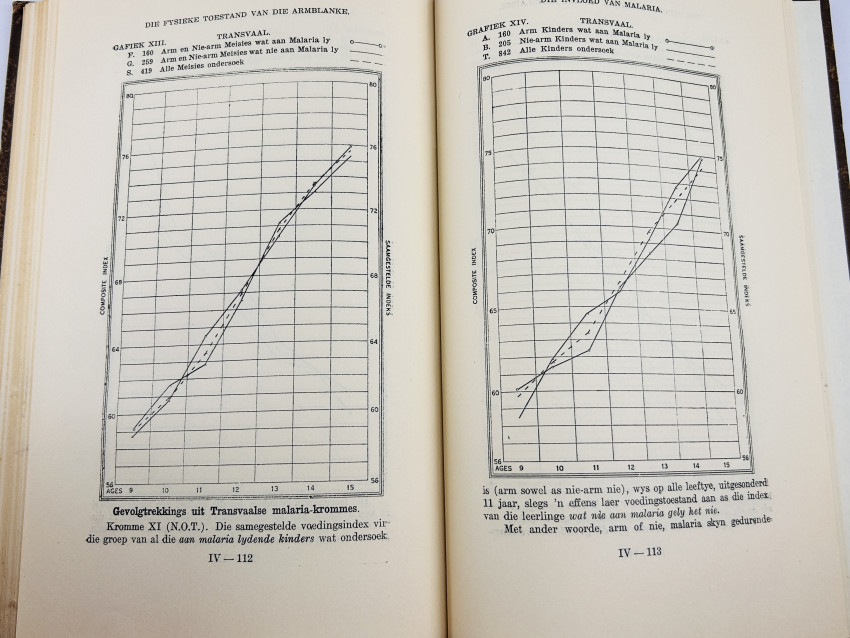
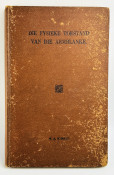
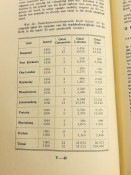
- Deel IV: Mediese verslag: Die Fisieke Tostand van die Aemblank (W.A. Murray) xxxiii + 154pp.
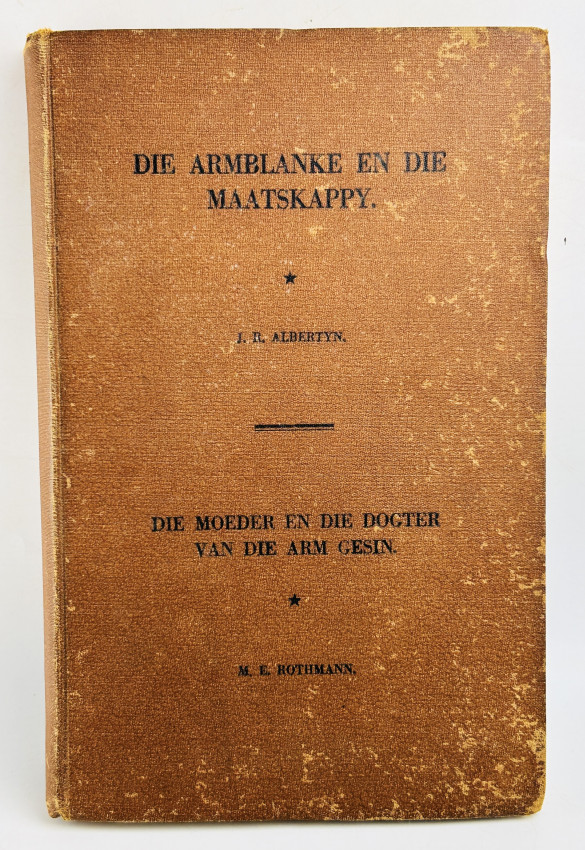
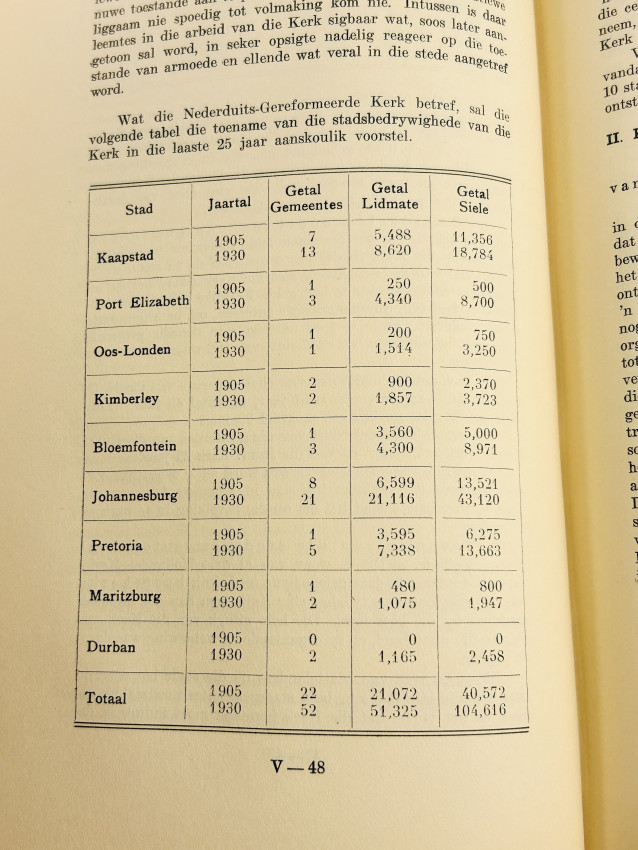
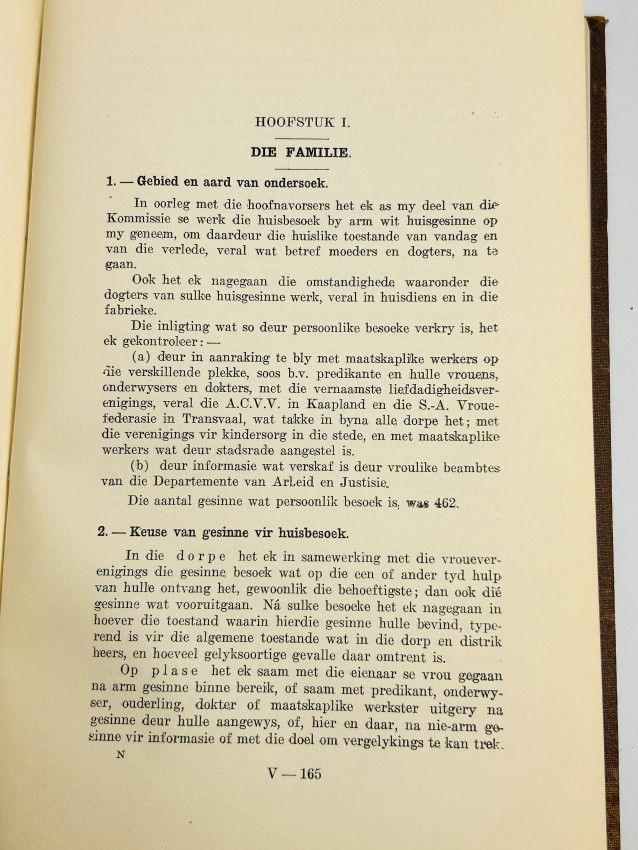
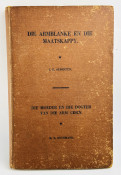
- Deel V: Sociologiese Verslag: (a) Die Armblanke en die Maatskappy (JR Albertyn) en (b) Die Moeder en die Dogter van die Armblanke-Huisgesin (ME Rothmann) xxxiii +230 pp.
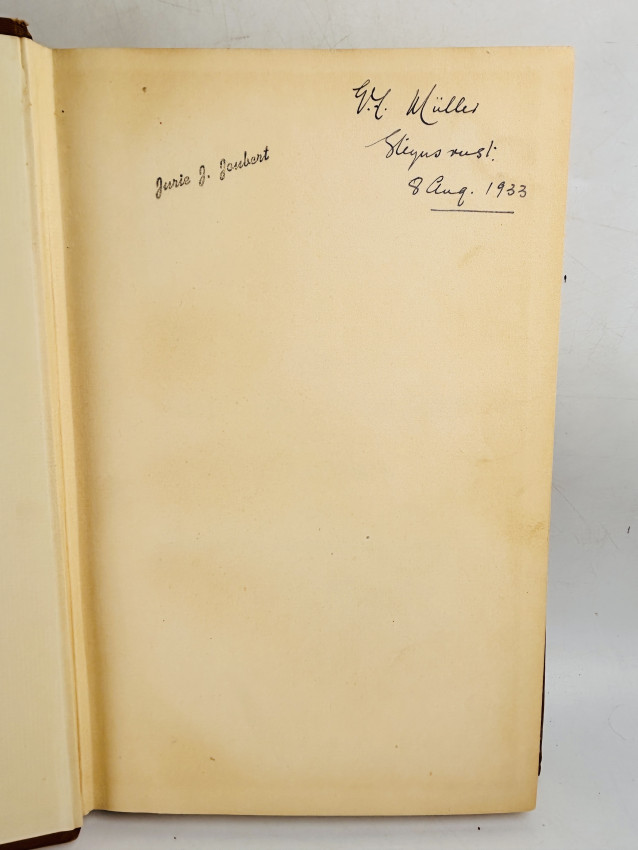
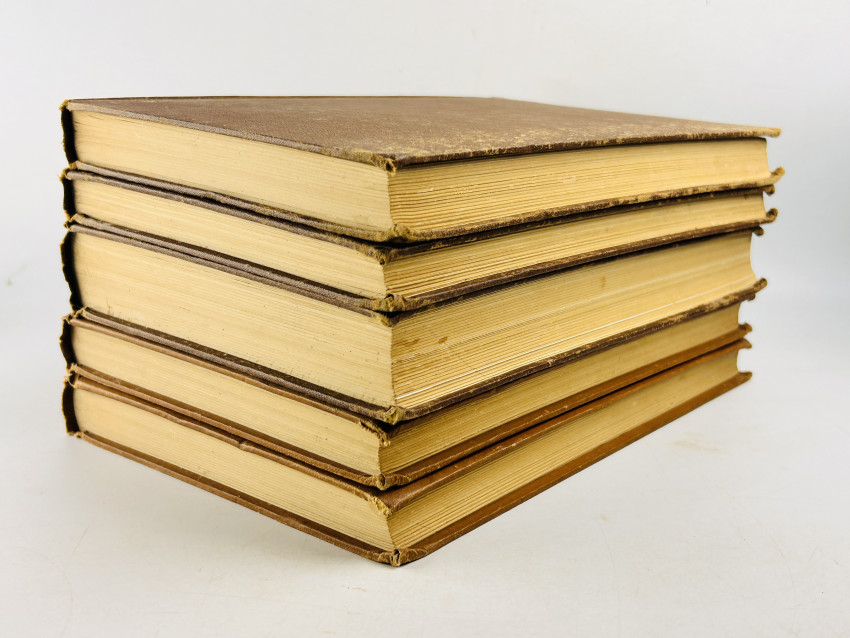
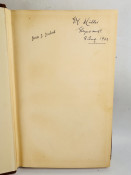
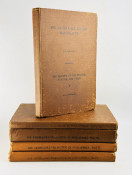
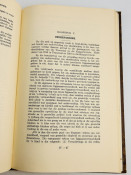
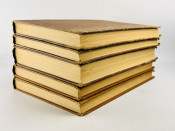
All five volumes are covered in brown boards with black titling on the spine and front cover. Parts I and II have pale brown board covers and is in good condition. Parts III to V are covered in a darker brown which is lightly edge-worn as per photos. There is a previous owner's stamp on the front end paper "Jurie Joubert" as well as a second previous owner's name "EM Muller, Steynsrust 8 Aug 1933" on most of the five volumes.
The commission report encompassed five volumes that dealt, in turn, with the economic, psychological, educational, health, and sociological facets of the "poor white" phenomenon. Although the ground work for Apartheid began earlier, the report provided support for the idea that the maintenance of white superiority would require support from social institutions. This was the justification for the segregation, and discrimination of the following decades.
The report expressed fear about the loss of white racial pride, and in particular pointed to the danger that the poor white would not be able to resist the process of "Bantu-isation." In seeking to prevent a class-based movement that would unite the poor across racial lines the report sought to heighten race as opposed to class differences as the significant social category.
The findings of the report helped bolster support for segregation and strict limits and laws for black South Africans. The hope was that the program of segregation would help poor whites, by giving them institutional assistance, and thus prevent race-mixing and maintain racial purity and economic power.
Source: https://en.wikipedia.org/wiki/Carnegie_Commission_of_Investigation_on_the_Poor_White_Question_in_South_Africa
- Binding Condition: Good
- Overall Condition: Fair to good