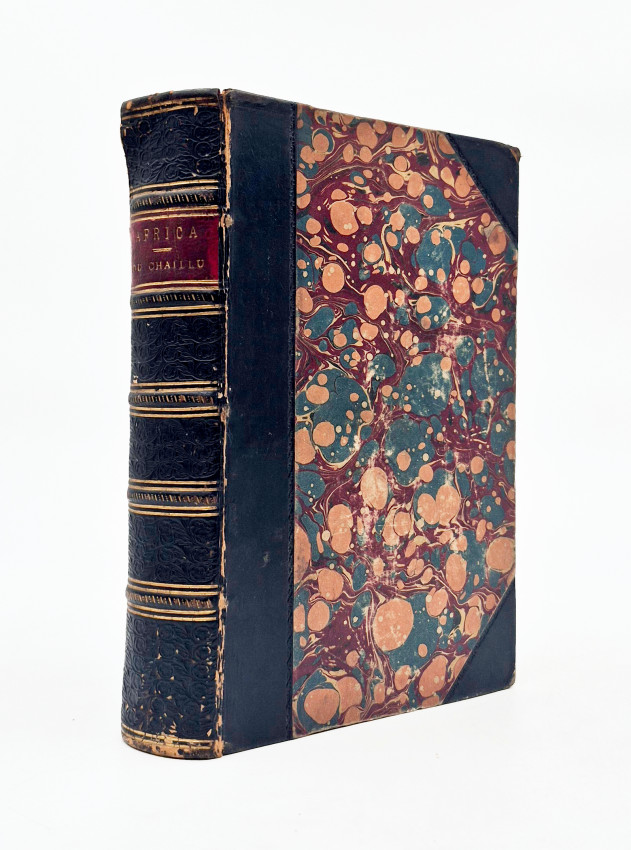
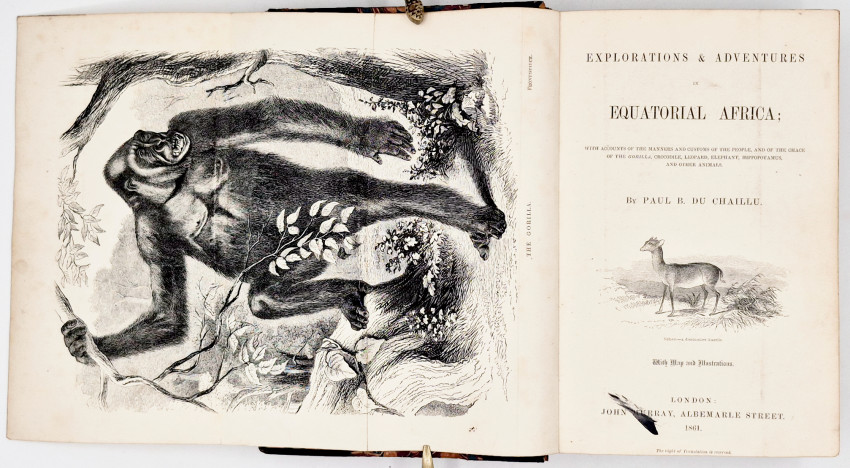
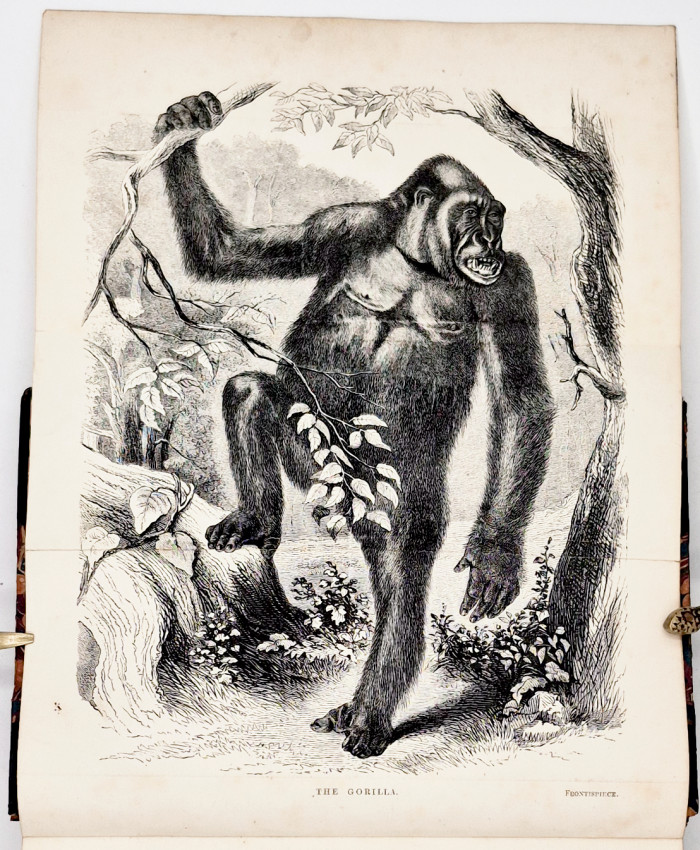
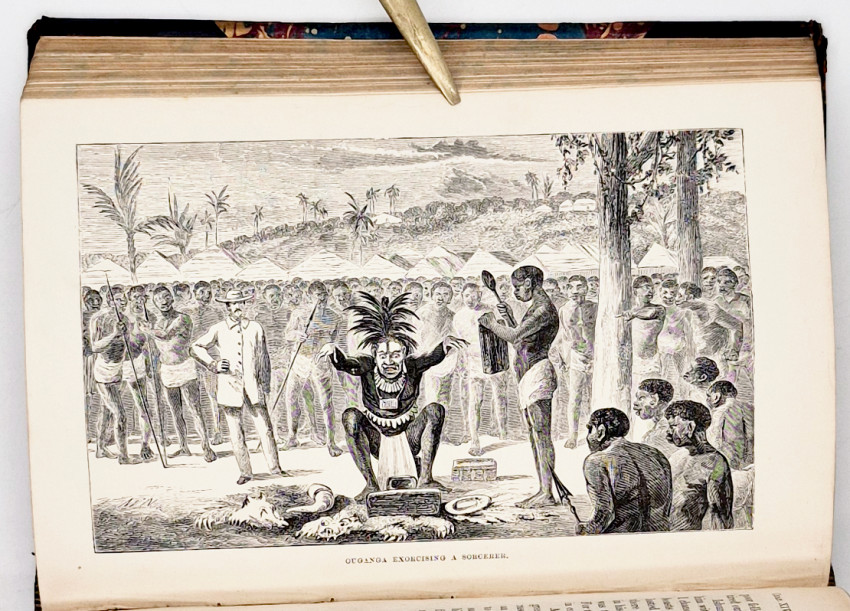
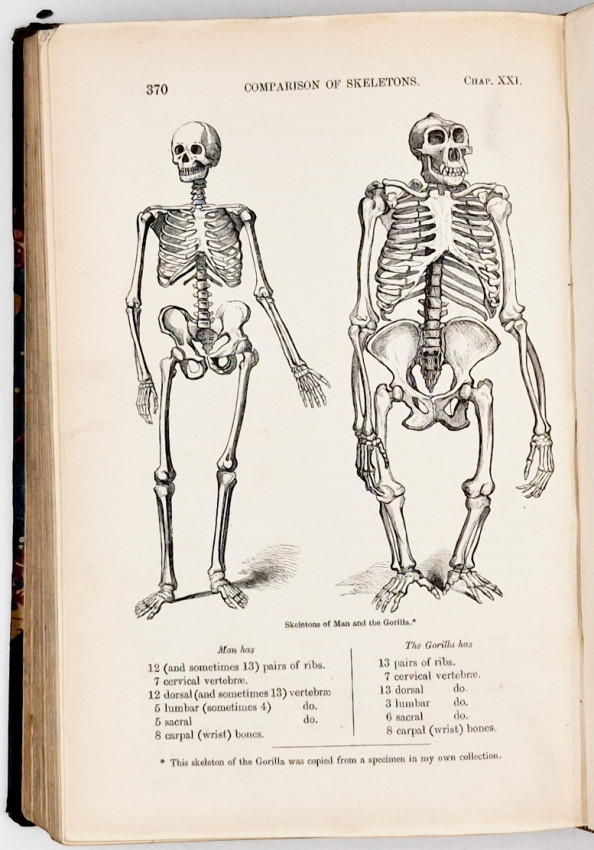
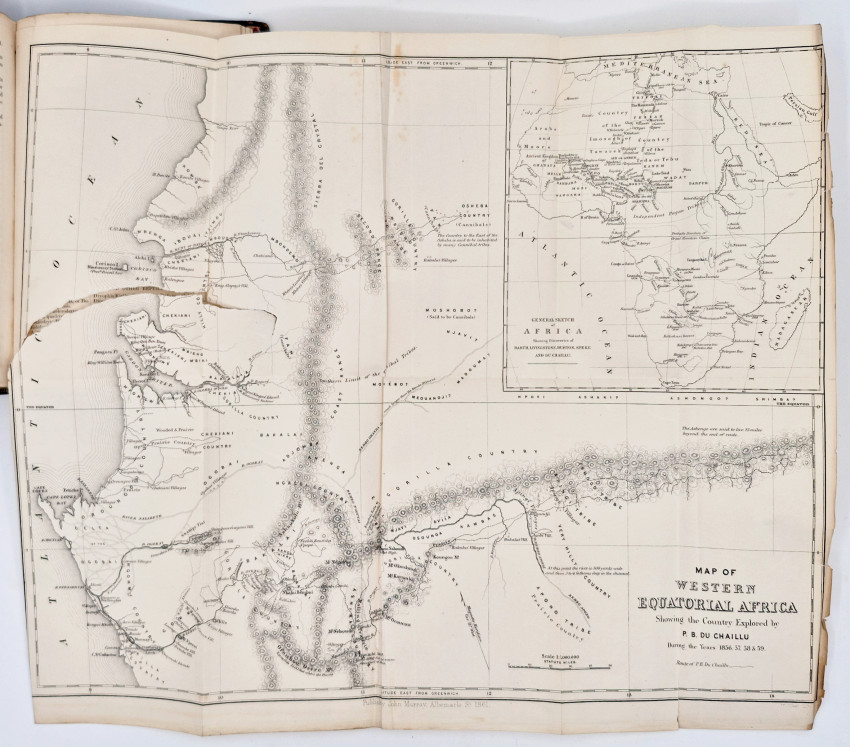
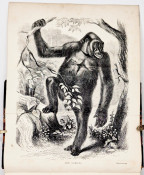
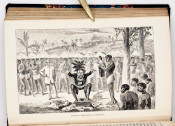
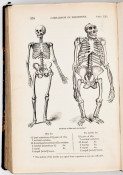
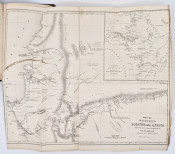
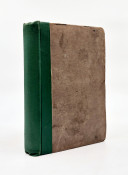
Second Edition: 479 pages, folding frontispiece of a gorilla, 28 wood-engraved plates and numerous illustrations in the text, folding map frayed at the fore edge and torn at the first fold, half black calf with red title label, marbled endpapers and boards rubbed, foxing on the preliminary and end pages, bookplate on front paste-down endpaper, a good ex-library copy with stamps.
Along with Livingstone's Missionary Travels and Researches, du Chaillu's Explorations and Adventures was one the most important books published on Africa in the mid-nineteenth century and was influential in shaping the European view of the 'dark' continent. 10,000 copies of the Guinea edition were sold in two years (Livingstone's book sold 30,000 copies of the Guinea edition in four years. (Altick: 'The English Common Reader', 1957). The first edition was published in April 1861 and the second in June of the same year.
Upon publication, the work faced severe criticism, particularly from botanists and geographers such as Dr. William B. Baikie and especially the leading zoologist Sir Richard Owen. His critics argued that Du Chaillu had fabricated his travels, that his maps were wrong, and that he could not have collected all the specimens he claimed. They believed he had simply retold the tales of local traders or had not ventured far from the coast. Du Chaillu fiercely defended himself, even travelling to London with his collection of specimens (including the first complete gorilla skins and skeletons seen in Europe) to silence his critics. Eventually, a second expedition (1863–1865), documented in his later work A Journey to Ashango-Land (1867), largely vindicated his geographical and ethnographic claims, though some mapping errors persisted.
The discovery of an ape-like man coincided with Darwin's theories of evolution. Du Chaillu's book and lectures significantly influenced the future course of African exploration inspiring amongst others Richard Burton who later published Two Trips to Gorilla Land in 1876.
- Size: 8vo (220 x 140 mm)
.jpg)