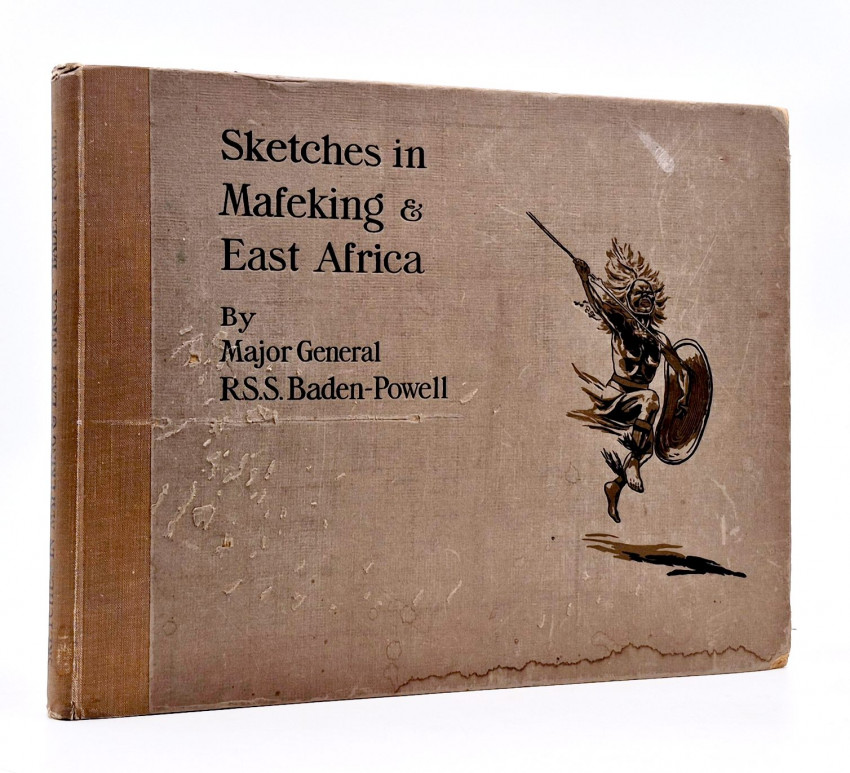
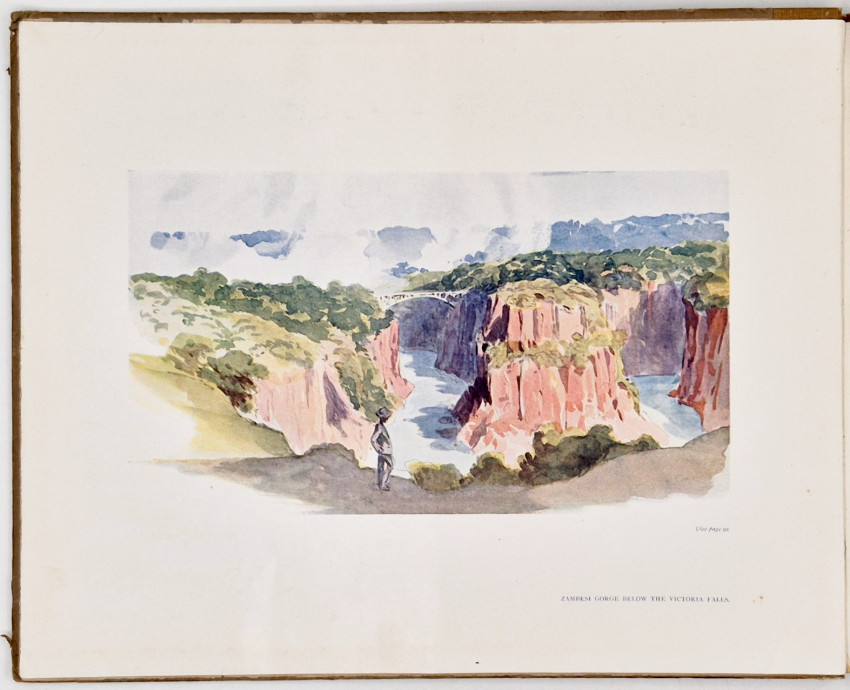
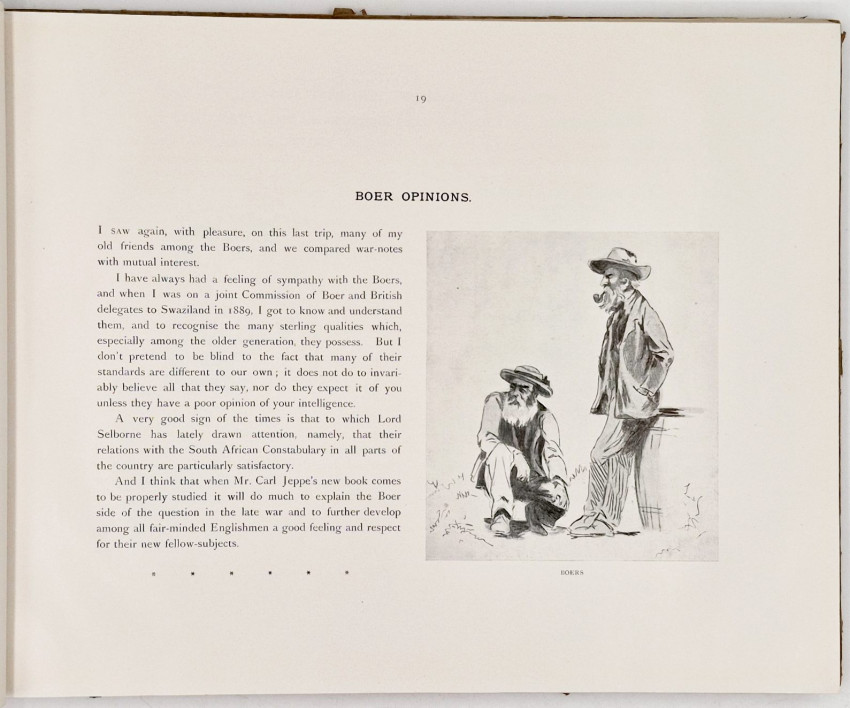
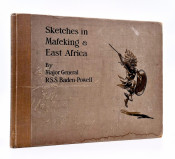
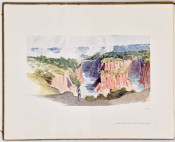
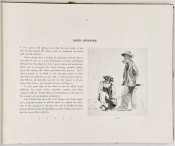
First Edition: 183 pages, colour frontispiece, 8 colour plates, numerous text illustrations, maps, plans, original pictorial paper-covered boards with brown cloth spine - the upper cover is water stained along the bottom edge, overall a very good copy.
Mendelssohn (Sidney) South African Bibliography volume 1, page 65: 'The author in his Preface states that "these notes are really extracts from diaries, from letters, and from sketch-books, strung together with asterisks in place of unnecessary verbiage. They are merely scraps and impressions gathered by the way in an ordinary, unimportant little trip of three months round South Africa, Rhodesia, and East Africa." There are 9 coloured plates, 168 illustrations in the text, and 6 maps.'
Oxford Dictionary of National Biography (https://doi.org/10.1093/ref:odnb/30520) 'Robert Stephenson Smyth Baden-Powell, first Baron Baden-Powell (1857–1941), army officer and founder of the Boy Scouts and Girl Guides, was born at 6 Stanhope Street, Paddington, London, on 22 February 1857, the sixth son of the Revd Baden Powell (1796–1860), Savilian professor of geometry at Oxford, and his third wife, Henrietta Grace (1824–1914).
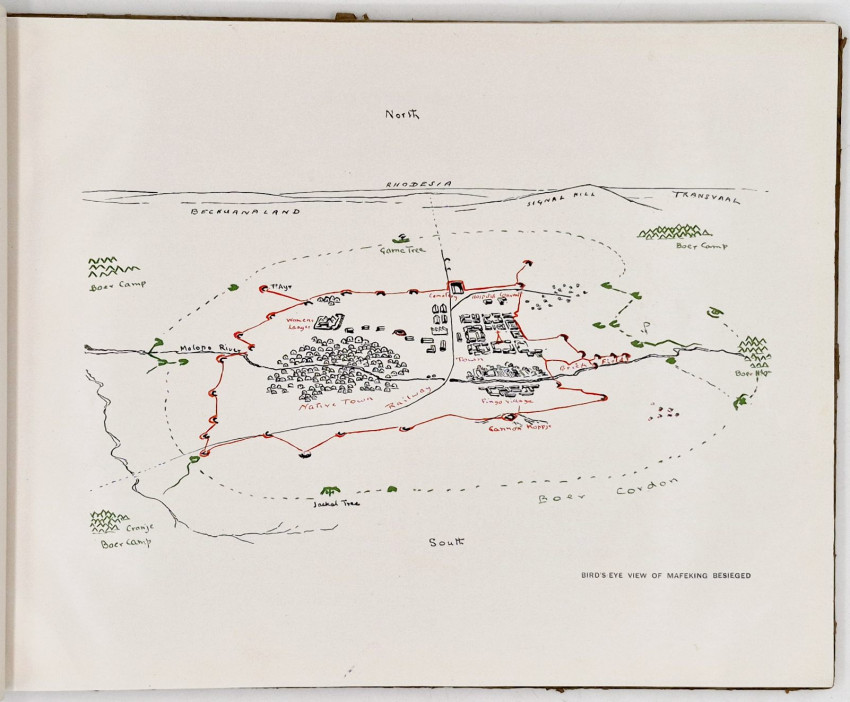
The siege of Mafeking
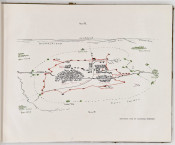
'In July 1899, as the situation worsened in South Africa, Baden-Powell was selected for special duties. With the title commander-in-chief, north-west frontier forces, he raised 500 irregulars, with the aim of tying down Boer troops, and maintaining the loyalty of the local natives. On arrival Baden-Powell, extremely vulnerable to Boer attack, decided to occupy the border town of Mafeking, with its 1500 white and 5500 black inhabitants. Because the town was not easily defended, Baden-Powell had to improvise defence works, at the same time maintaining civil and native morale and continuing to harry the Boers besieging the town. It is estimated that during October and November 1899 some 6000 to 8000 Boer troops were in the vicinity, deployments which significantly reduced their military strength in other areas. The siege lasted 217 days, and Baden-Powell's reports, with their cheeky and jaunty style, increasingly attracted public interest at home.
'As the siege lengthened Baden-Powell's priorities had to be the sustaining of morale as food supplies diminished, while remaining prepared for a Boer attack. This he achieved largely through force of personality, using fully his theatrical, reconnaissance, and organizational abilities. He ordered the attack (26 December) on the Boer outpost, the Game Tree Fort. The operation was bungled, causing unnecessary casualties: the worst blunder of the siege. In early January his difficulties increased on his being told by his military superiors to hold out until May 21, six to eight weeks longer than he had been led to expect. News of Mafeking's final relief reached London on the evening of 18 May, and provoked an outburst of popular patriotism throughout the country, and in many other parts of the English-speaking world. Baden-Powell acquired a heroic status. Later historians have disagreed about the significance of the Mafeking crowds, but the celebrations clearly crossed existing class, religious, and political divides. The Manchester Guardian concluded:
And the story is all the more moving because the defence is an achievement not so much of professional soldiers as, to a great extent, of men and women before the war we should not have been able to distinguish from the average Englishmen in the colonies. Manchester Guardian, 19 May 1900, 9b
'Baden-Powell's role in the defence of Mafeking gave him a unique status for the rest of his life.
'Baden-Powell was promoted major-general in August 1900 and ordered by the new commander-in-chief, Lord Roberts, to form a police force to aid pacification once the war was concluded. In setting up the South African constabulary—for which he designed an idiosyncratic uniform with American stetsons and special badges—Baden-Powell, with his views on training and welfare, faced much obstruction from the military and civilian authorities, still engaged in fighting the war. In June 1901 he had to take home leave from exhaustion, and by his return in January 1902 the force was fully established.'
- Overall Condition: Very good
- Size: Oblong 4to (255 x 325mm)