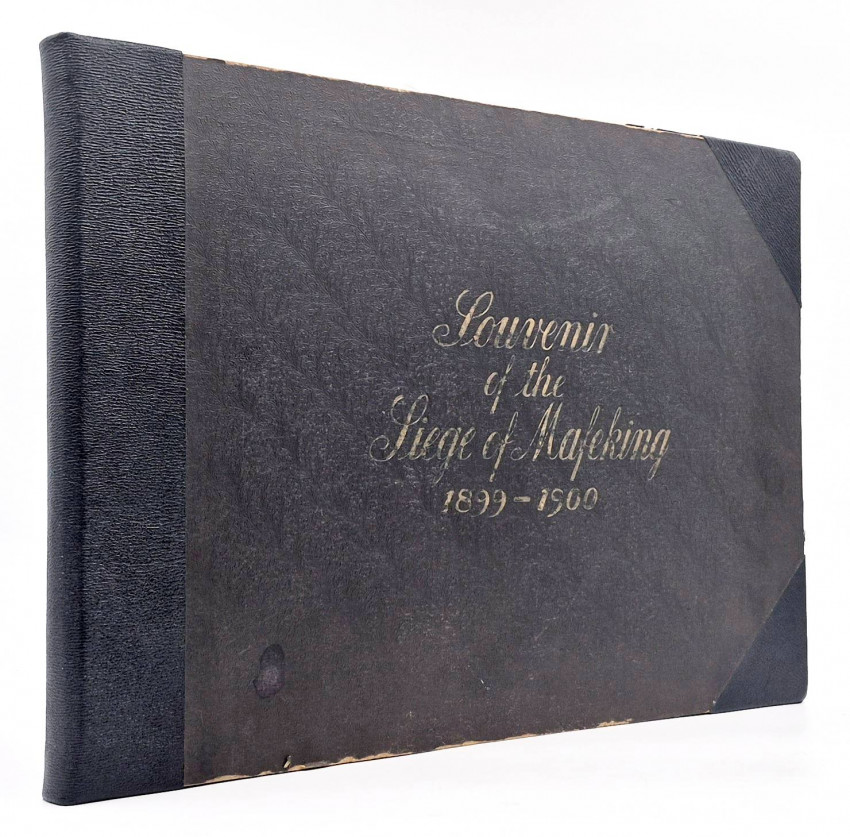
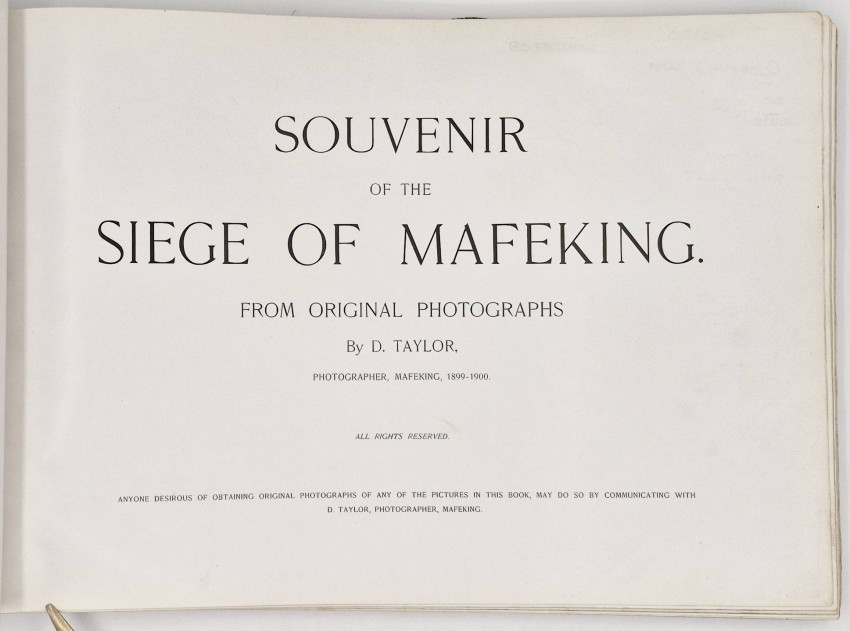
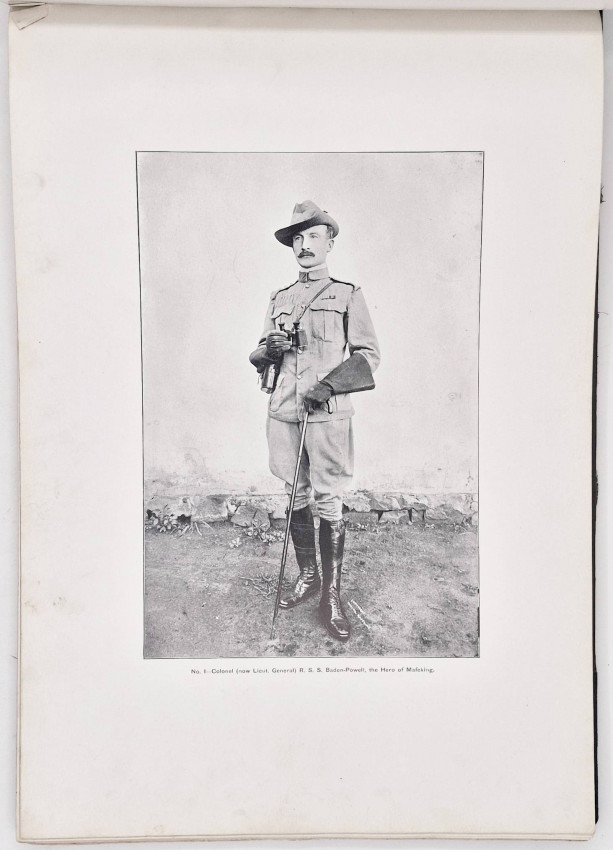
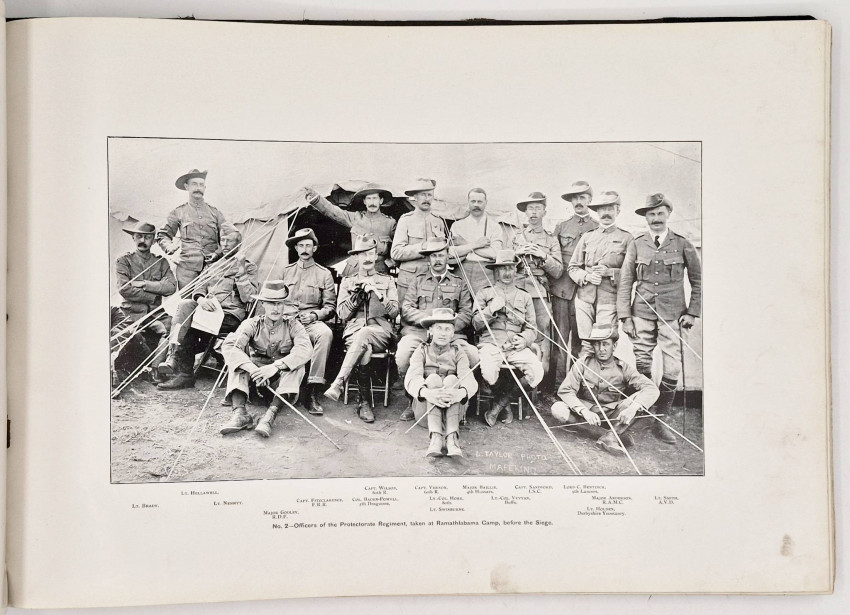
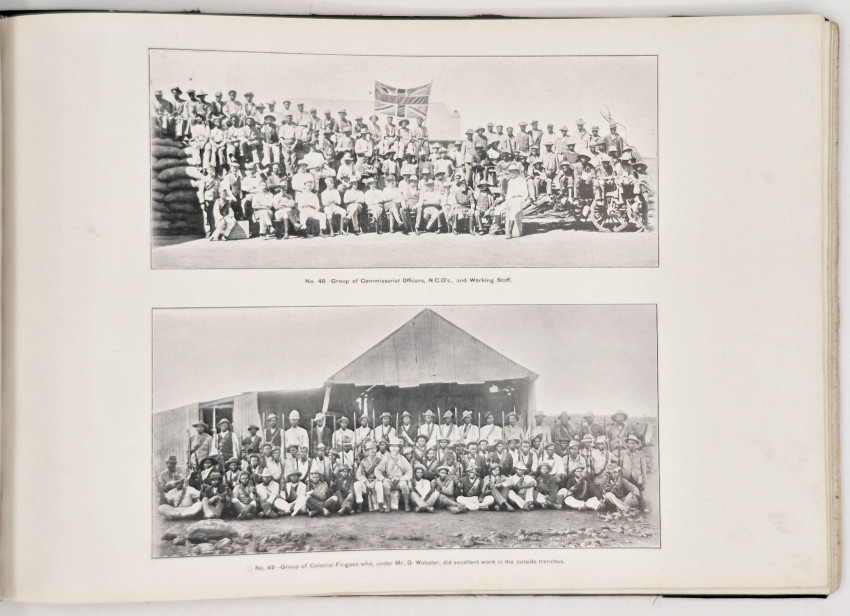
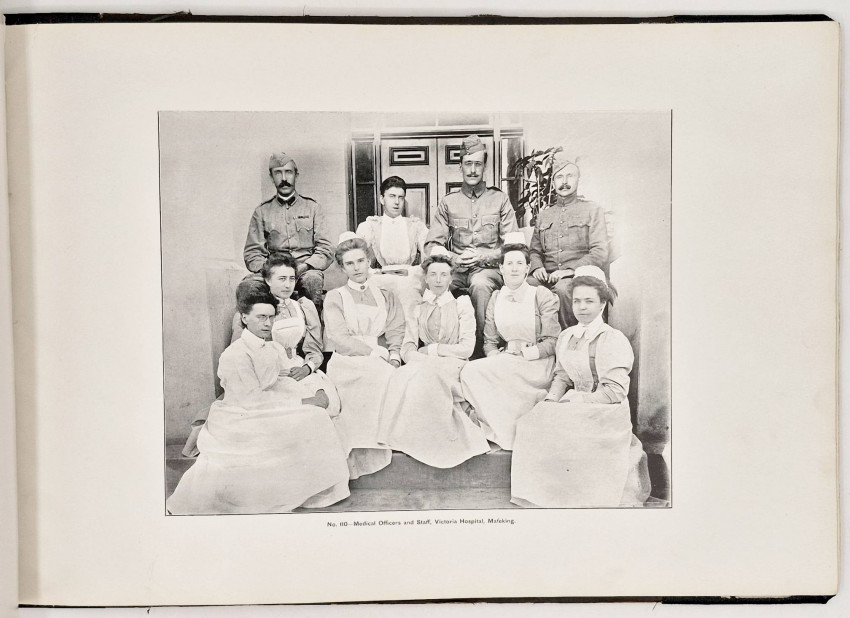
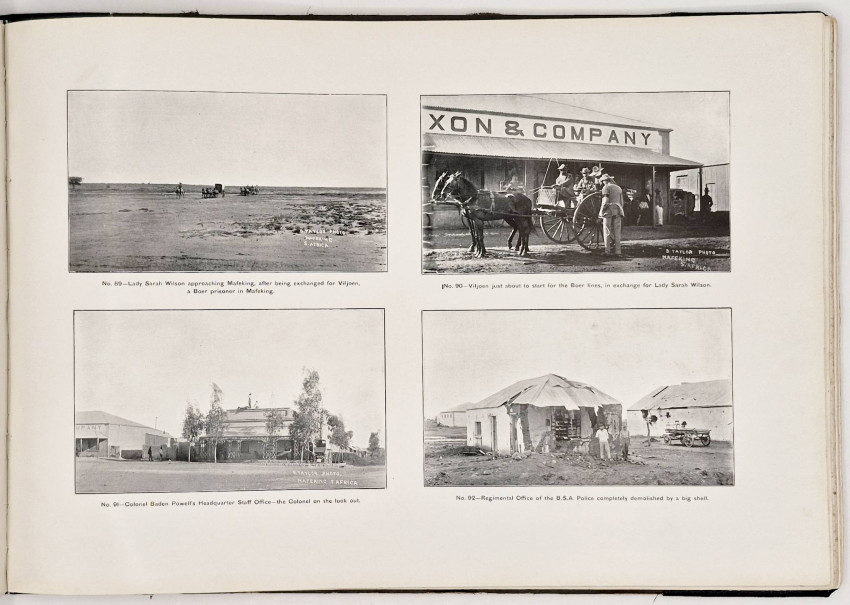
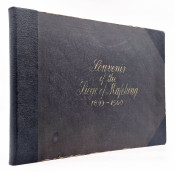
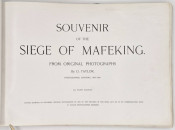
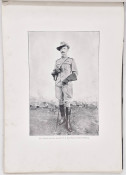
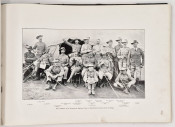
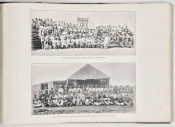
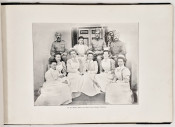
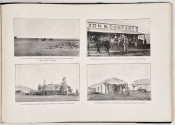
First edition: Title page, 2 pages Preface, double page Panoramic View of Mafeking from the West as frontispiece, unnumbered, there follow 1 - 114 numbered photographs on 62 leaves, colophon on the last page, original black cloth on the upper cover and back titled gilt, new leather back and corners. The cloth along the edges is worn. Marbled endpapers. Hinges strengthen with white buckram cloth, the photographs printed on coated paper are in excellent condition, a very good copy.
Printed by: Sir W. C. Leng and Co. Printer, Sheffield, [1900]
DAVID TAYLOR, THE PHOTOGRAPHER (https://www.pelteret.co.za/content/000098/Mafeking-David-Taylor-and-a-Tribute-Medallion.pdf): '....Mr David Taylor was just such an entrepreneur. He was born to Charles Taylor (a master tailor) and Mary (neé Adam)on 30 March 1867 in Carse Barracks, Parish of Forfar, County Forfarshire, Scotland. He married Helen Notman on 25 February 1898, and wife his new bride, travelled to South Africa. They were to produce six children (3 boys 3 girls). In his late teens, he had joined the 1st Battalion Highland Light Infantry and remained a private in the regiment until his discharged in Cape Town in January 1899.
'By the beginning of the siege (14 October 1899) he, together with other family members, was in Mafeking. In the mind of the collector, he was to became synonymous with the creation of several desirable items, all associated with the siege: the famous Mafeking “blue” stamps, the publication of an outstanding portfolio of siege photographs, and the memento publication of the Mafeking Mail Siege Slips under the auspices of Townshend, Taylor and Snashall of Cape Town.
'Taylor’s portfolio of photographs which he published during the South African War is a sensitive and definitive collection by a truly talented craftsman. It ranks in quality with the Arthur Elliot Collection of South African vernacular architecture, and is highly sought after as a collectors’ item. In it, he not only documents the everyday events of a town under siege, but also, with the eye of an historian, captures the personalities that went to make up a “plucky” garrison.
'David Taylor was to die aged 58 in the Johannesburg Hospital on 4 January 1925 of carcinoma of tongue and jaw. He is buried in the New Cemetery (now the Brixton), Johannesburg. Were it not for the enigmatic person that was David Taylor, there would be but a poor photographic record of one of the most renowned sieges in the military history of the British Empire.' (Robin Pelteret. https://www.pelteret.co.za/)
- Overall Condition: Very good
- Size: Oblong 4to (290 x 400mm)