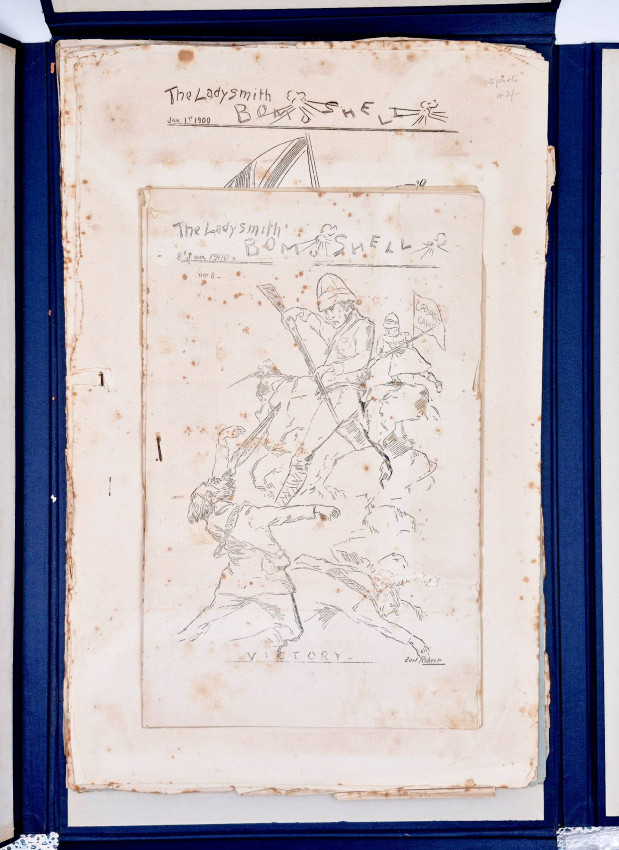
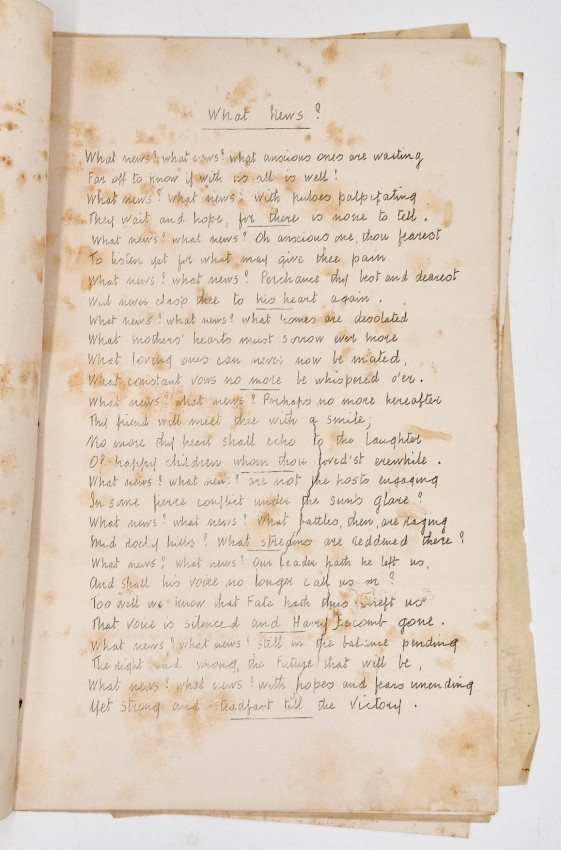
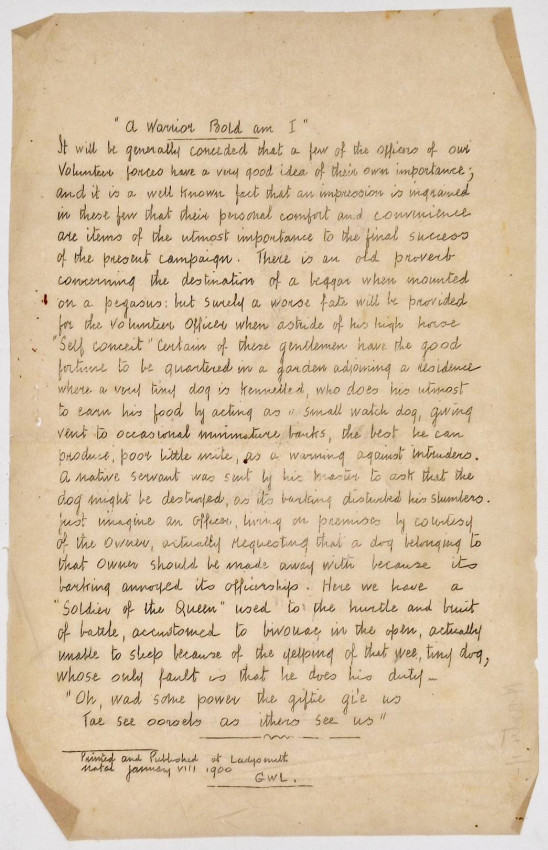
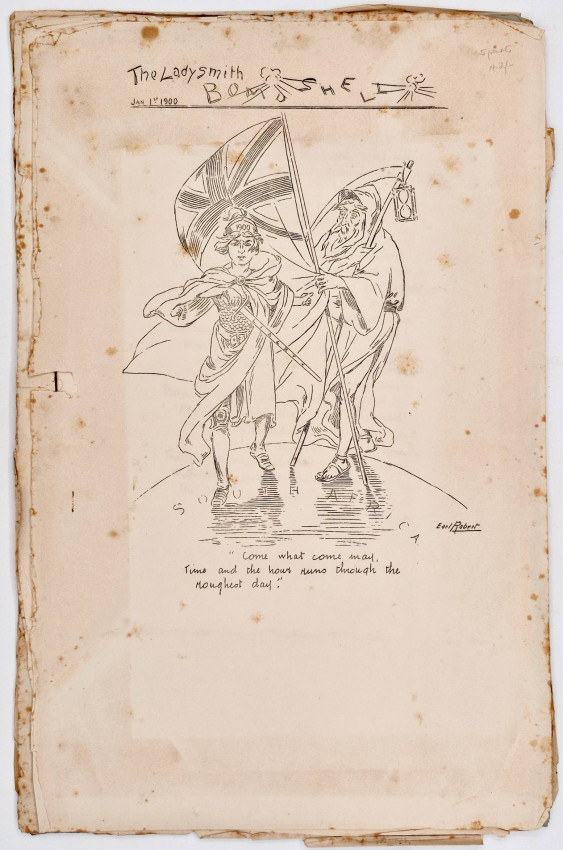
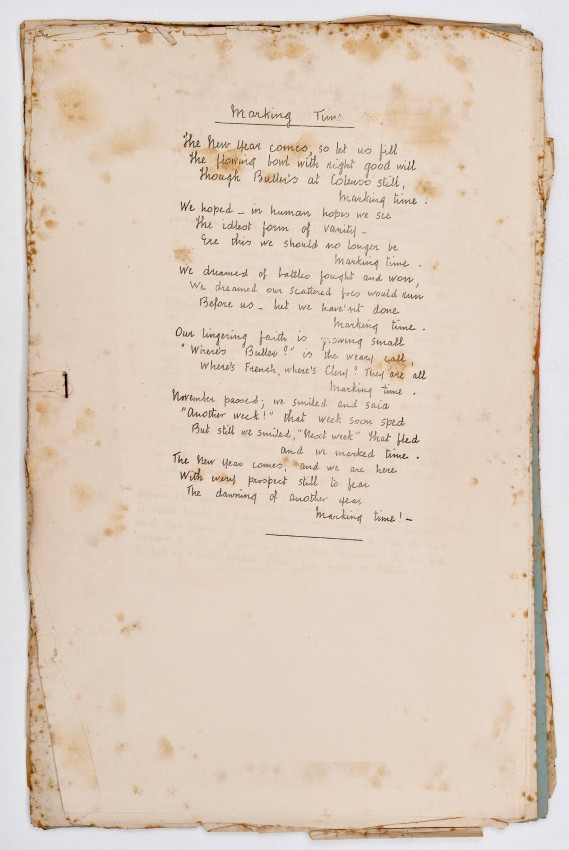
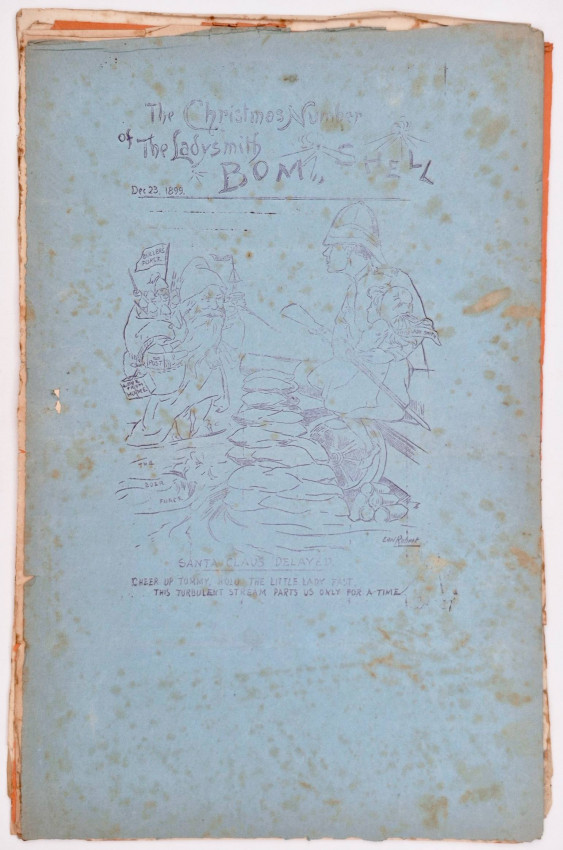
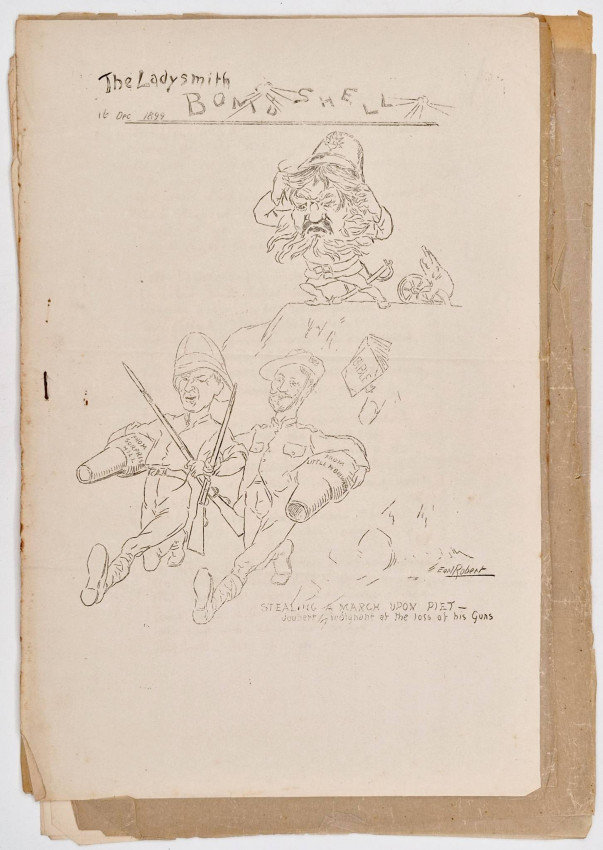
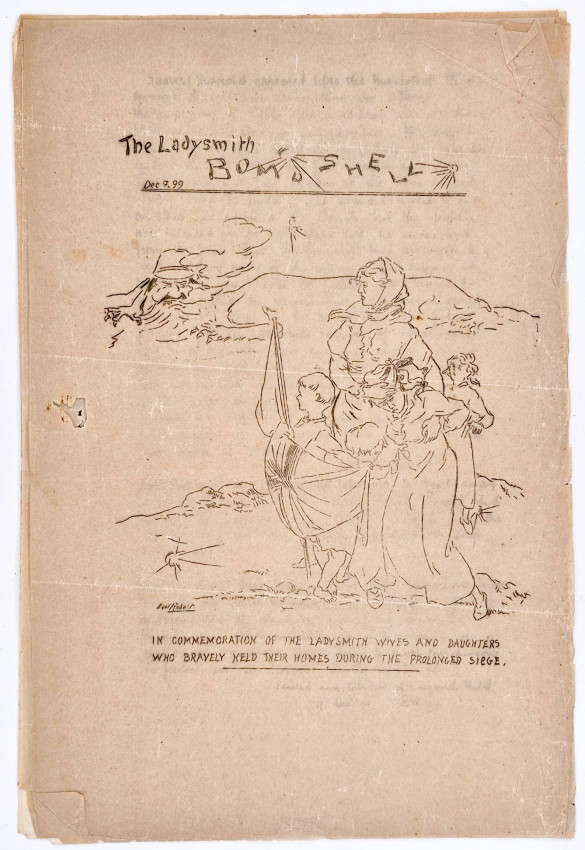
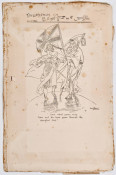
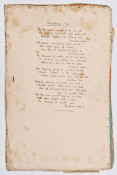
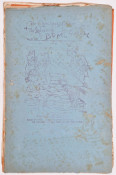
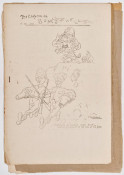
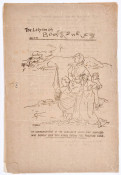
Six of the eight original issues:
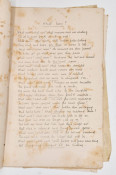
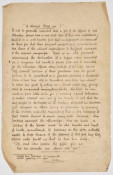
Nov 24. 99. 385 x 258 mm, 6 pages on white paper, singe staple.
Dec 7. 99. 385 x 258 mm, 6 pages on off-white tracing paper.
16 Dec. 1899. 385 x 258 mm, 6 pages, first page on white paper, the rest on off-white tracing paper.
Dec 23. 1899. Larger format 450 x 285 mm, 6 pages, pages 1 & 4 on blue paper, 2,4 & 6 on white paper, 3 on orange paper, single staple.
Jan 1st 1900. Larger format 450 x 285 mm, 6 pages on white paper, single staple.
8th Jan 1900. Smaller format 325 x 205 mm, 5 pages on white paper, last page on off-white tracing paper, single staple.
Edges frayed and foxing, issues for November 18th and November 30th missing, complete sets of the original issues are scarce.
Greenwall (Ryno) Artist & Illustrators of the Anglo-Boer War, Cape Town, Fernwood Press, 1992,
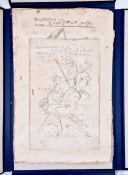
'The cyclostyled The Ladysmith Bombshell, which first appeared on 18 November 1899. The subsequent seven issues appeared on 26 November, 2 December, 9 December, 16 December, 23 December, 1 January 1900 and 8 January. George Walter Lines was the publisher and the news sheet was distributed free. Earl Robert produced a fine series of cartoons,
which appeared on the front cover, and his work also featured inside in some of the later issues. In 1900 Robert published a facsimile version which varied slightly from the original. Lines, too, reproduced The Ladysmith Bombshell in a different format in his book The Ladysmith Siege, which also appeared in 1900.'
The humour was characteristically self-mocking and anti-heroic, drawing on the "comic stoicism" of British music-hall culture. It treated shell-fire with dark humour, one mock advertisement read: "Try Joubert's Hair Curlers. Hundreds of testimonials from the manager of the Royal Hotel, Mr Carter, prominent surgeons and others."
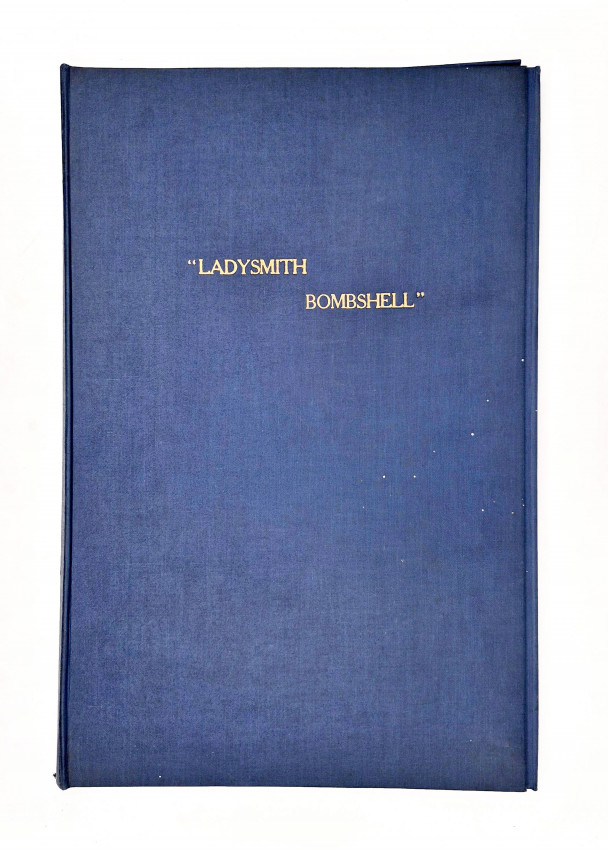
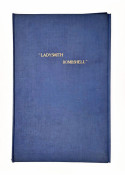
The six issues are contained in a specially made blue cloth folder, titled gilt on upper cover with bookplate of Edna and Frank Bradlow.