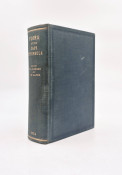
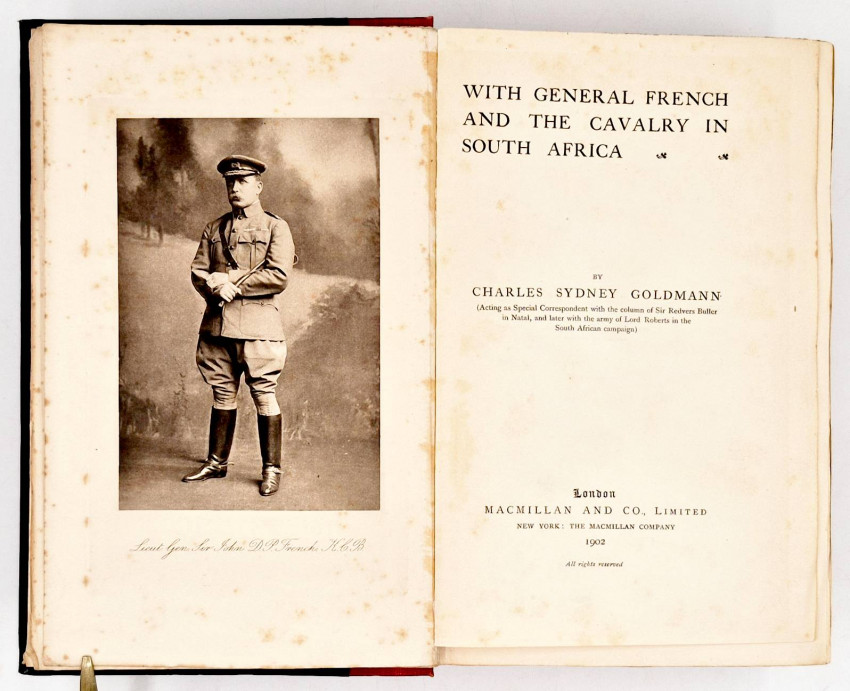
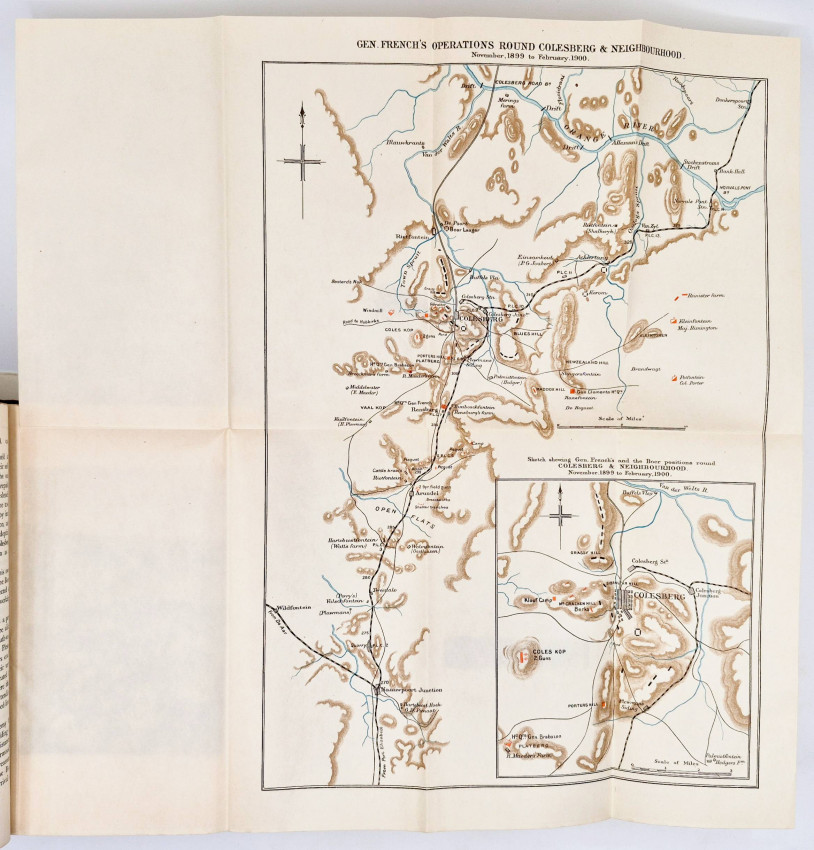
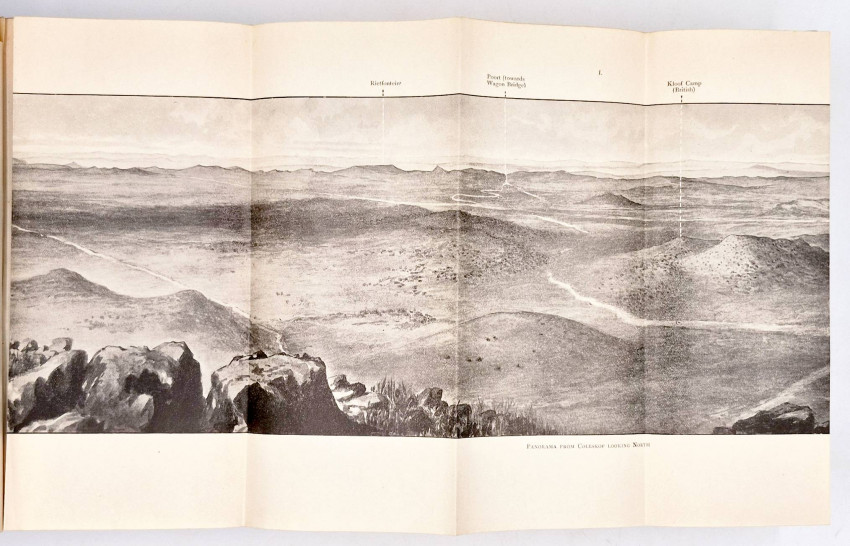
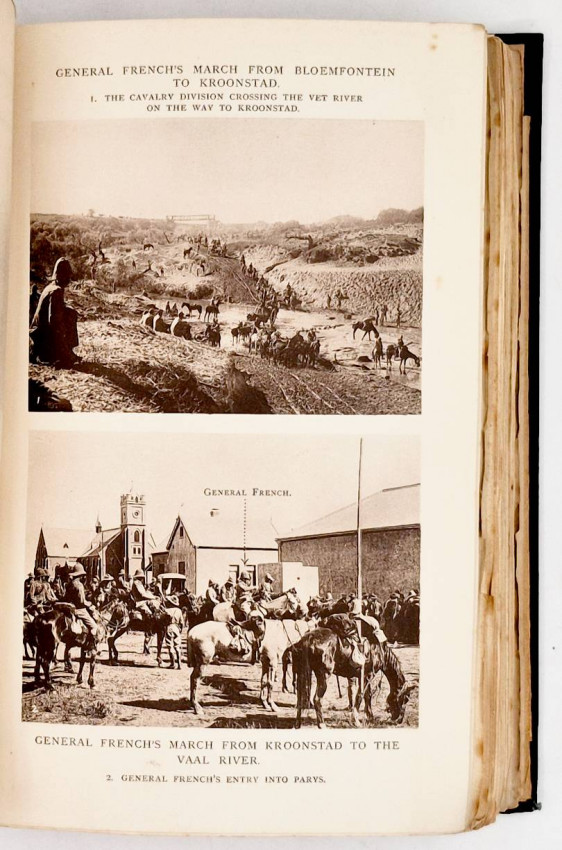
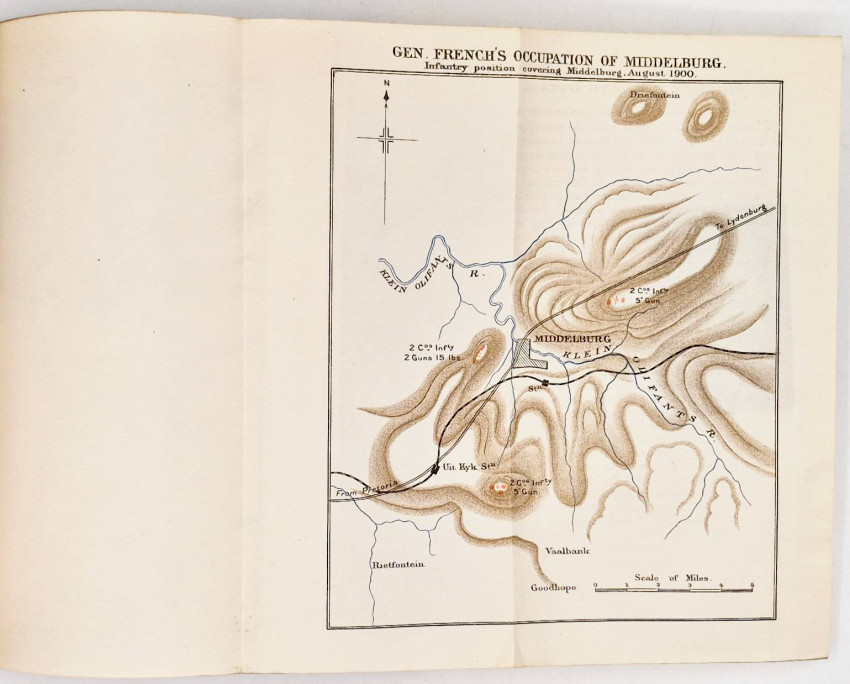
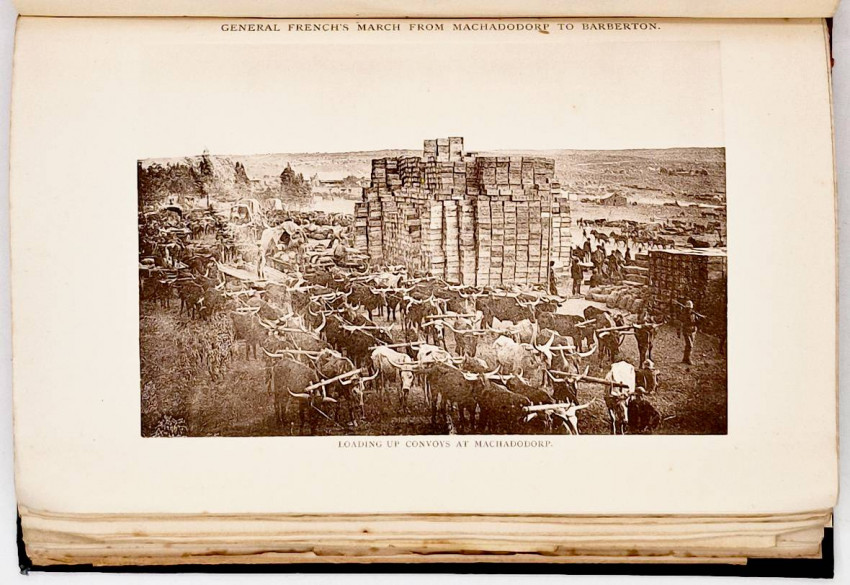
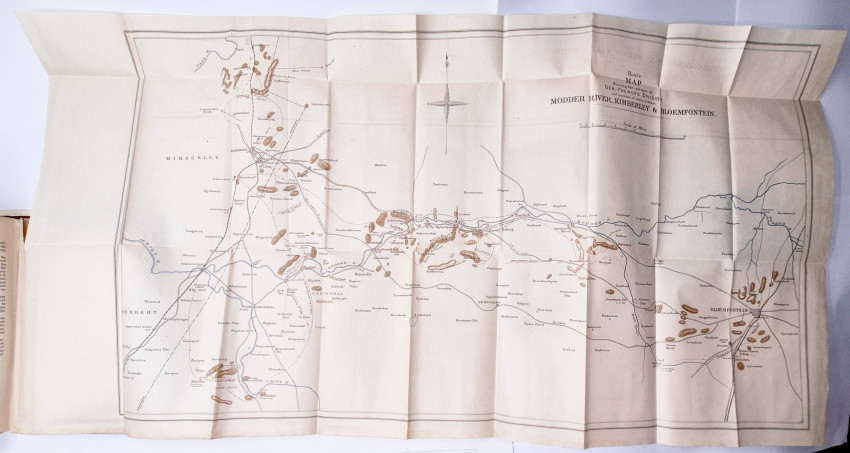
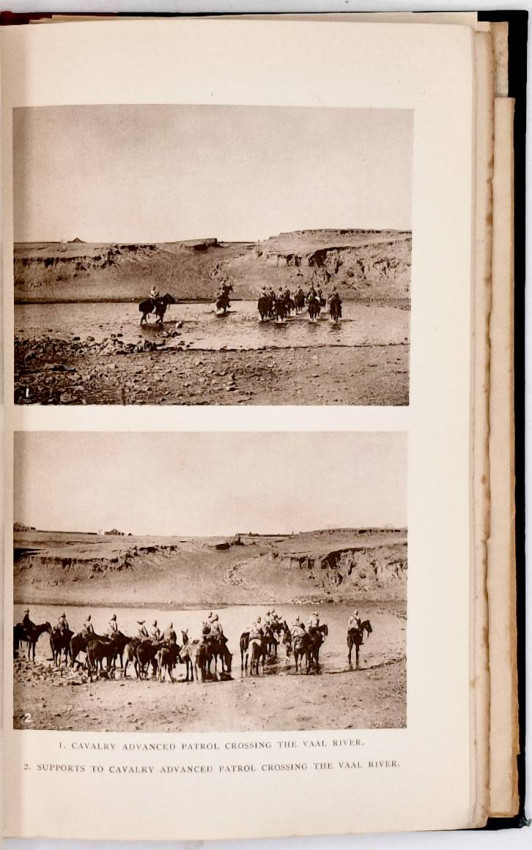
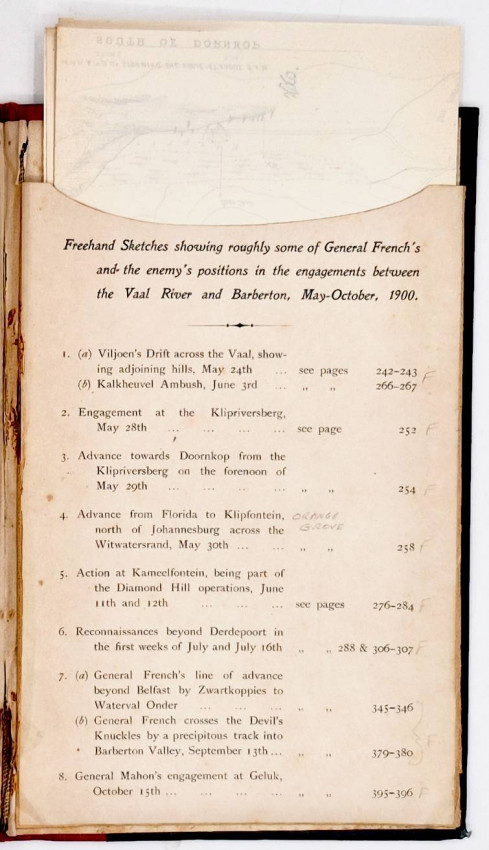
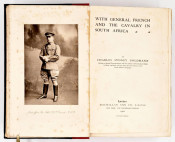
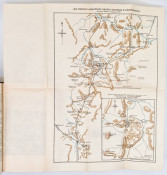
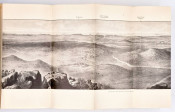
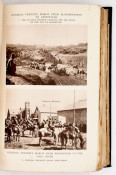
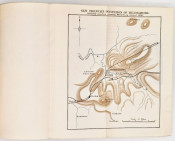
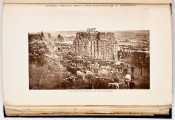
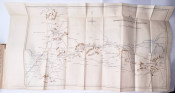
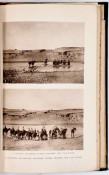
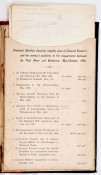
First edition:462 pages, frontispiece portrait of Lieut. Gen Sir John D. P. French, numerous folding maps, folding panoramas and plates, 8 reproductions of freehand sketches showing some of French's and the enemy's positions between the Vaal River and Barberton, May - October 1900 in pocket at end, original red cloth back and black cloth sides, back hinge weak due to the heavy folding maps in the pocket, a very good copy.
Hackett (R.G.) South African Boer War Books, An illustrated bibliography of English language publications relating to the Boer War of 1899-1902, Privately Printed, London 1994, page 105, 'An account of French's cavalry operations excluding the campaign in Natal. Chapters relate to Colesberg operations, the relief of Kimberley, operations to the fall of Bloemfontein and Pretoria, and the campaign in eastern Transvaal to November 1900. The narrative is preceded by an informative introduction relating events to the investment of Ladysmith. Among appendices are observations on cavalry, notes on reconnaissance, on transport and remounts in war. The volume is liberally illustrated with folding maps, panoramas and plates. Loose sketches are contained in a separate pocket.'
Mendelssohn (Sidney) South African Bibliography volume 1, page 617, ‘The purport of the volume is "to follow the fortunes of our cavalry in the South African War dealing chiefly with the work of the mounted troops under the leadership of Sir John French. The writer was an enthusiastic admirer of the dashing cavalry leader, and remarks that his feats will have their place in military annals among the most notable achievements of which cavalry can boast. In the course of the introductory remarks it is asserted that Kruger attributed the peace after Majuba to fear on the part of England," and that after the Jameson Raid he set himself steadily and unfalteringly for the conflict which he subsequently forced upon the Suzerain Power.
'The Boers, being too well informed from abroad as to our imagined readiness for war, entertained a contempt for our army, and doubted not that, in a trial of strength, success would once more rest with them. Buller’s tactics in dividing his army are severely criticised, and it is maintained that his plans had the effect of doubling the fighting power of the enemy." The volume contains detailed accounts of all Sir John French's marches and engagements, from his actions around Colesberg to his services in the far north-west of the Transvaal, and there is a good description of the brilliant manner in which the Relief of Kimberley was executed, and an account of the pursuit of Cronje until he was headed off at Paardeberg. Few works on the war have been prepared with such thorough attention to detail, and every chapter is accompanied, at its conclusion, by a series of plans, maps, and illustrations of an elaborate nature. The appendices consist of articles on “Cavalry,” “Reconnaisances,” “Remounts,” and “Transport.” The volume was written by a gentleman who was not a soldier by profession, and belonged to the somewhat hotly abused class of capitalists and mining magnates.
‘Goldmann was associated with powerful mining and financial groups in the Transvaal. He became a partner in the S. Neimann companies in 1895 and by 1905 was Chairman of six mining companies. He acted as war correspondent during the Boer War for the Argus and the Standard. This monumental work is probably the best illustrated campaign study of the war.’
- Overall Condition: Very good
- Size: Thick 8vo (230 x 150 mm)