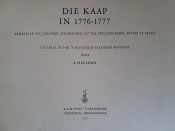
HALLEMA, A. (Ed.) — Die Kaap in 1776-1777: Akwarelle van Johannes Schumacher uit die Swellengrebel-Argief te Breda
Description
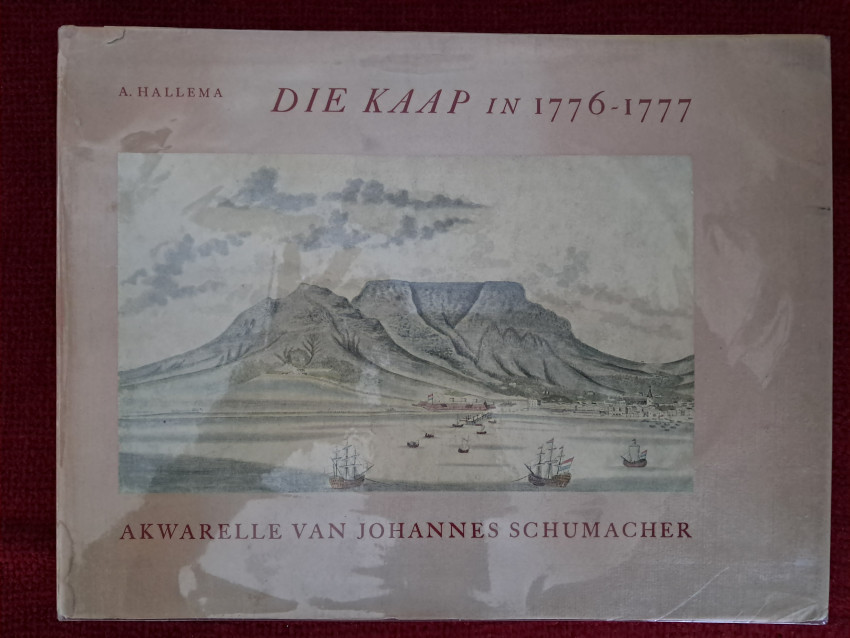
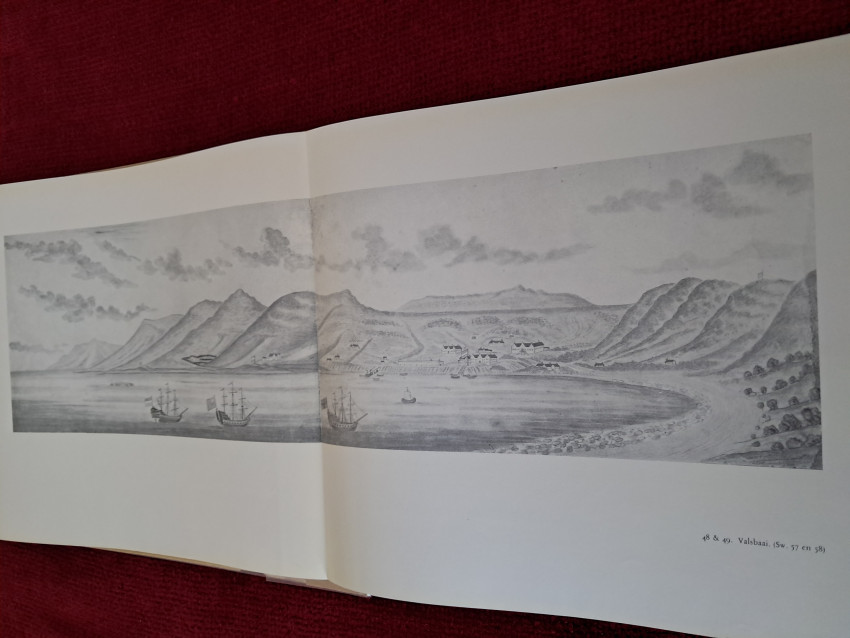
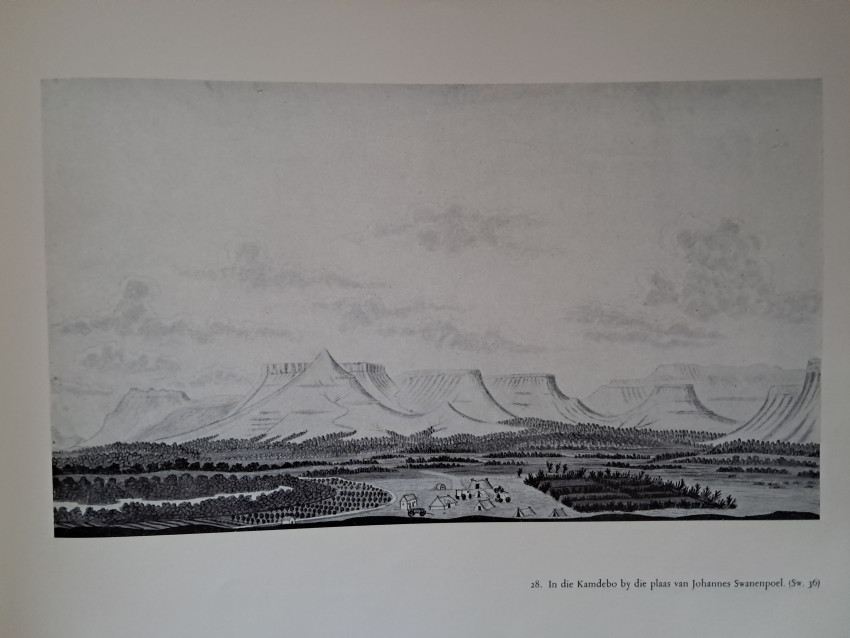
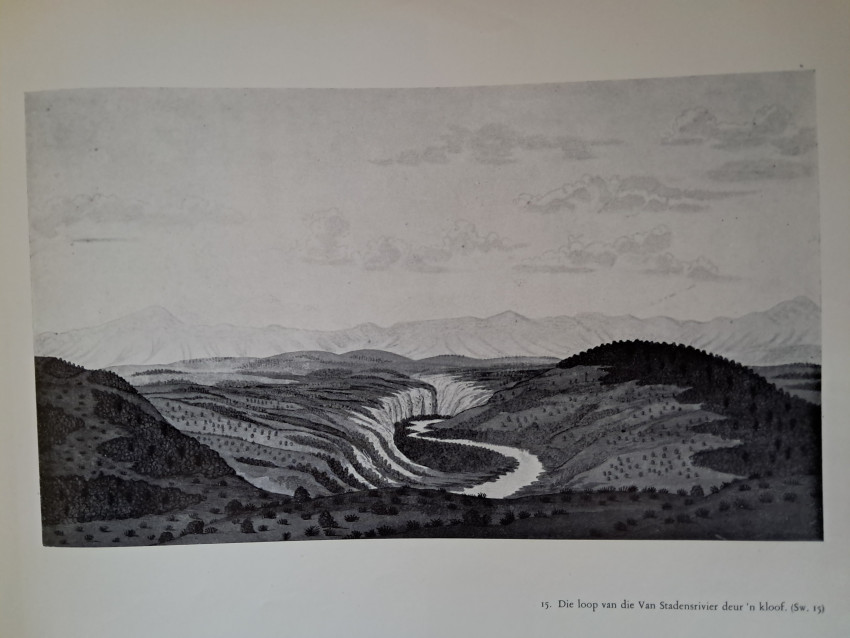
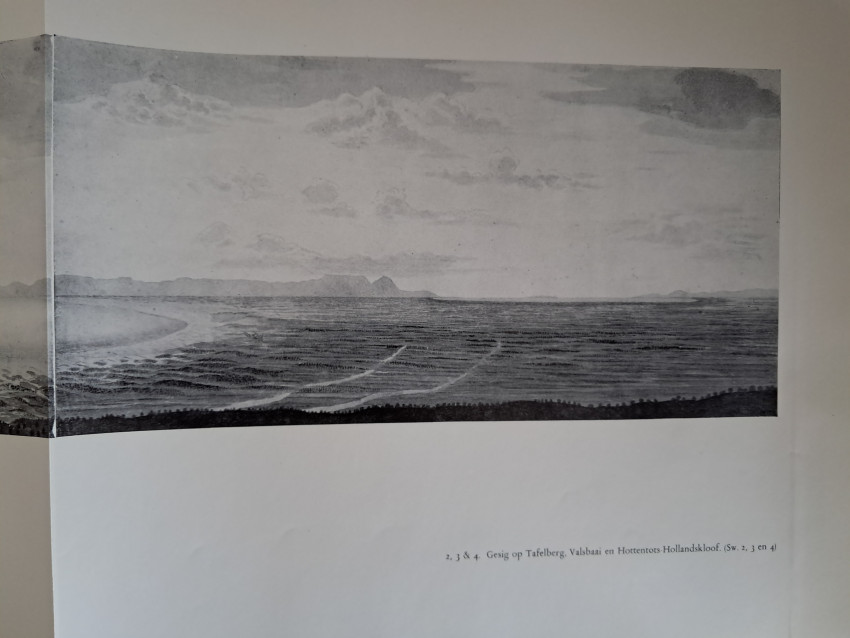
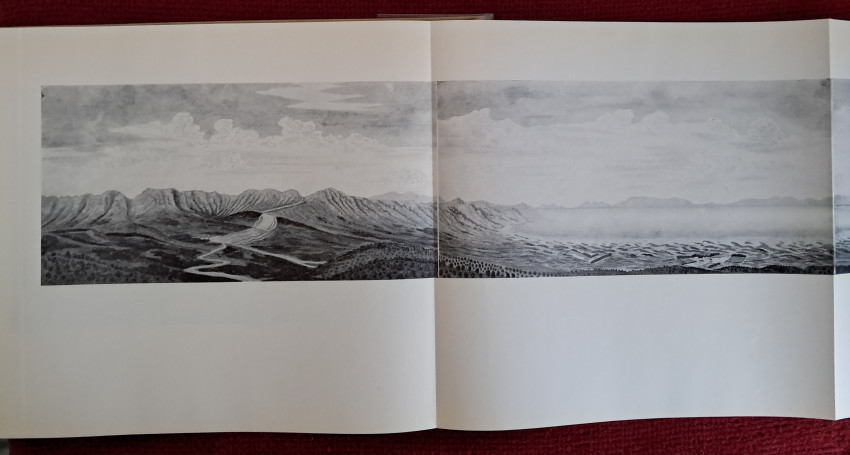
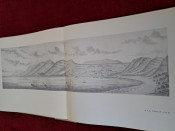
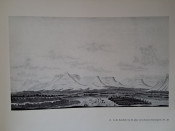
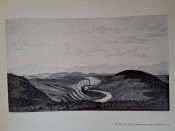
An exceptional piece of early Cape Africana art history, published by the esteemed A.A.M. Stols in 1951. This volume replicates 49 historic aquarelles (watercolours) painted by the artist Johannes Schumacher between 1776 and 1
Schumacher accompanied Hendrik Swellengrebel Jr. (son of the Cape Governor) on his extensive travels through the South African interior. His detailed drawings serve as one of the most critical visual records of the Cape’s landscape, colonial outposts, indigenous peoples, and fauna during the late Dutch East India Company (VOC) era.
Edited and annotated with a comprehensive historical introduction and appendix by A. Hallema, this edition was strictly limited to only 550 printed copies. It is a cornerstone volume for collectors of early Cape history, cartography, and antique South African art.
Detailed Specifications
- Editor/Author: A. Hallema
- Artist: Johannes Schumacher
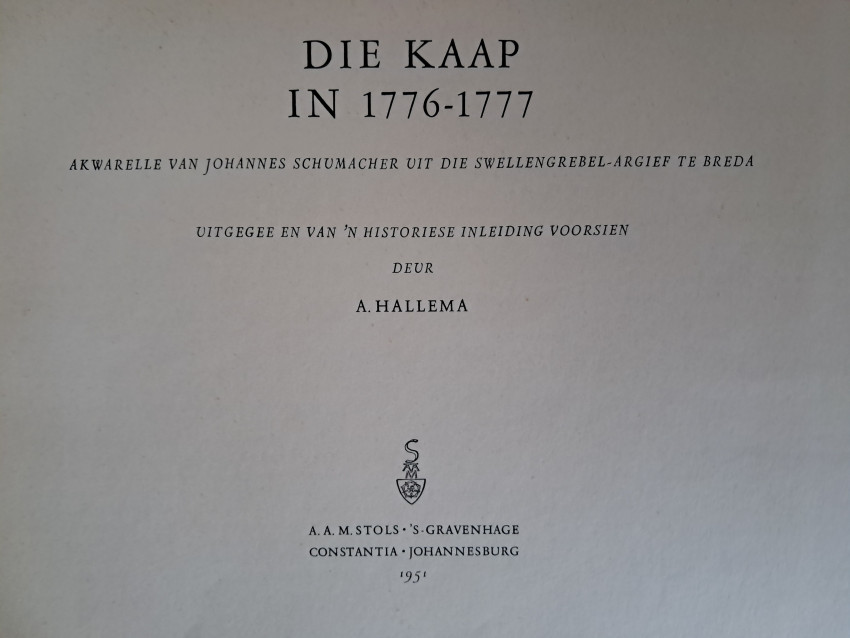
- Title: Die Kaap in 1776-1777: Akwarelle van Johannes Schumacher uit die Swellengrebel-Argief te Breda
- Publisher: A.A.M. Stols, The Hague
- Year: 1951
- Edition: Limited First Edition (One of only 550 copies printed)
- Language: Afrikaans text introduction and descriptions.
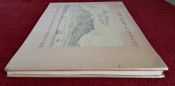
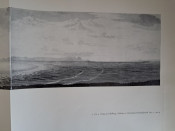
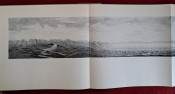
- Format/Size: Large Oblong Folio (320 x 245 mm); Features a historical introduction, an appendix, and 49 full-page plates (including several impressive folding panoramic views).
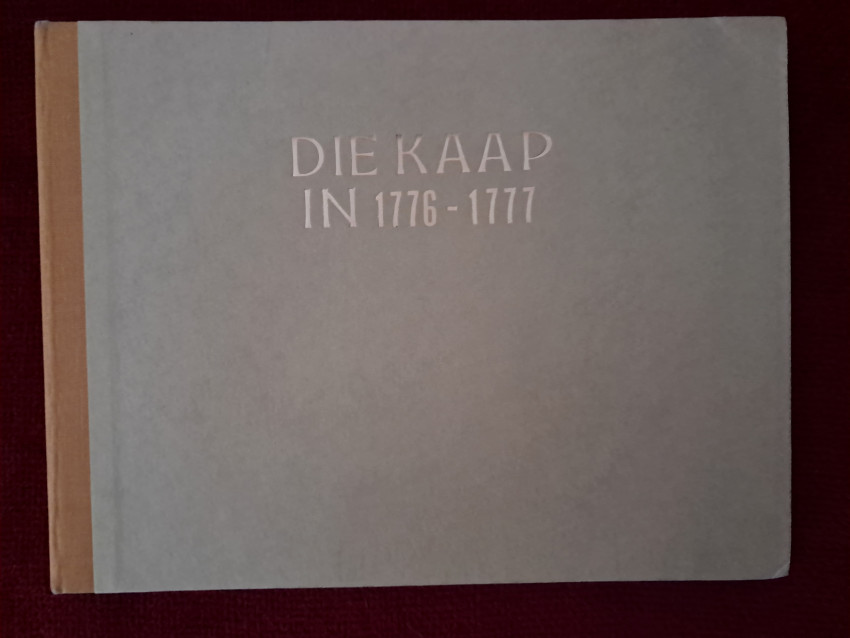
- Binding: Original publisher's cloth boards featuring crisp, bright gilt lettering on the upper cover and spine.
Condition Report
- Book & Binding: Very Good. The cloth boards are sturdy and the gilt remains bright. Internally clean, solid, and tightly bound. Typical, minor age-associated tanning is present on the first and last blank pages, but the internal plates remain beautifully preserved.
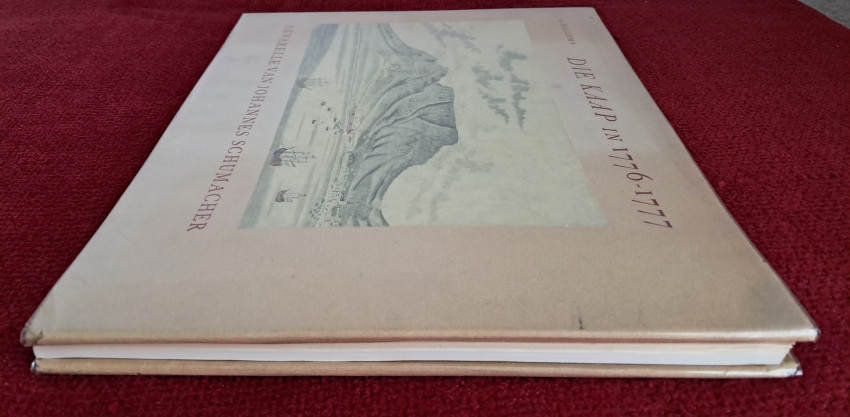
- Dust Jacket: Good to Very Good. The scarce original dust jacket is tidy but exhibits edge wear, small edge tears, some general tanning, and minor surface markings. It is now safely housed and stabilized in a protective clear cellophane cover.