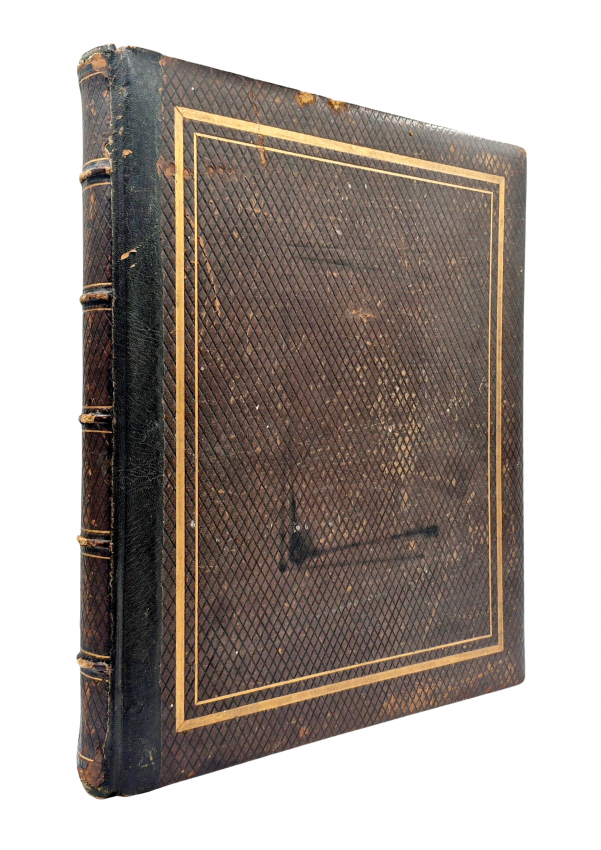
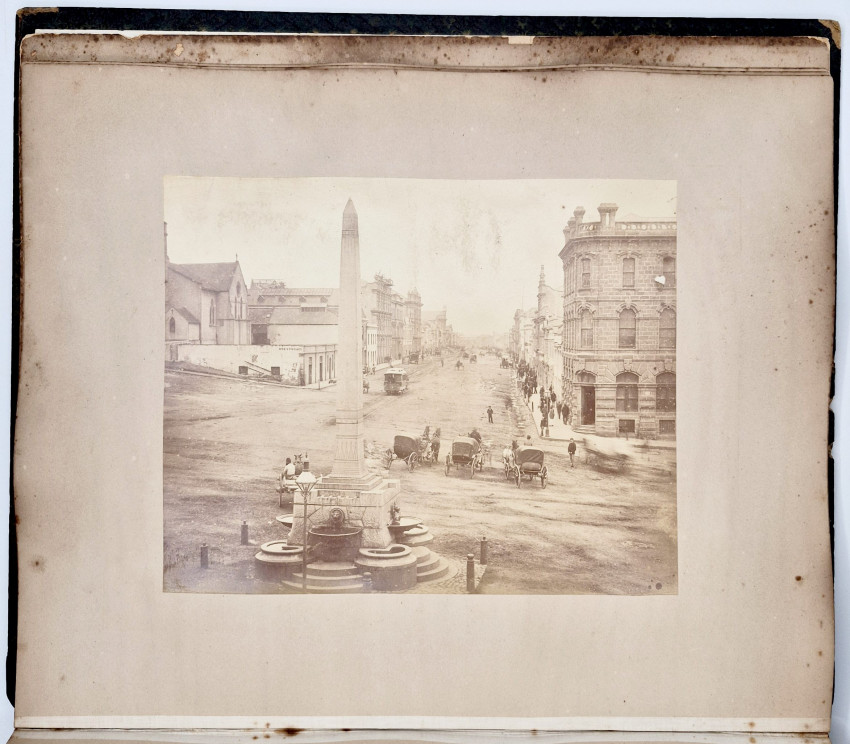
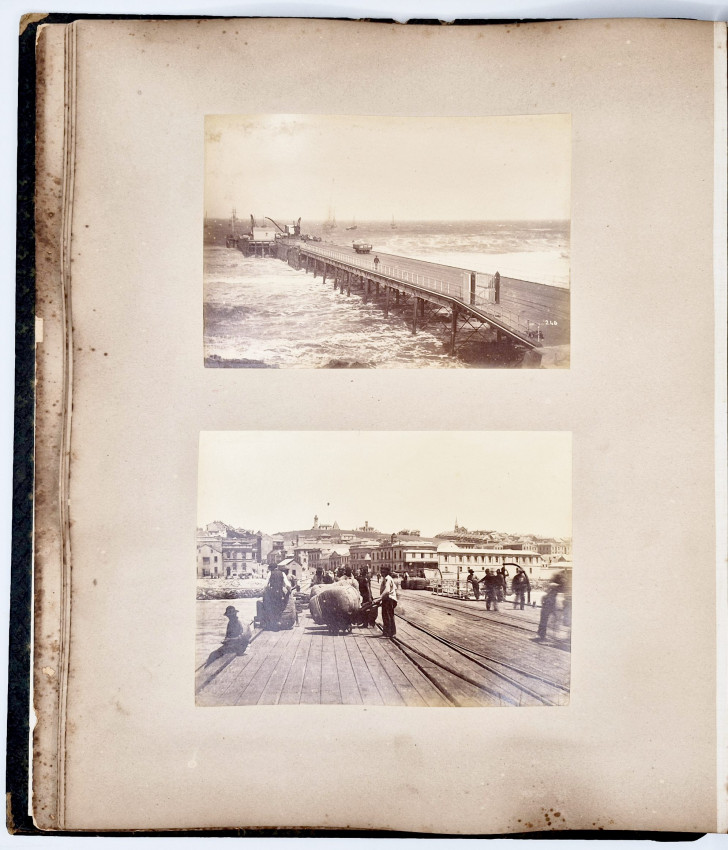
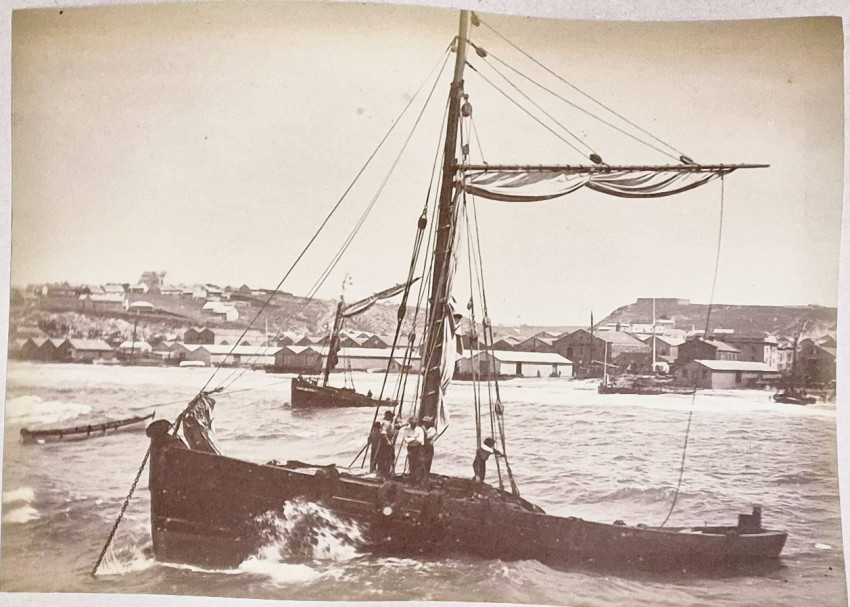
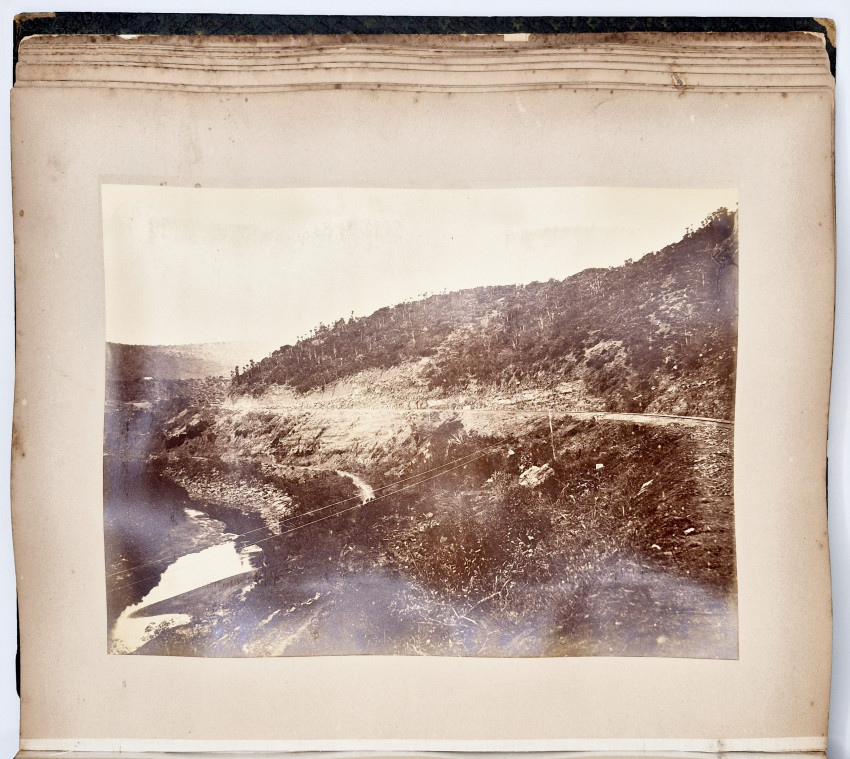
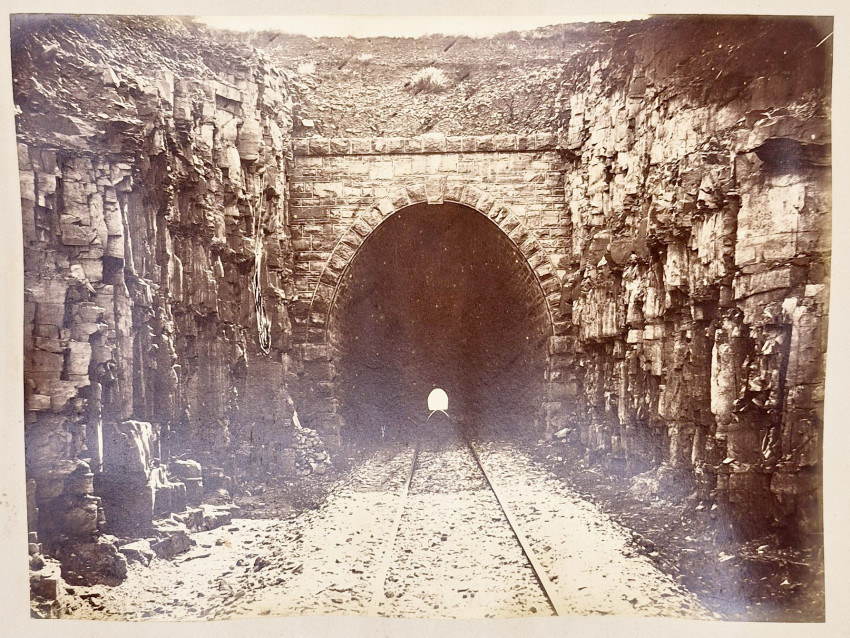
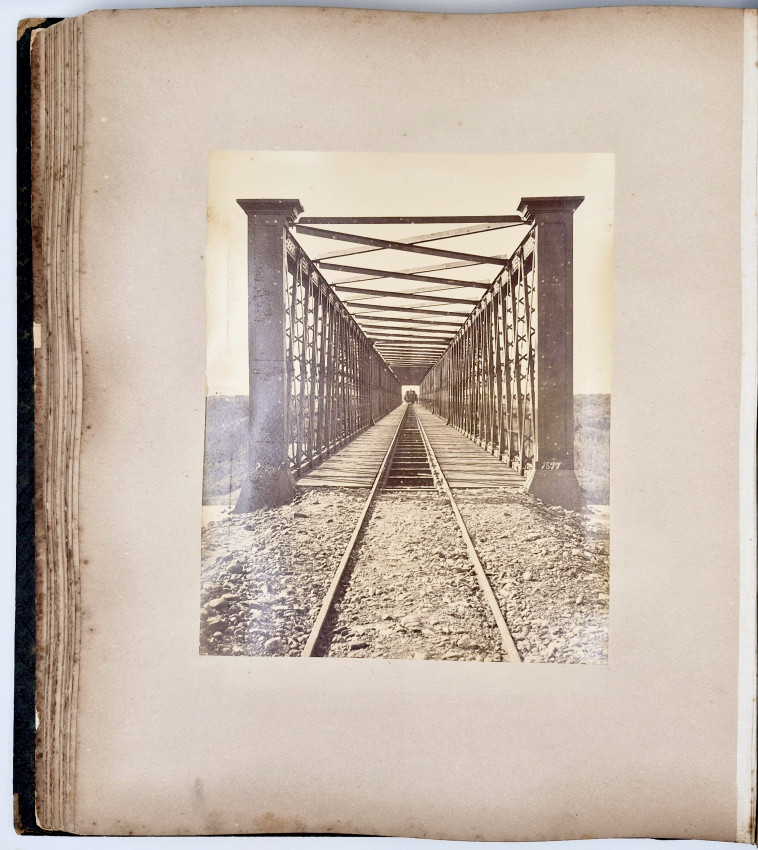
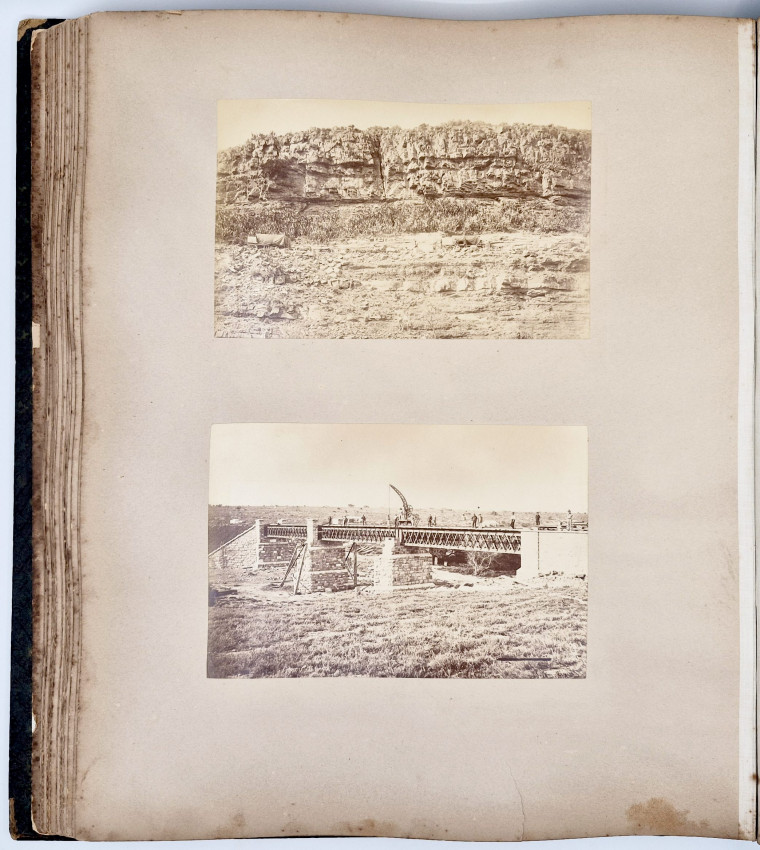
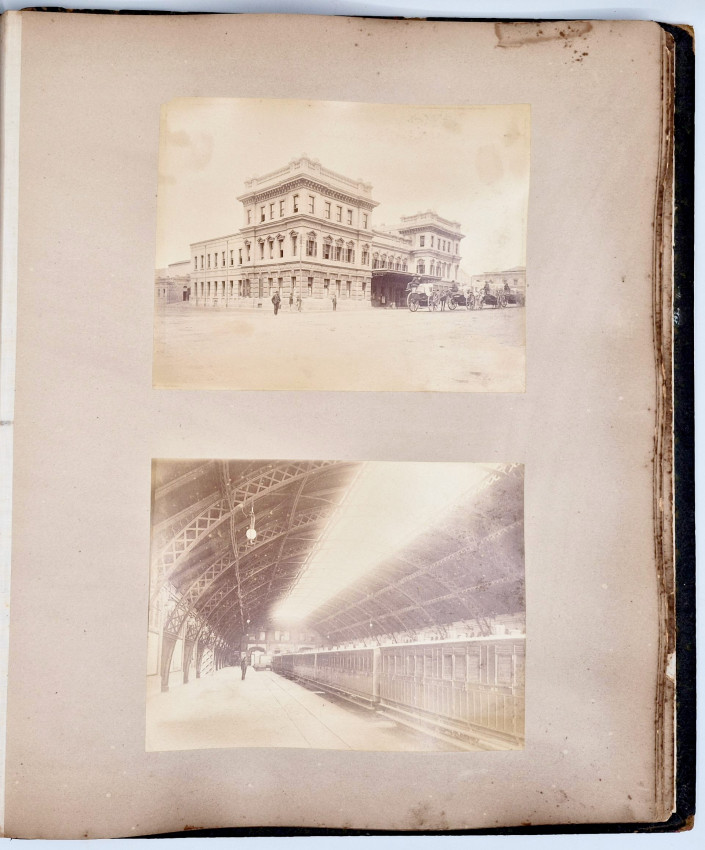
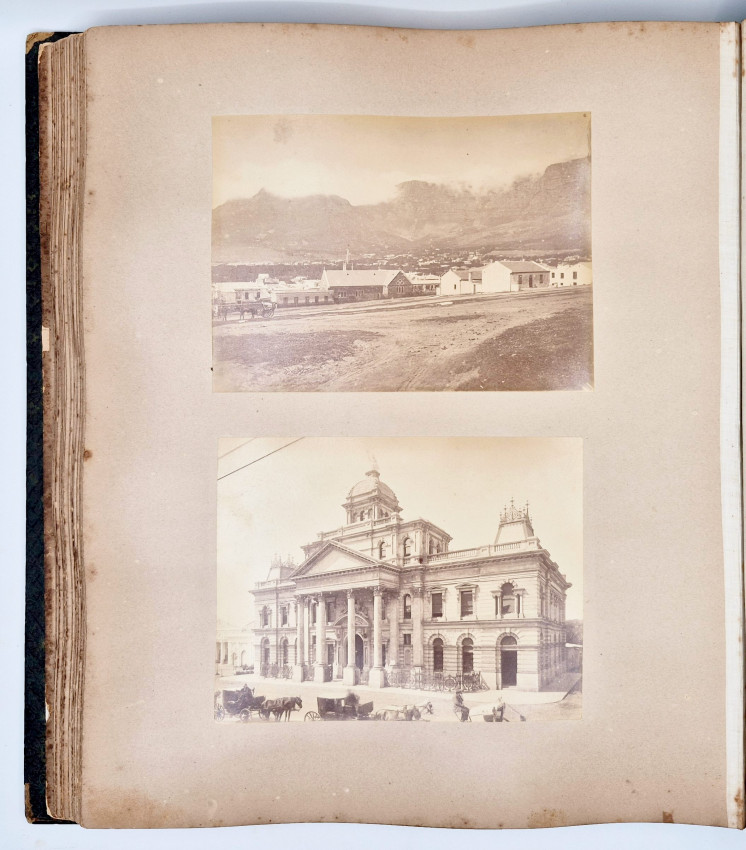
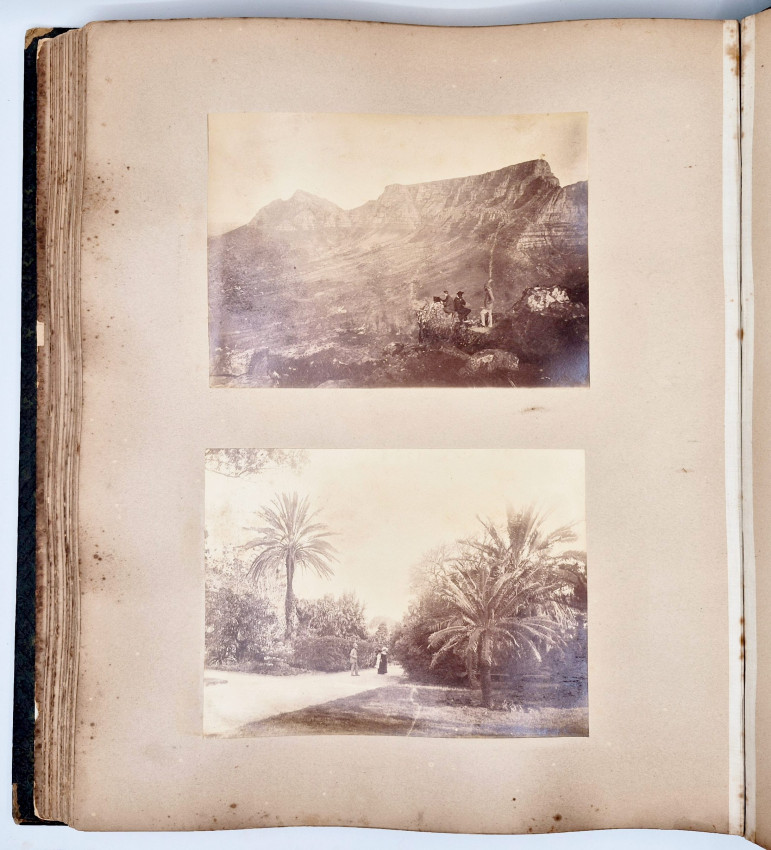
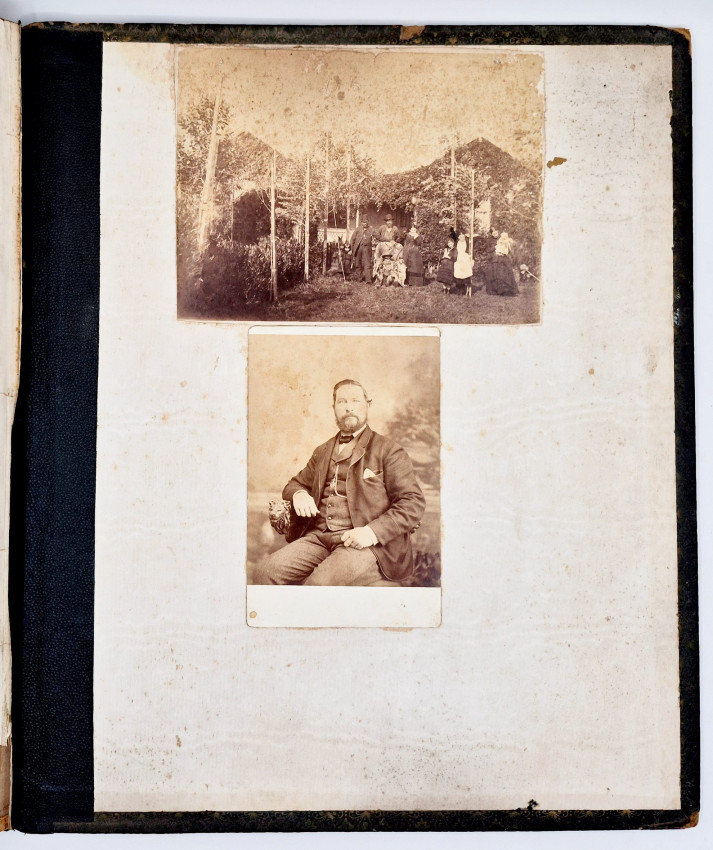
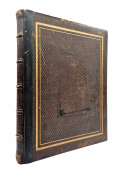
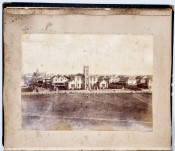
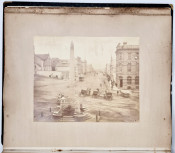
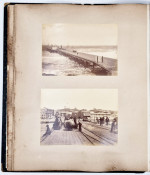
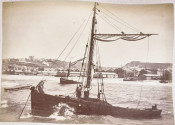
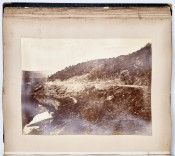
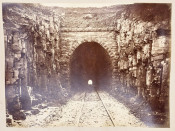
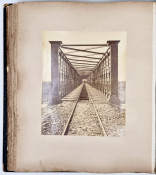
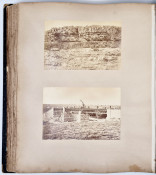
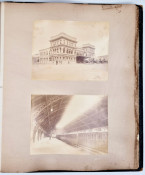
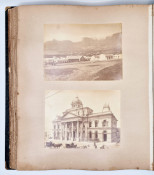
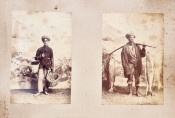
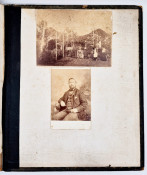
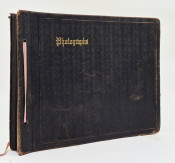
Album, folio (445 x 380 mm), containing 29 stiff card leave with 91 Woodburytype images laid onto the card leaves which are bound in on linen hinges - two leaves are loose, original brown diced Russia leather with gilt rules, rebacked preserving the backstrip, there is no titling, all edges gilt, patterned endpapers, hinges strengthened with black leather, the card leaves are foxed throughout but the Woodburytype prints are unaffected.
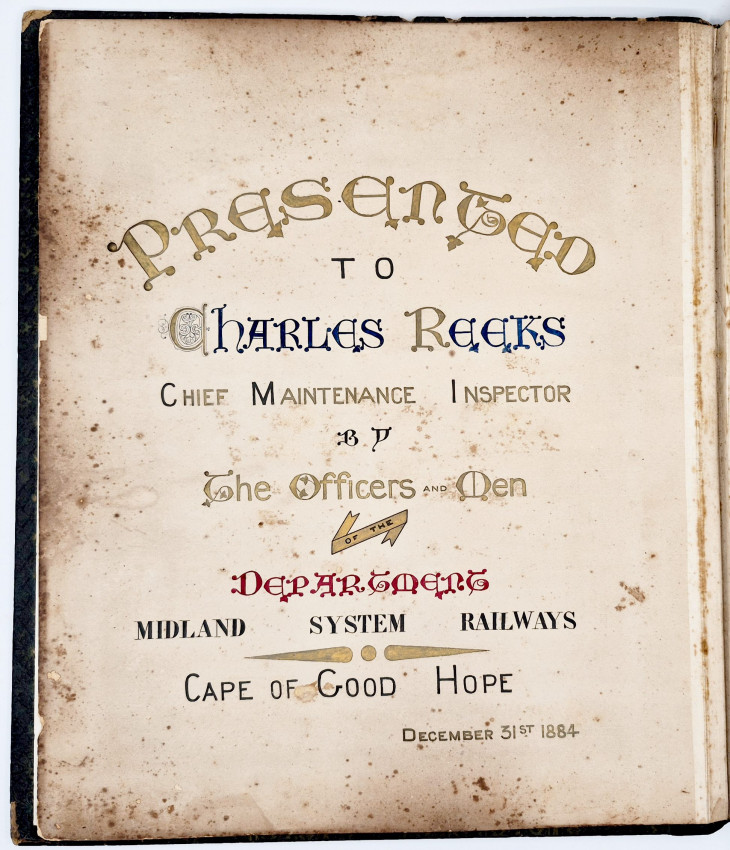
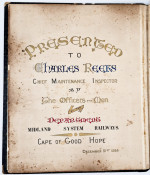
A hand lettered presentation page in gilt, red and blue reads: Presented to Charles Reeks, Chief Maintenance Inspector by The Officers and Men of the Department Midland System Railways, Cape of Good Hope, December 31st, 1884.
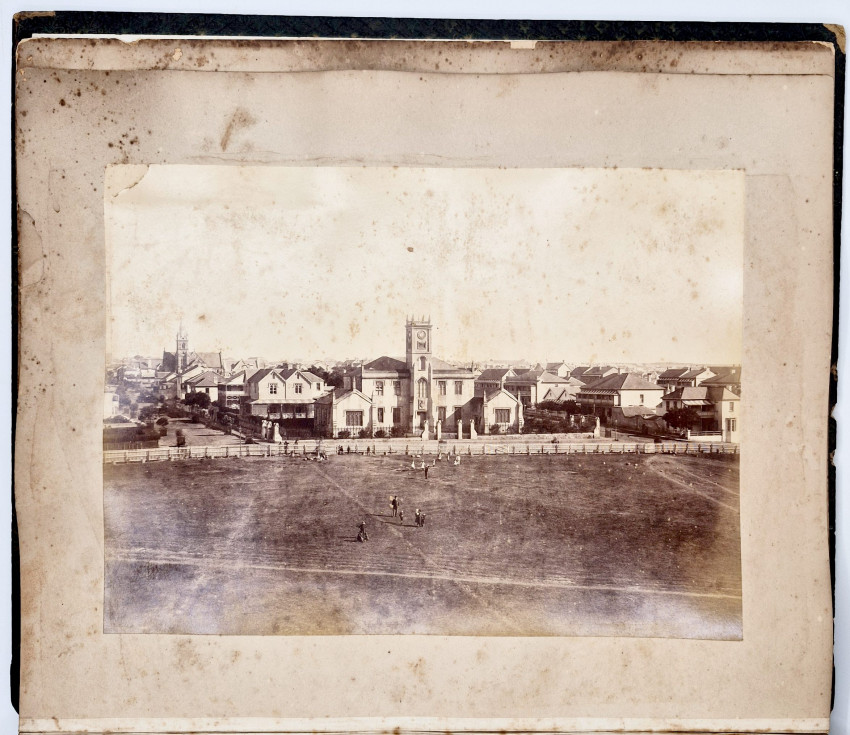
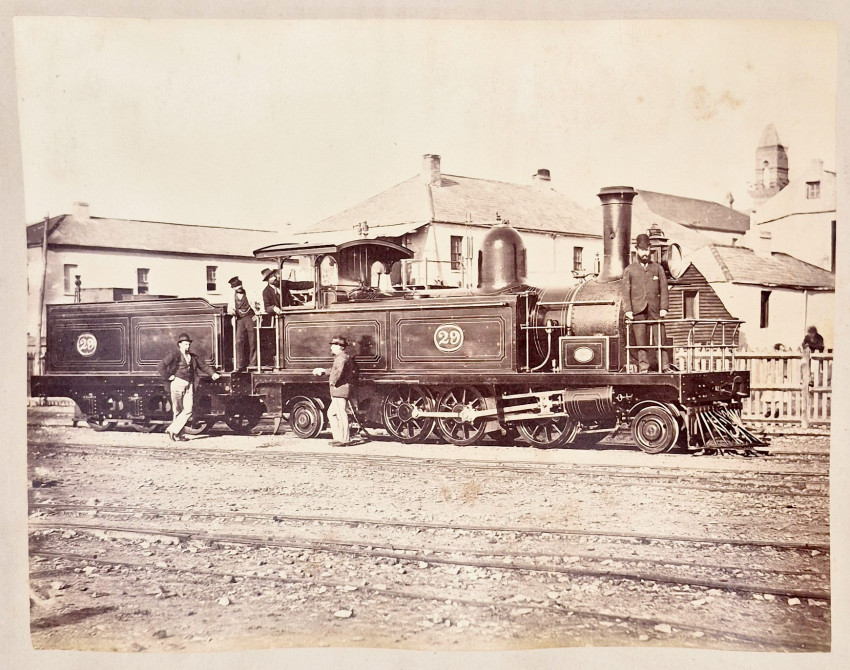
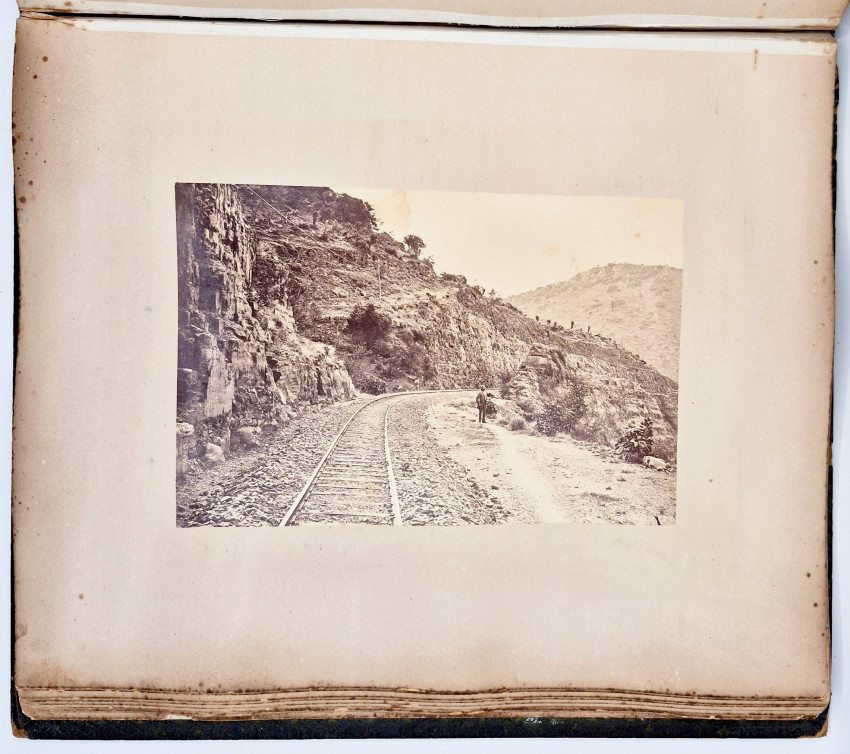
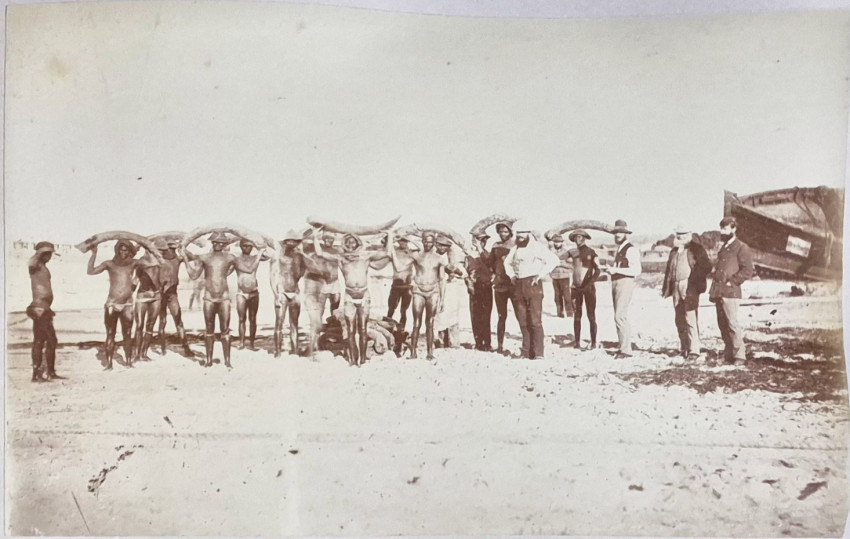
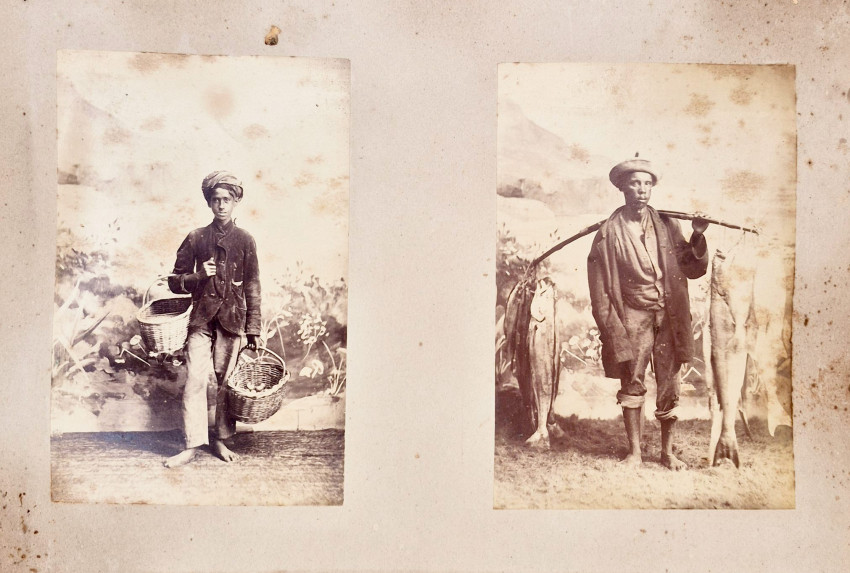
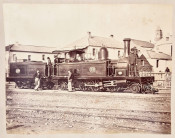
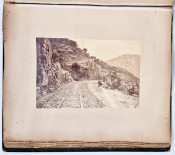
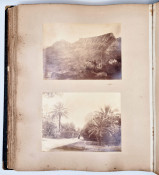
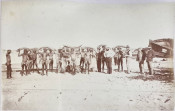
There are 19 full-plate photographs - 262 x 342 mm - mostly of railway subjects, the remainder are half-plate mounted two per leaf of towns, rural scenes, harbours and ships and ship wrecks, African villages and life - one showing African workers carrying elephant tusks on a beach, and other views.
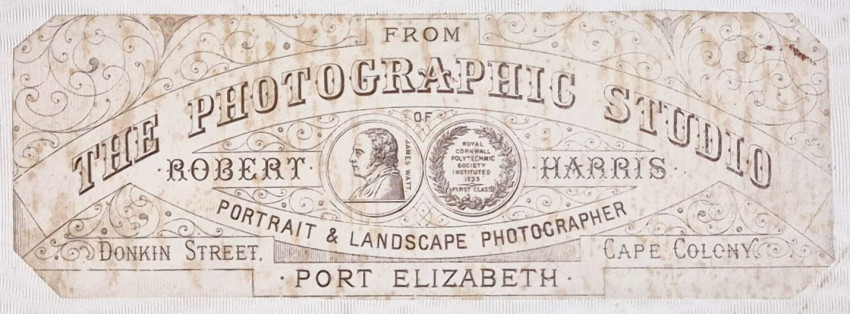
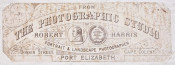
Robert Harris's label on the front free endpaper reads - From the Photographic Studio of Robert Harris, Portrait and Landscape Photographer, Donkin Street, Port Elizabeth, Cape Colony.
'Harris operated from Donkin Street between 1880 and 1894. He is best known for his use of the Woodburytype, a complex photomechanical process that used pigmented gelatin to produce images with no visible grain. This process was expensive and required a high level of technical skill. This album predates his major published work South Africa - illustrated by a Series of one hundred and four permanent Photographs, published in Port Elizabeth in 1888 in a slightly smaller format but with the same diced leather binding. He was a major exhibitor at the 1885 Port Elizabeth Exhibition and the 1886 Colonial and Indian Exhibition in London. Little more in known about Harris and his life and work.
'Charles Reeks was a senior official within the Cape Government Railways (CGR) during a pivotal expansion phase in the 1880s. As the Chief Maintenance Inspector for the Midland System in 1884, he was responsible for the structural integrity and operational safety of the rail network radiating from Port Elizabeth toward the interior. 1884 was an important year for the Midland System. In that year the line from Port Elizabeth finally reached De Aar, creating the first rail link between the Midland and Western (Cape Town) systems. Reeks would have overseen the maintenance of the Main Line which split at Swartkops and ran through Alicedale, Cookhouse, and Cradock. The Midland System was notoriously difficult to maintain due to the steep gradients of the Bankberg and Sneeuberg ranges. Reeks would have managed a large staff of gangers and sub-inspectors to combat the effects of flash floods and extreme temperature shifts on the iron rails. In the rigid hierarchy of the Victorian Cape Civil Service, a 'Chief Maintenance Inspector' was a high-ranking technical officer. Reeks would have reported directly to the System Engineer or the Engineer-in-Chief Henry John Pauling.' (Google Gemini)
- Size: Folio (445 x 380 mm),
.jpg)