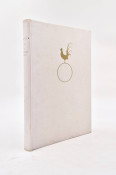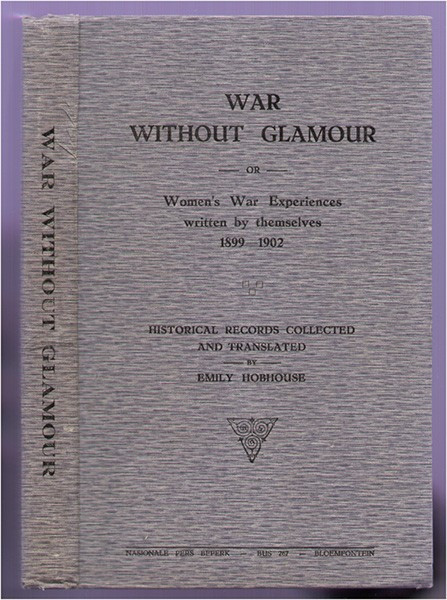
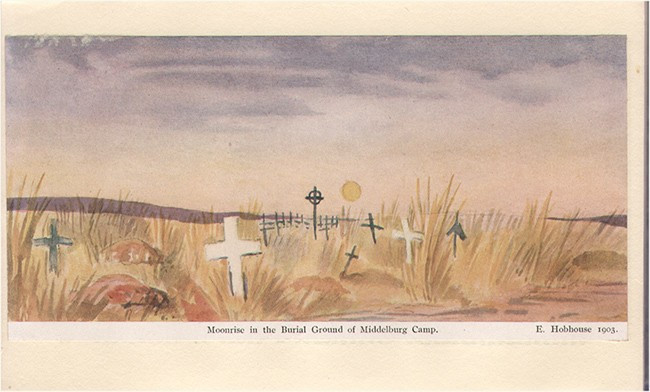
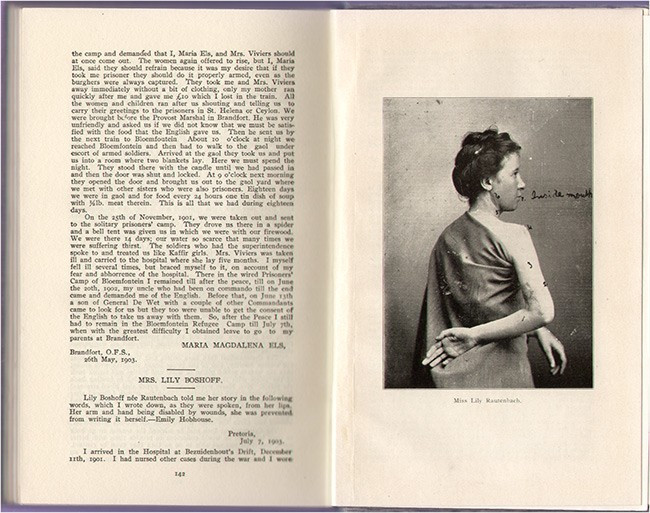
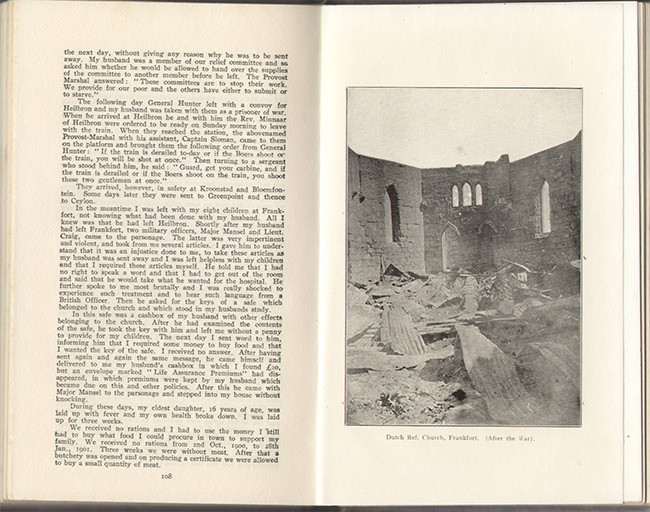
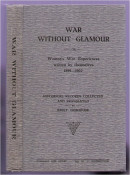
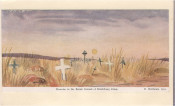
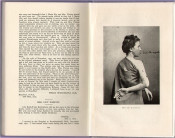
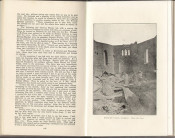
158 pages, 3 tipped in colour plates from paintings by Emily Hobhouse, 10 black & white plates, grey cloth, a very good copy.
From the author's Preface: Nearly half of the records herein collected were written in Afrikaans and have been translated by me, the others written in English have undergone some grammatical changes. I take no responsibility for any opinions expressed in these records, but I offer them to the public in the full belief of the accuracy of the facts, which are endorsed by my personal observations and experience.
Oxford Dictionary of National Biography (https://www.oxforddnb.com/display/10.1093/ref:odnb/9780198614128.001.0001/odnb-9780198614128-e-38520?rskey=hldMws&result=2)
'Hobhouse, Emily (1860–1926), social activist and charity worker, was born on 9 April 1860 at St Ives, in Cornwall......Following the outbreak of the South African War (11 October 1899) Hobhouse became a member of the South African Conciliation Committee, launched on 1 November 1899 with Leonard Courtney as its president, one of a number of organizations formed to combat the often violent ‘jingoism’ of the war's supporters. She was the honorary secretary of its women's branch, formed early in 1900, and organized a number of protests against the war. Anger and concern about the effects of the war increased during 1900, after reports reached Britain of the British army's scorched-earth policy, which drove Boer women and children from their farms to be housed in refugee camps (subsequently described as concentration camps).
'Emily Hobhouse set up a philanthropic committee, the South African Women and Children Distress Fund, to collect money to help the women and children, and, despite the reservations of her friends and family, travelled to South Africa in December 1900 to investigate conditions and to distribute funds. She obtained military permission to visit some of the camps and spent several months travelling between different camps in the Orange River and Cape colonies. She saw at first hand the disease and death, especially of children, that had resulted from overcrowding and lack of food and medical facilities. She worked with local women to improve conditions in those camps to which she was given access, and returned to Britain in May 1901. She travelled back on the same ship as Sir Alfred Milner, the British high commissioner, from whom she was surprised to learn that he had been sent more than sixty reports of her activities in South Africa.
'Hobhouse and other members of her committees campaigned extensively to publicize the conditions in the camps, often against officially orchestrated hostility. She had some correspondence with members of the British government, including St John Brodrick and Joseph Chamberlain, and her report to the South African Distress Fund was published in June 1901. Influenced by Hobhouse, with whom he had had an interview, the Liberal leader, Sir Henry Campbell-Bannerman, asked in a speech on 14 June: 'When is a war not a war? When it is carried on by methods of barbarism in South Africa' (Wilson, 349). Hobhouse's report had become a famous indictment. The government responded by appointing six women as a committee of inquiry into the camps, headed by Millicent Fawcett. Although conditions in many camps had been improved since Hobhouse's visits, the Fawcett committee shared her opinion about the lack of suitable accommodation and the poor organization of the camps, and their report, published in February 1902 (Parl. papers, 1902, 67), made many of the same recommendations that she had made almost a year earlier.
'Emily Hobhouse was refused membership of the committee, and when she tried to re-enter South Africa in November 1901 was not allowed to land, and was forcibly transferred to another ship and deported. She returned to South Africa in 1903 and set up various resettlement and rehabilitation projects, including the establishment of industrial schools for lace-making, spinning, and weaving, and in 1907 was appointed an adviser to manage public funds for the schools. Her co-worker and the honorary treasurer of the Boer Home Industries was the Quaker Anna Ruth Fry (1878–1962), who compiled the first of the three memoirs of Hobhouse's life (1929).
'She published three accounts of the South African War: War without Glamour, or, Women's War Experiences Written by Themselves, 1899–1902 (1924); The Brunt of the War and where it Fell (1902); and a translation of the diary of Alida M. Badenhorst, Tant'Alie of Transvaal (A.M. Badenhorst): her Diary, 1880–1902 (1923).
'Emily Hobhouse contracted pleurisy after a long illness and died in London on 8 June 1926.
- Overall Condition: Very good
- Size: 8vo (250 x 160 mm)