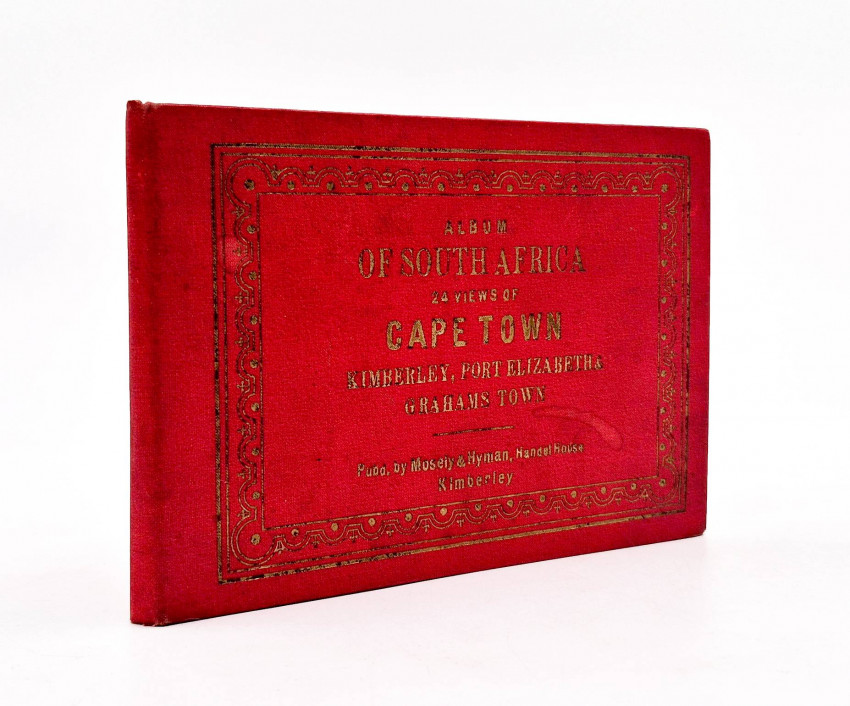
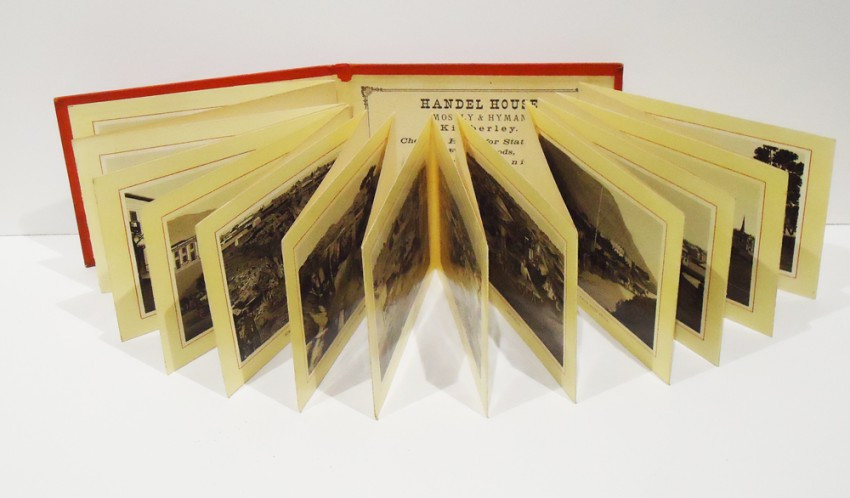
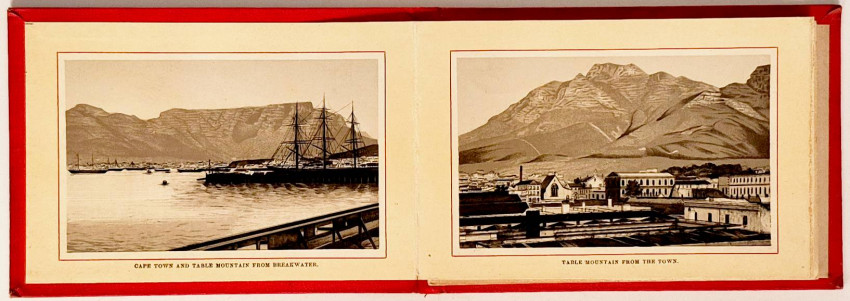
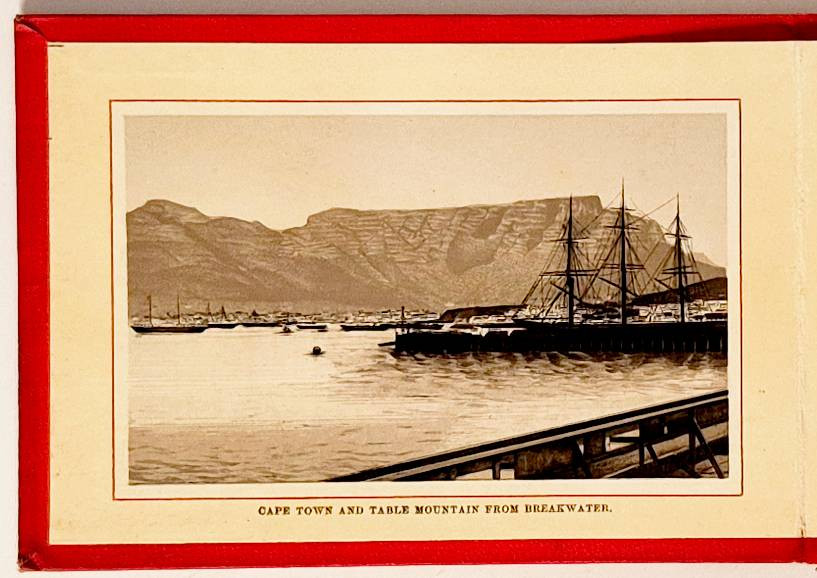
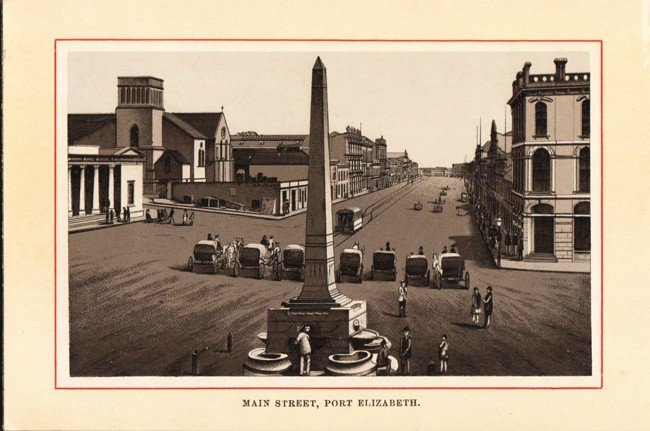
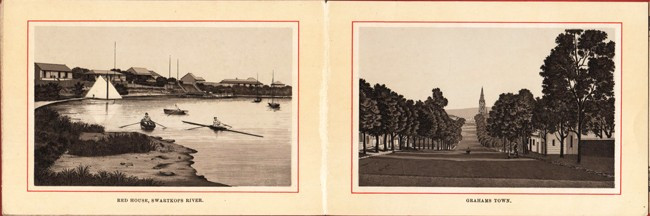
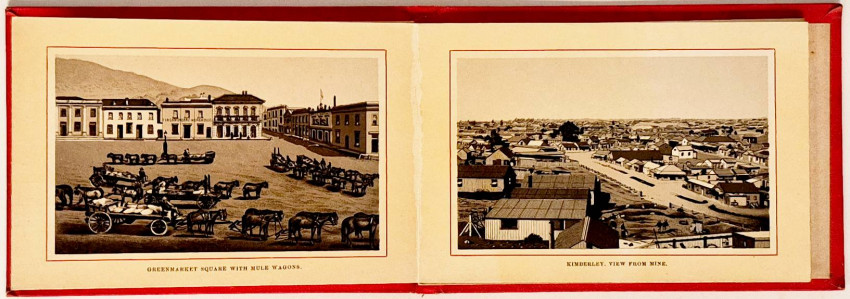
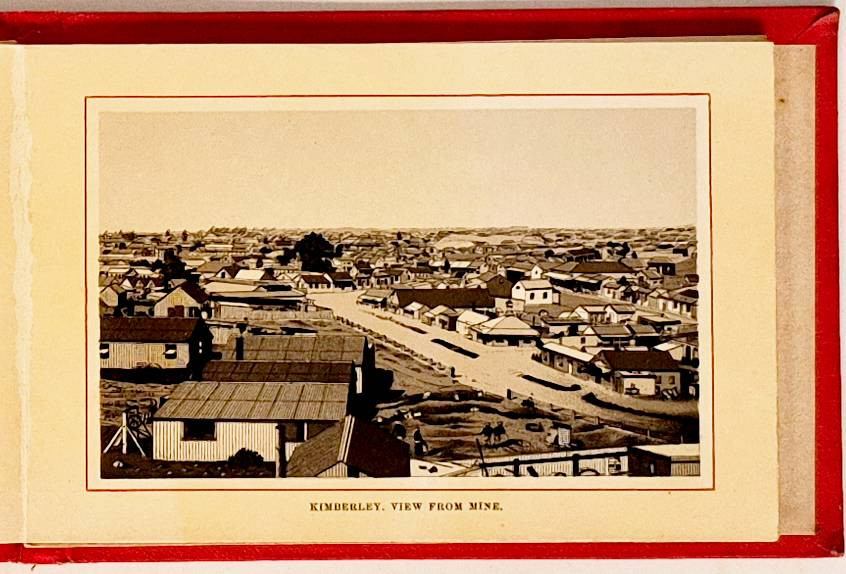


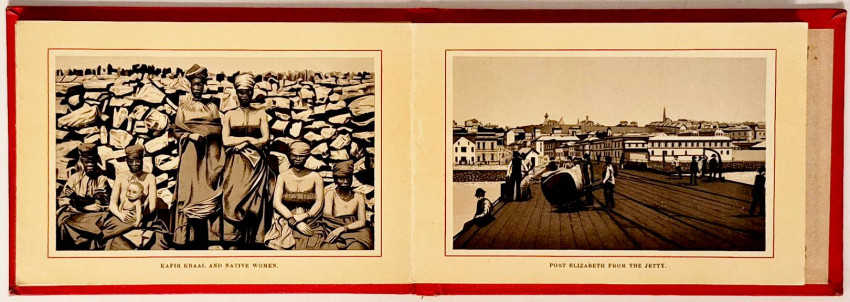
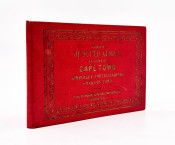
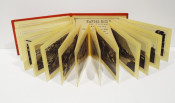
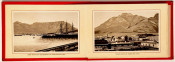
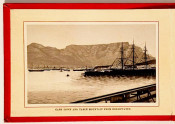
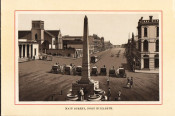
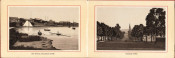
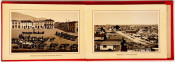
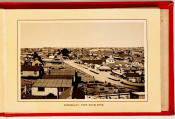
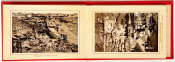
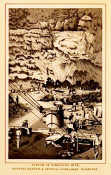
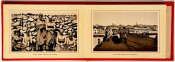
24 lithographically printed and varnished images from photographs on a fold-out concertina strip 3.2 meters long which folds into red cloth covers titled and decorated gilt on the upper cover.
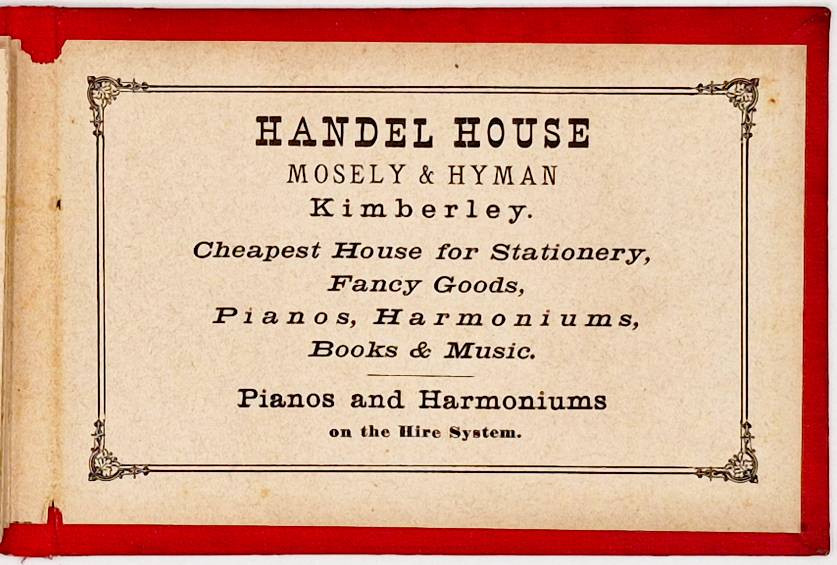
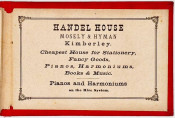
An advertisement appears on the rear paste-down endpaper for Handel House, Mosely & Hyman, Kimberley, Fancy Goods, Pianos, Harmoniums, Books & Music. Pianos and Harmoniums on the Hire System.
A South African Bibliography, Volume 5. Supplement, page 9, lists two similar albums (one copy of each) with selections of images from other cities and towns but not the present album.
These albums of glazed photo-images, sometimes called leporello albums after the concertina style of binding which was first used in German music publishing, were printed in Germany and sold to various commercial firms in South Africa whose names appear as the nominal publishers.
The name comes directly from Mozart's opera Don Giovanni. In the opera, Leporello is the servant of Don Giovanni. During the famous "Catalog Aria", Leporello dramatically unrolls a long, accordion-folded paper list documenting his master's 2,065 romantic conquests.
The panoramic landscapes, cityscapes, or historical scenes were printed using early stone lithography or multi-coloured chromolithography. This technique allowed for exceptionally fine details and soft tonal gradations.
After printing, a layer of high-gloss spirit varnish or lacquer was applied directly over the images. This shellac-like layer gave the printed scenes a deep, luminous sheen—closely mimicking the appearance of contemporary glass-plate photographs (like albumen prints)—while protecting the ink from moisture and handling.