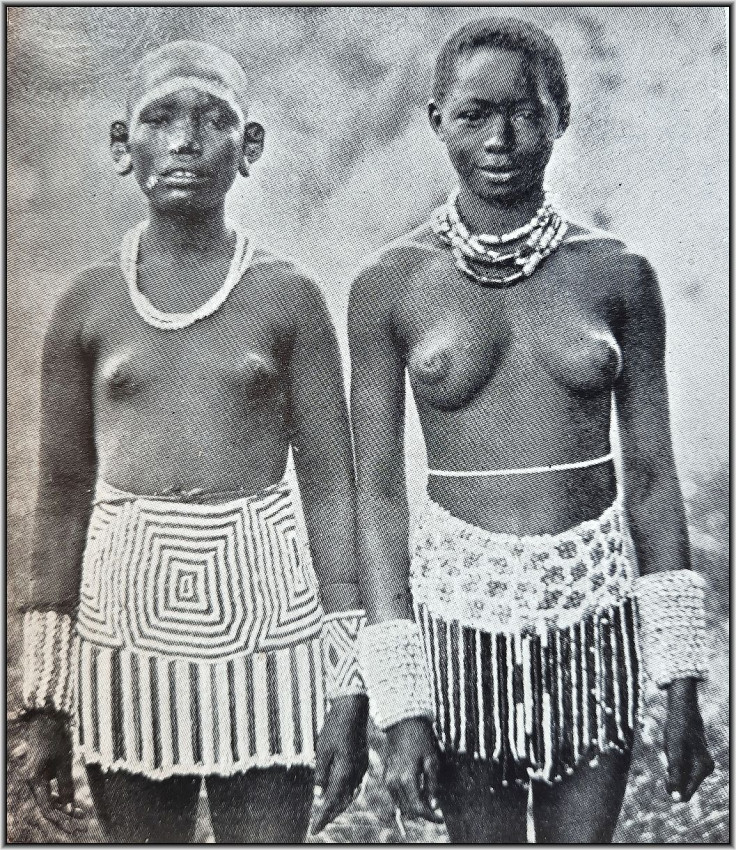
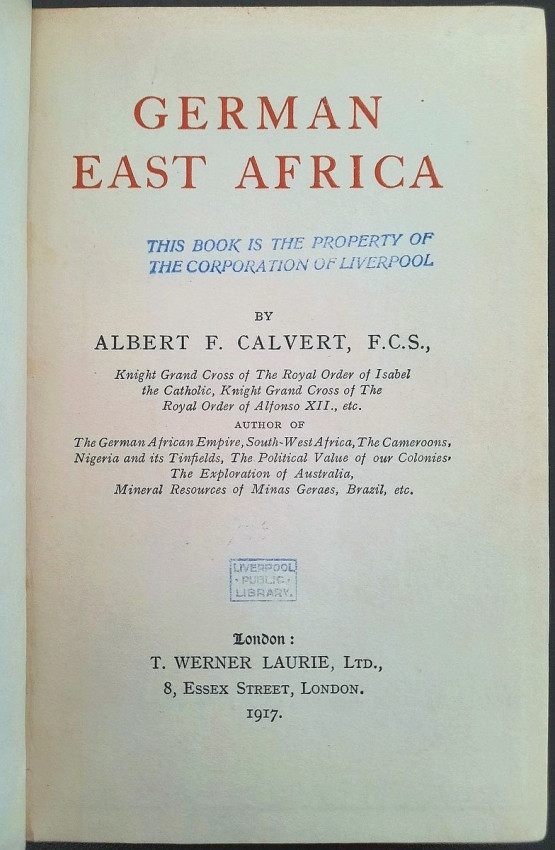


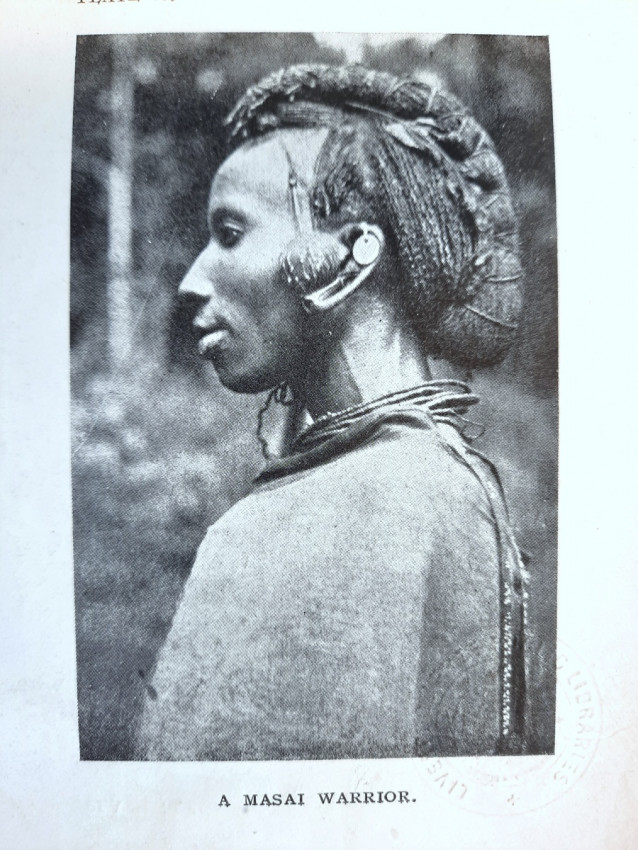
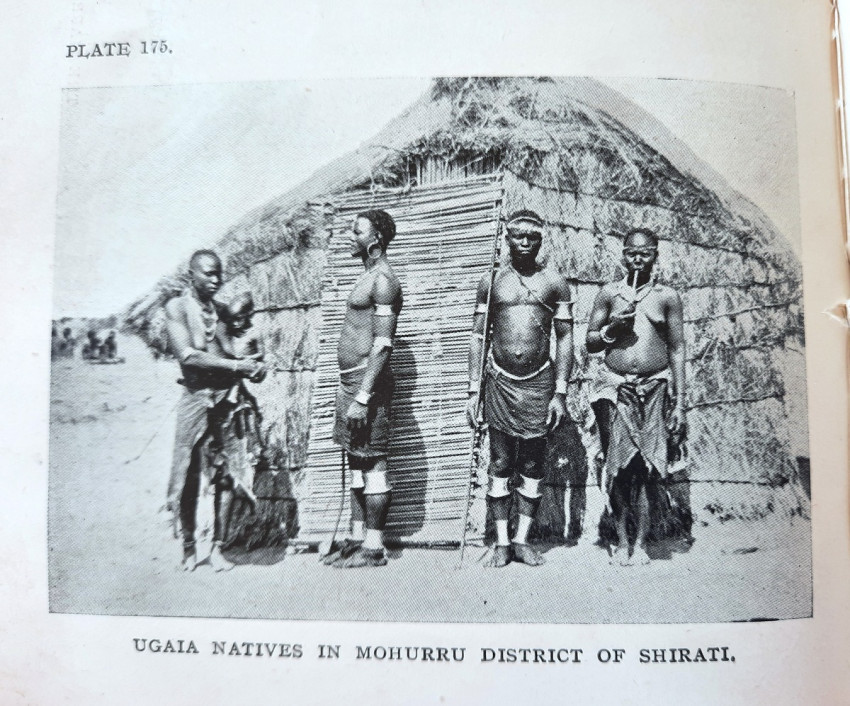

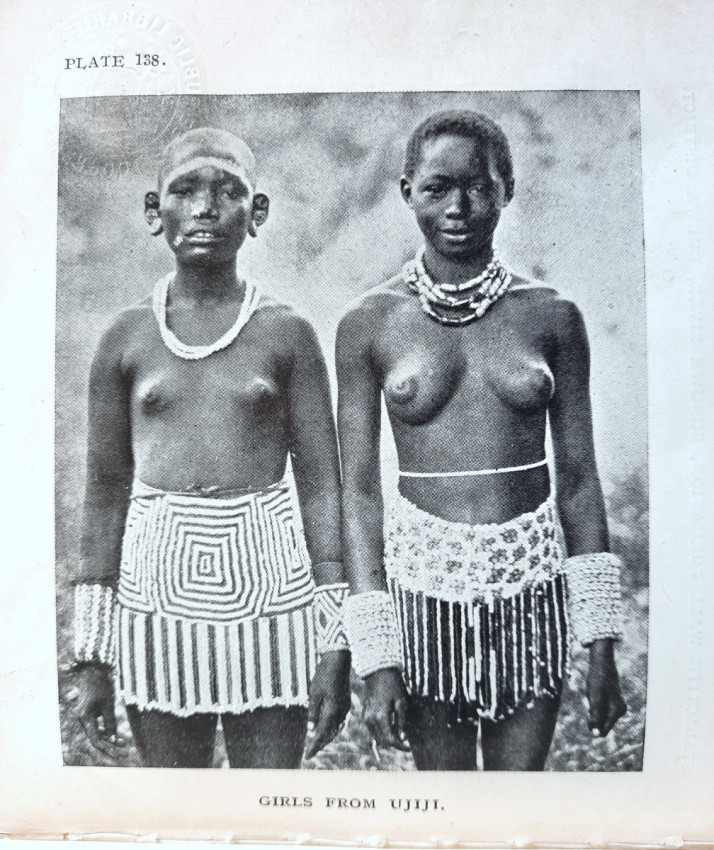
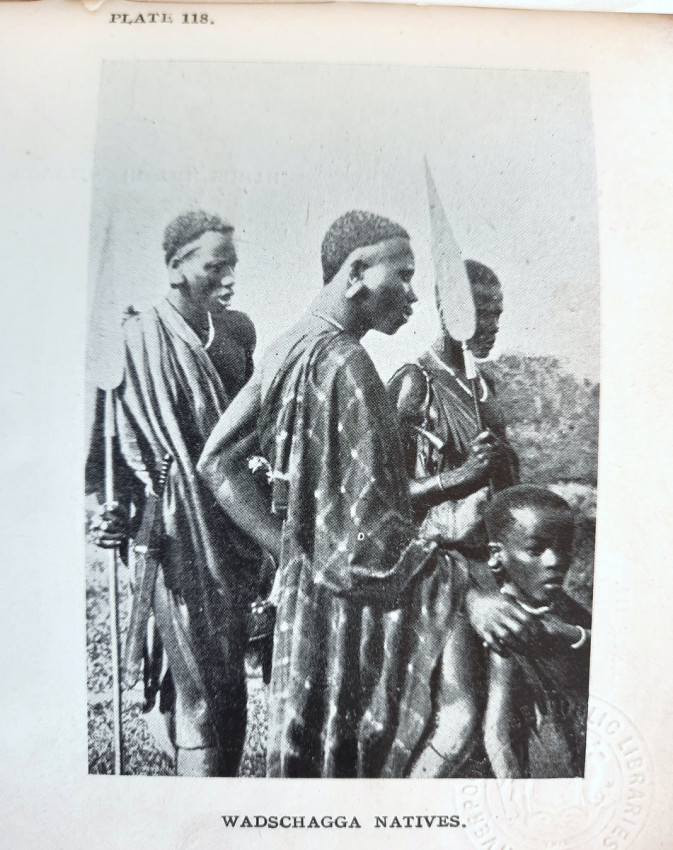
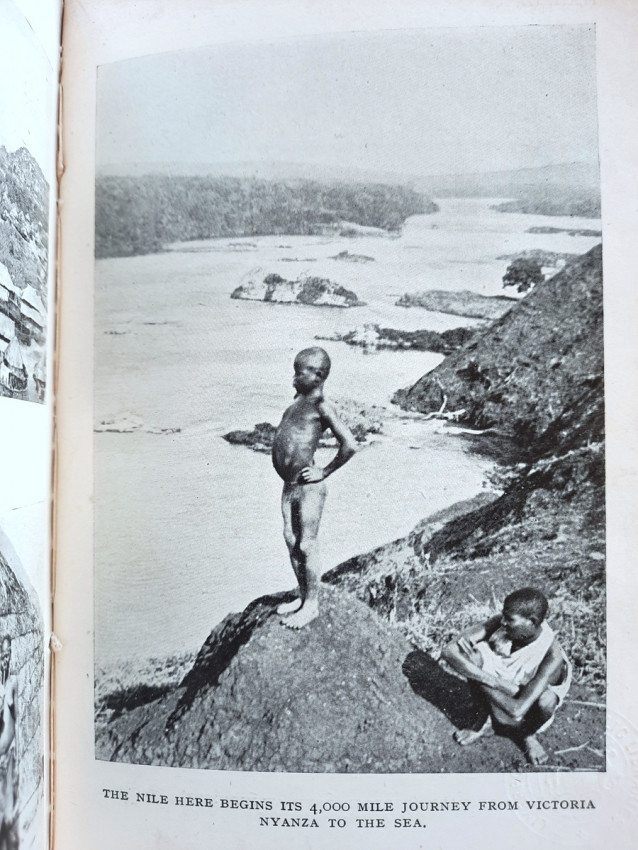
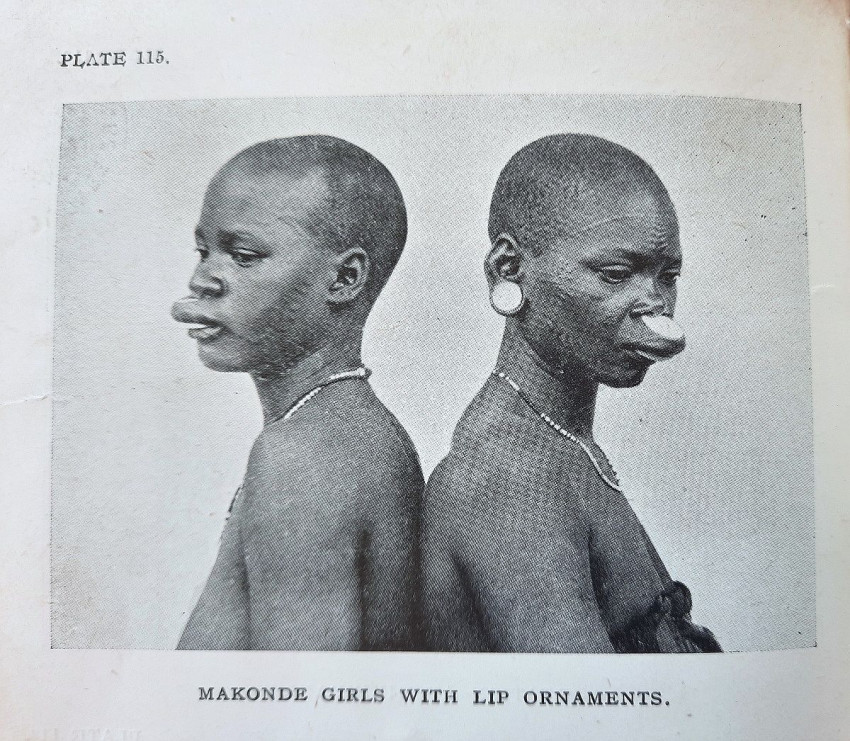

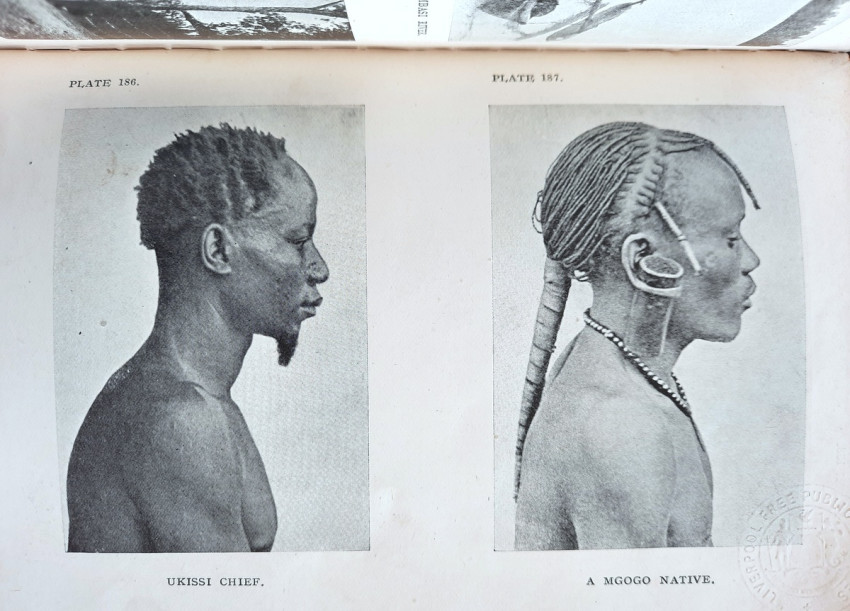
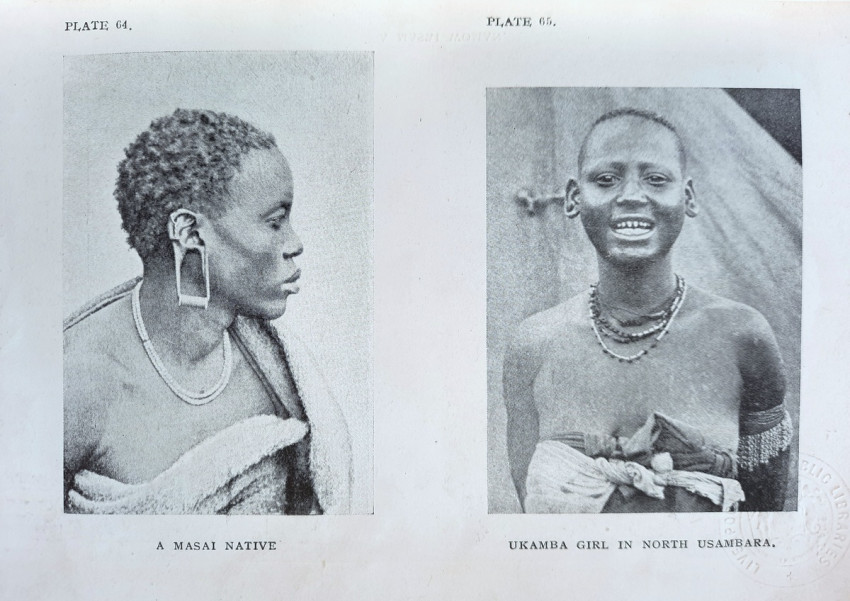
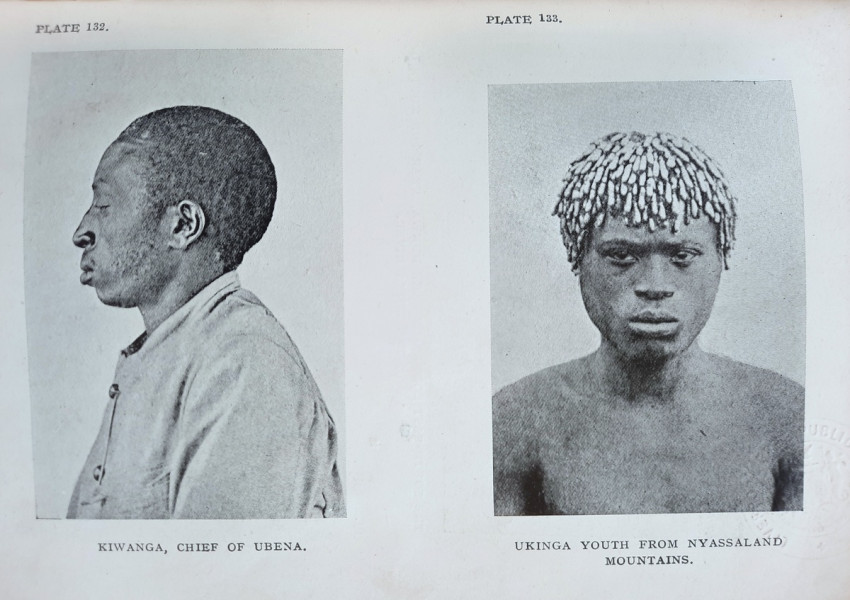


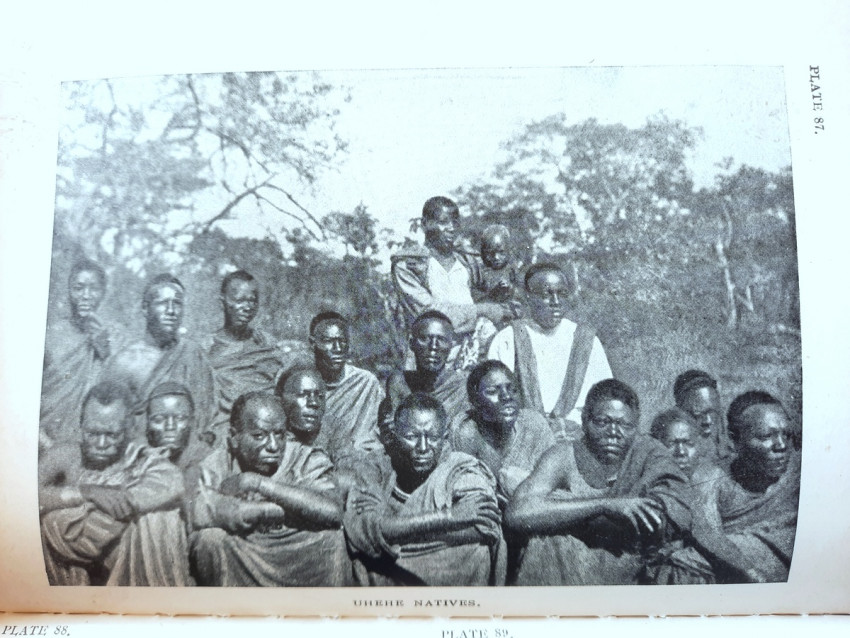
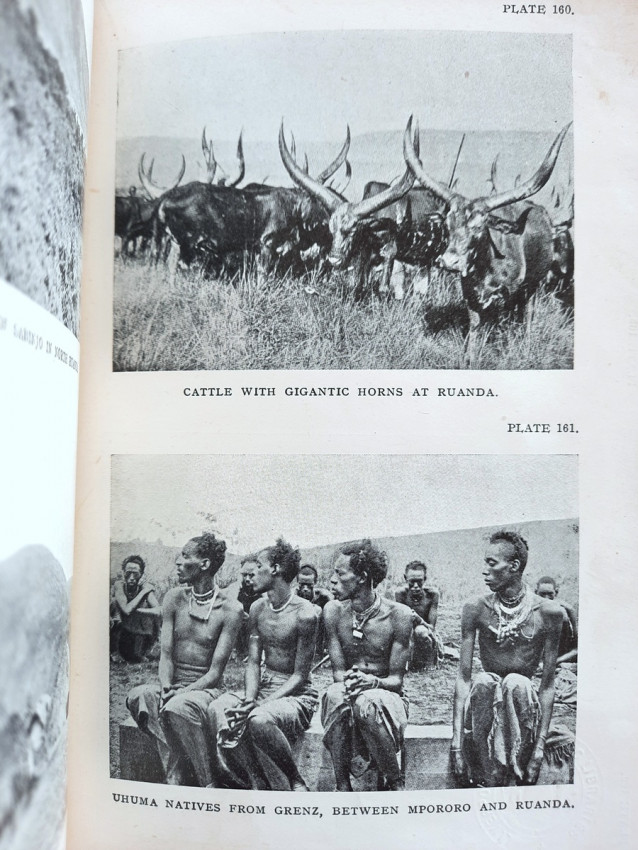
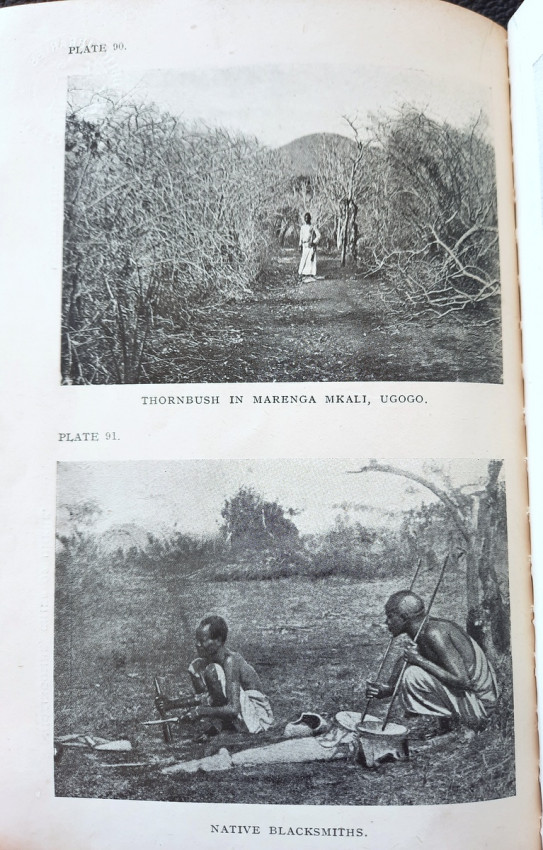
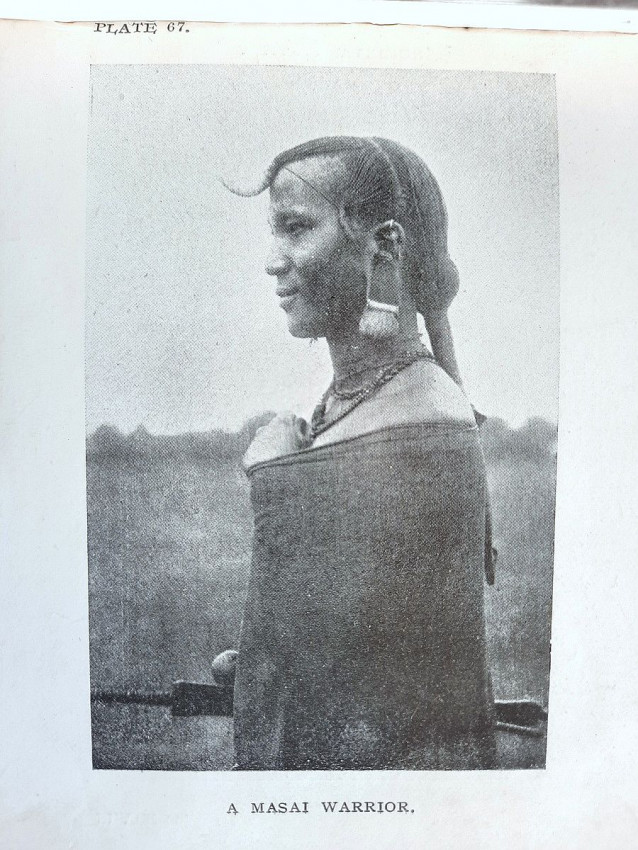
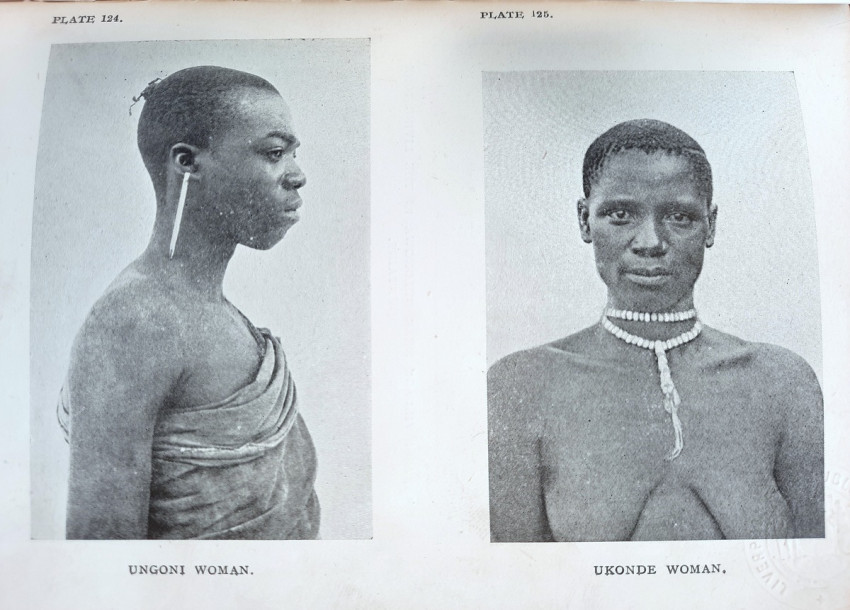
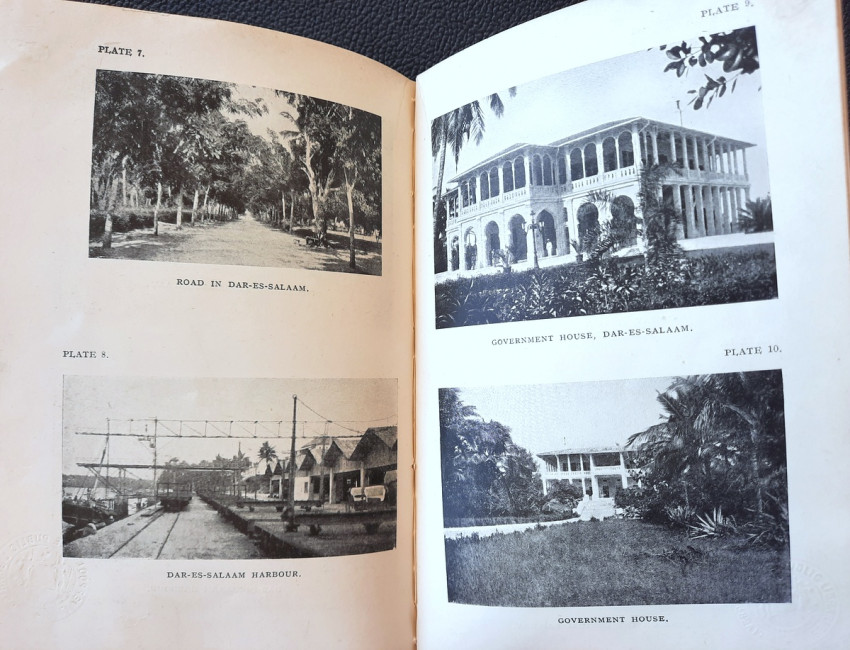
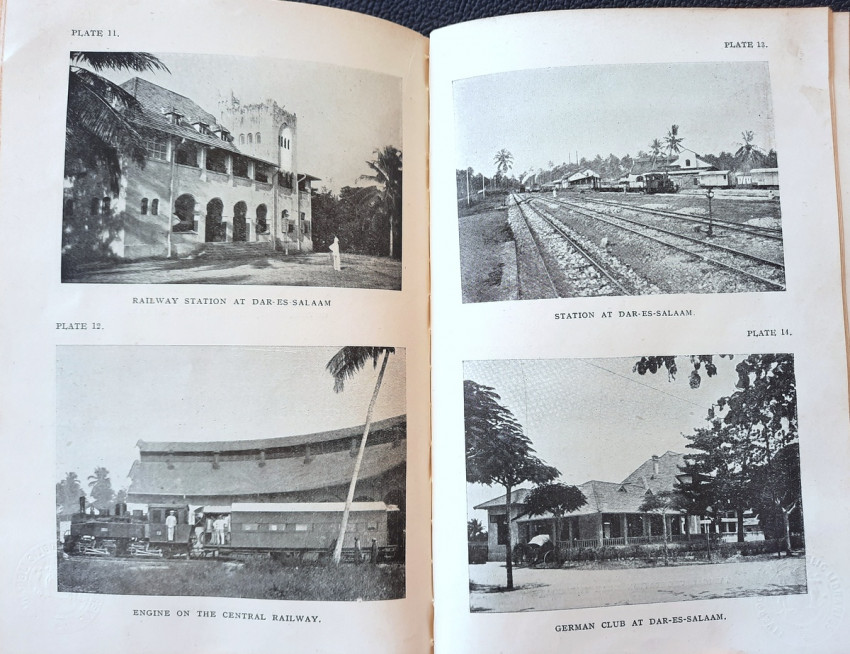
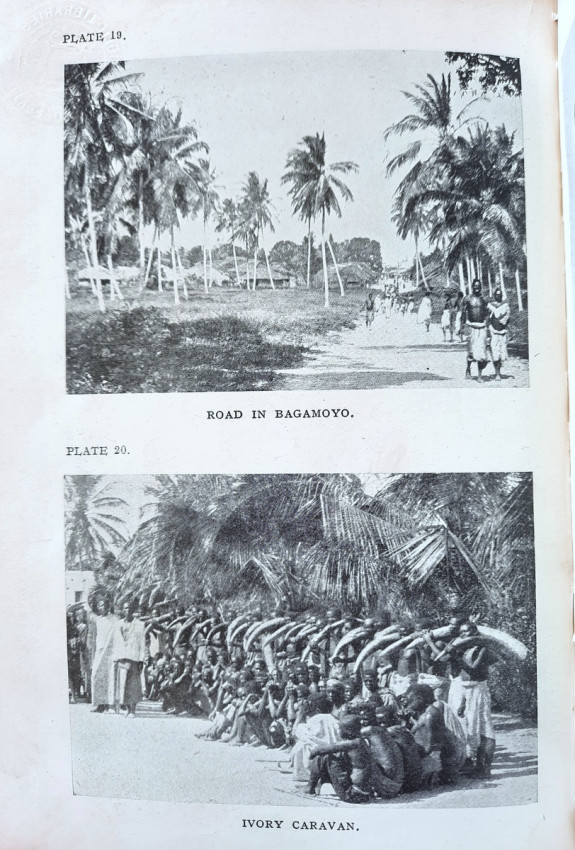
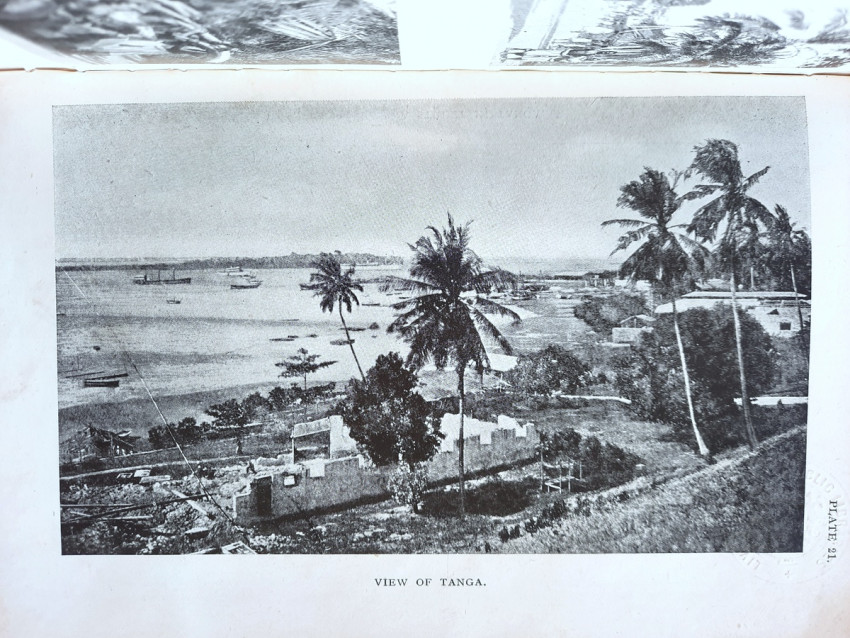
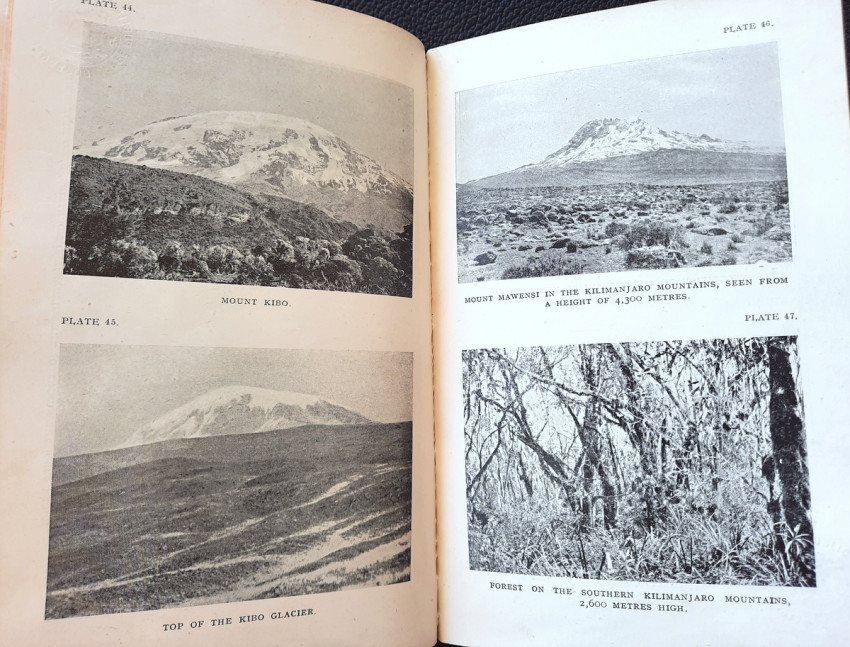
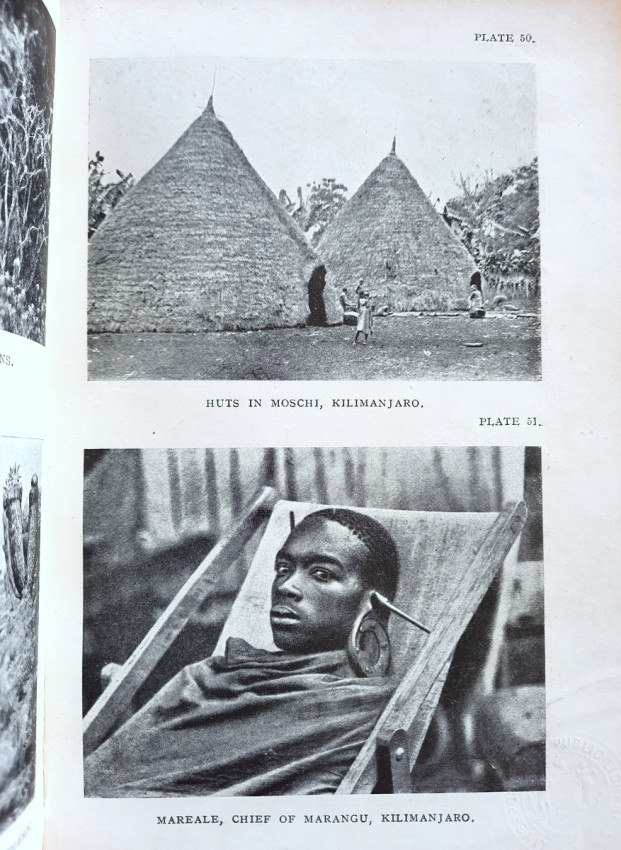
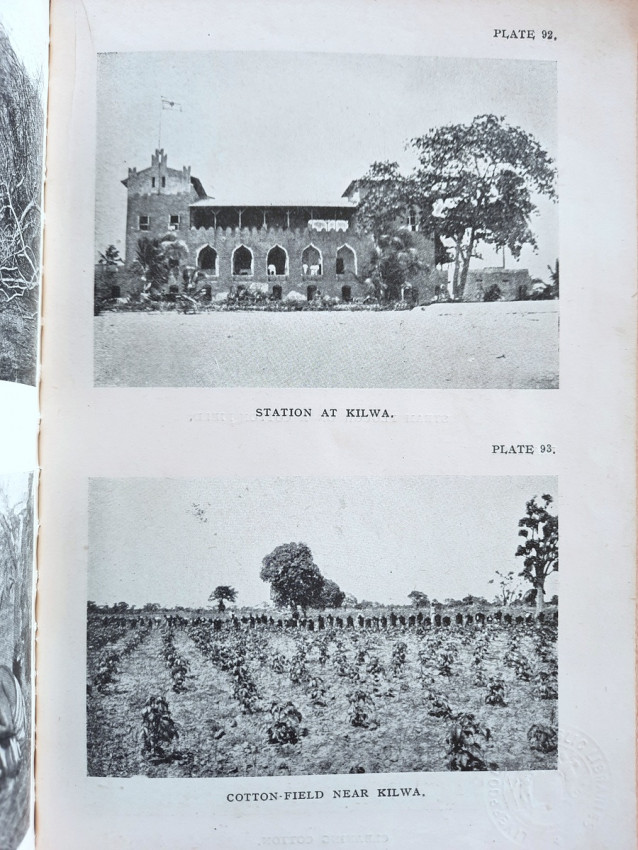
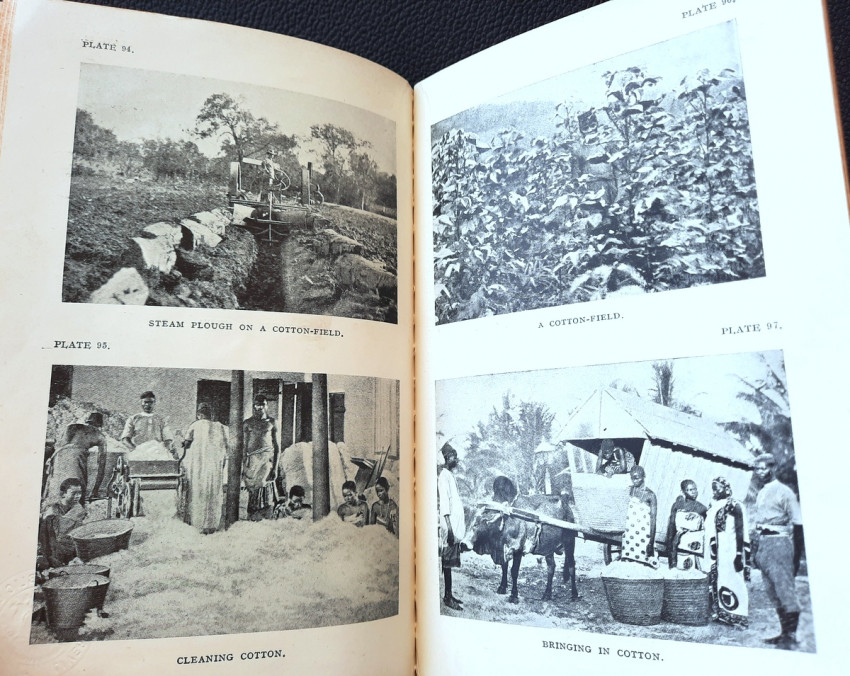
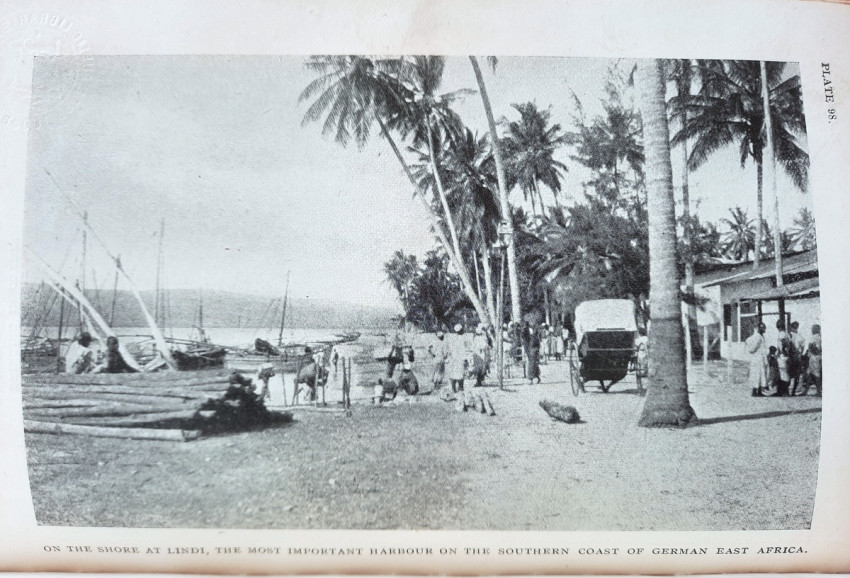

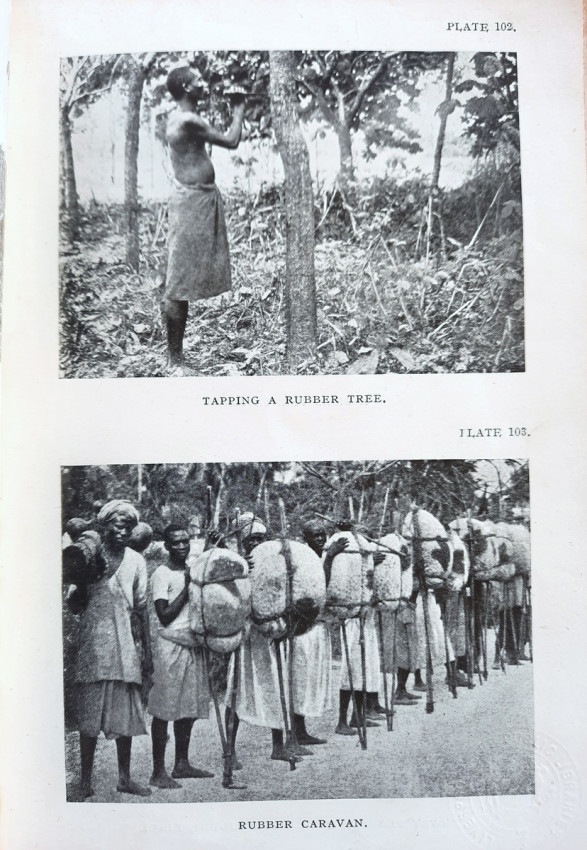
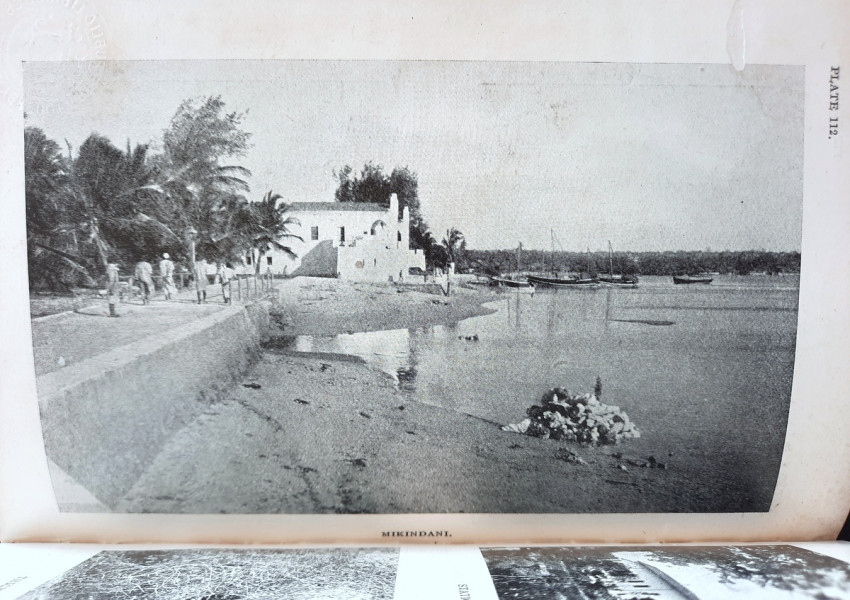
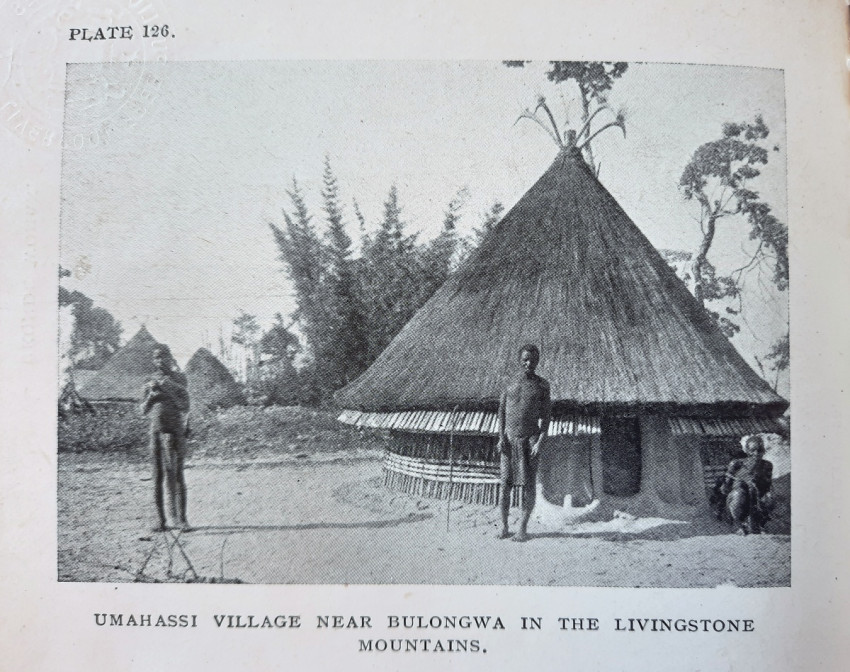
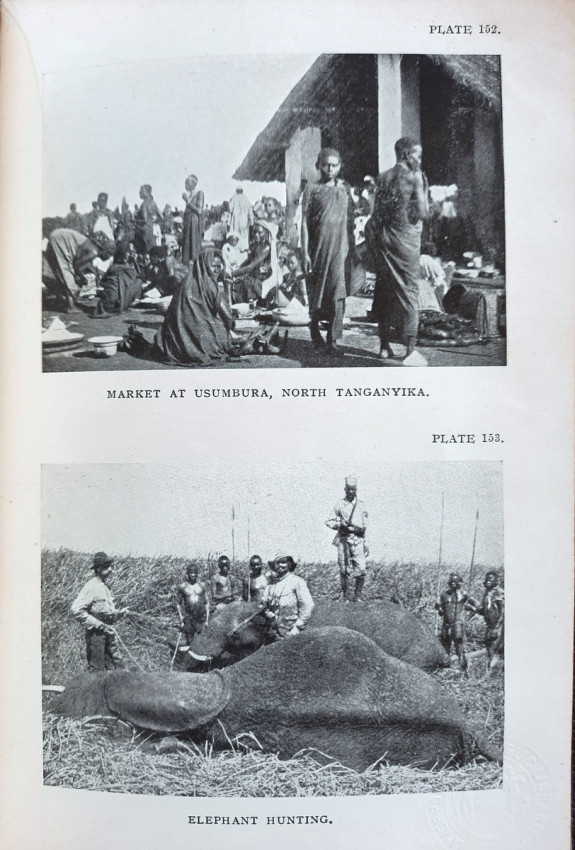
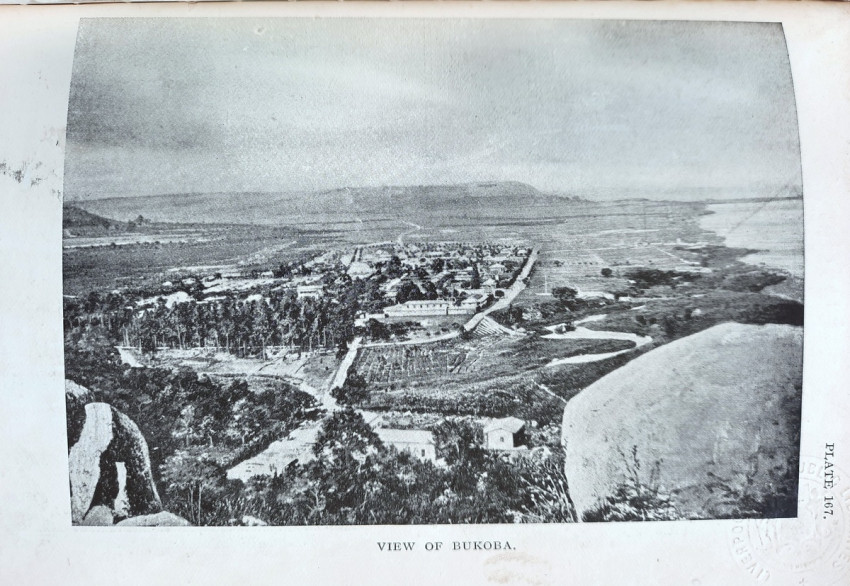

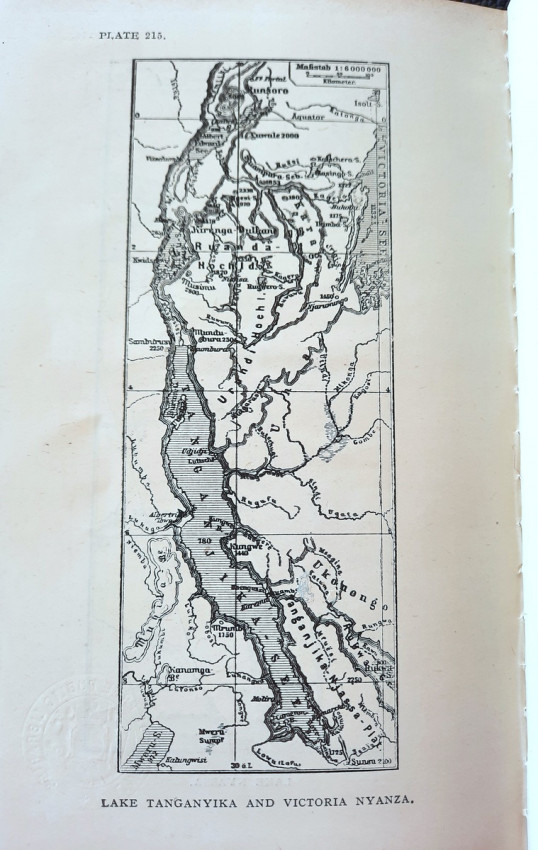
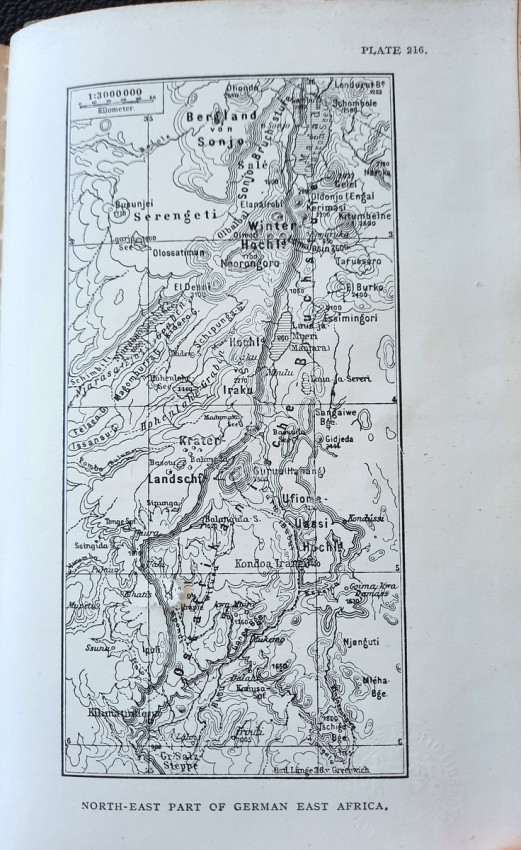

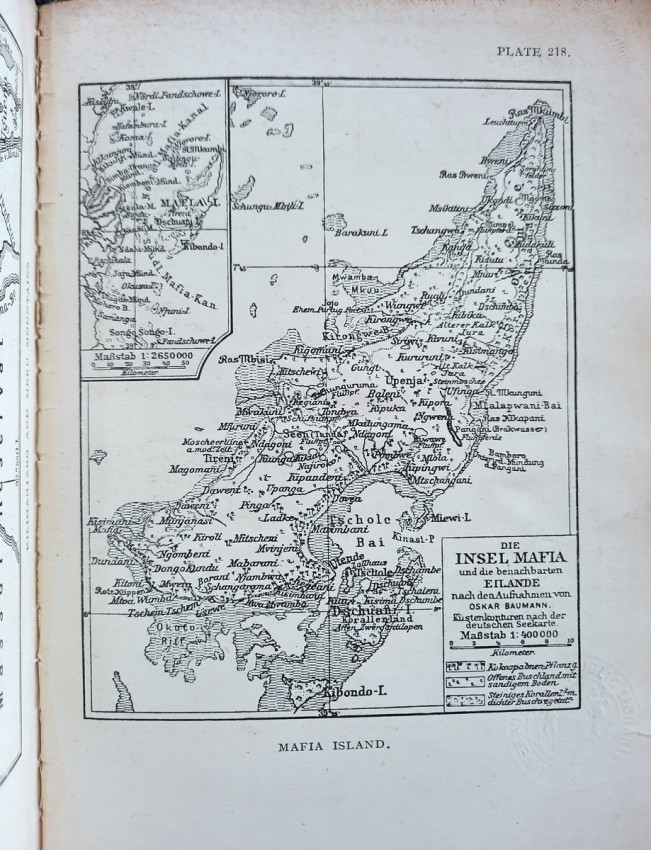
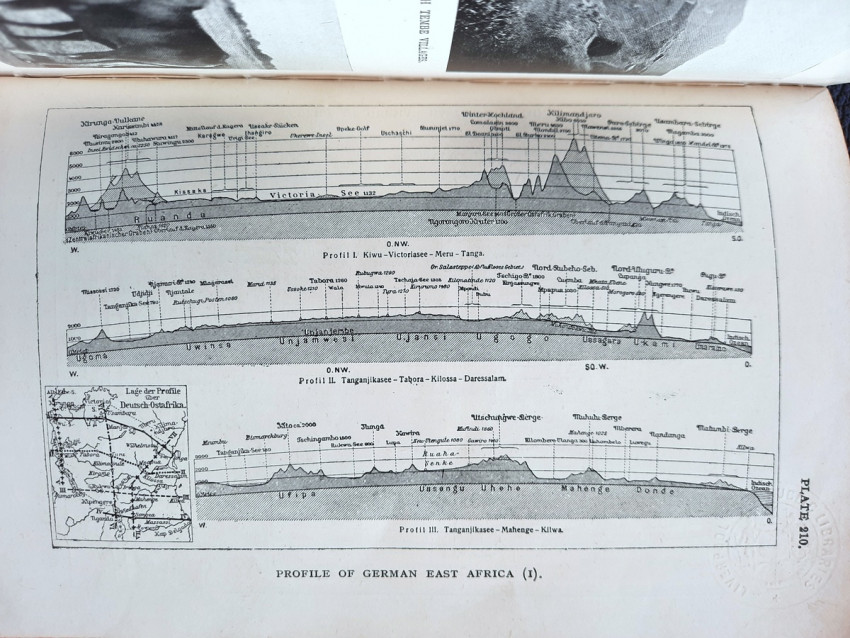
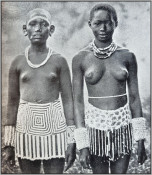
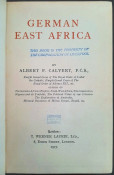
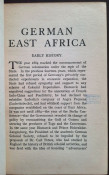
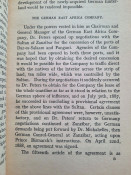
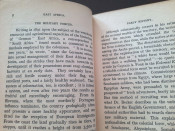
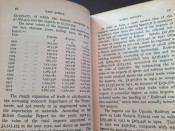
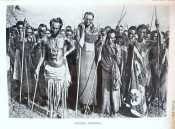
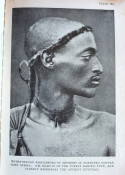
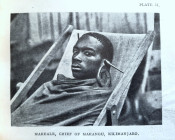
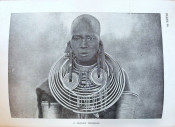
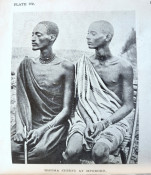
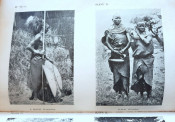
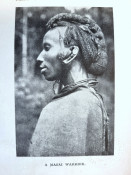
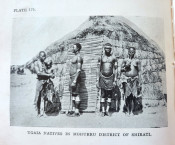
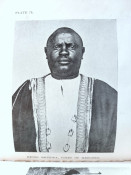
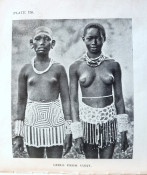
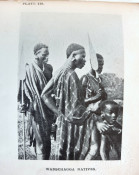
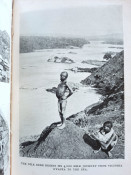
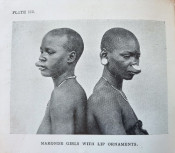
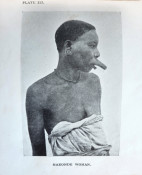
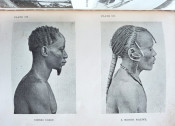
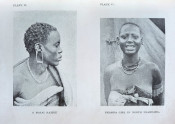
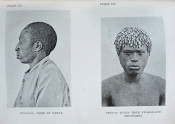
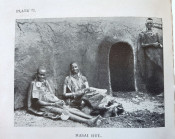
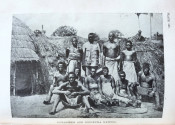
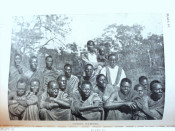
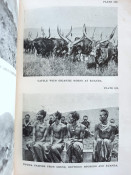
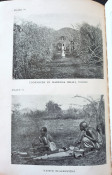
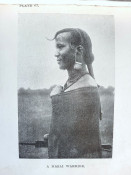
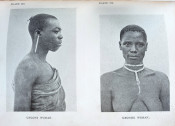
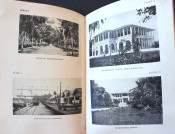
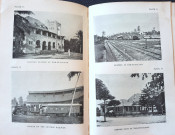
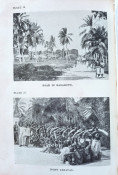
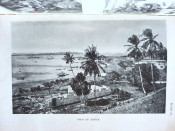
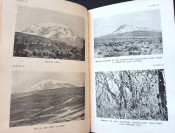
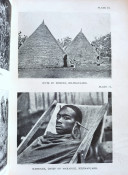
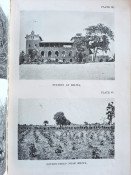
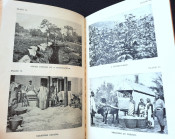
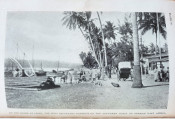
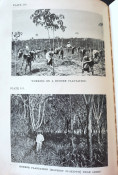
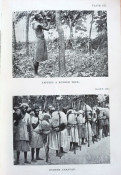
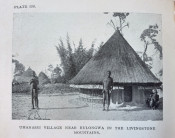
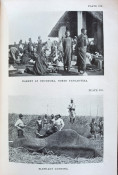
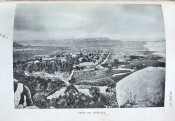
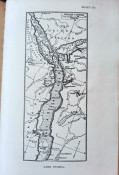
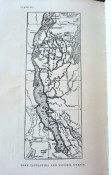
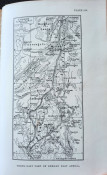
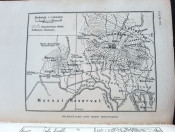
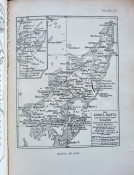
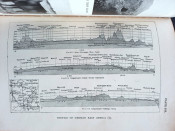
One of the most important reference sources on the German East Africa, a compendium compiled by Albert F. Calvert, gives a complete overview about German East Africa until 1917. This scarce work consists of nine chapters on 122 pages and 219 photographic plates on glossy paper at the rear (full page plates or two plates per page), including the 4 plates with profile diagrams and 6 maps. Plates includes many photos of native tribes and their chiefs, native women, hunting scenes, local life and tribe's customs, native and colonial settlements, plantation work scenes, etc.
CONTENTS:
- Early History;
- Physical Features of the Protectorate;
- Plantation Cultivation;
- The Organisation of Experimental Work;
- Mining and Minerals;
- Native Population, Labour and Education;
- Railway Development;
- Lake Tanganyika;
- The Usambara Line.
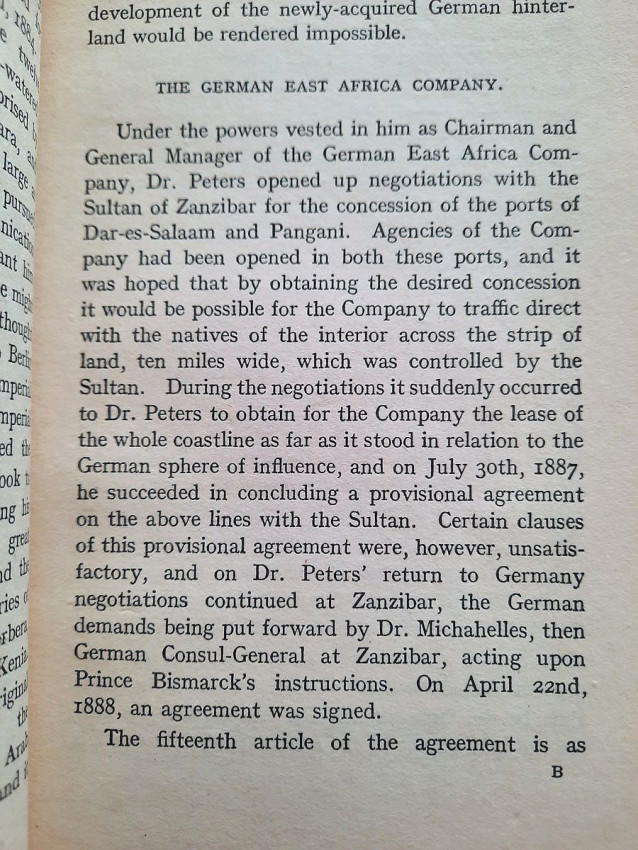
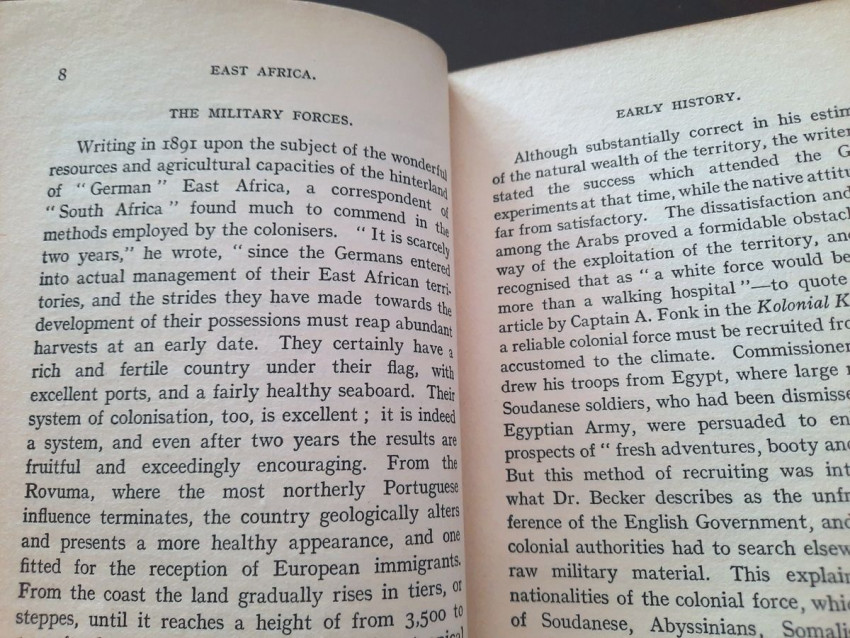
- The chapter "Early History" contains a short sections "German East Africa Company" and "The Military Forces" with descriptions of important aspects on these topics;
- The chapter "Mining and Minerals" contains the sections "Future of the Gold Industry", "The Mica Deposits" and "Coal and Iron".
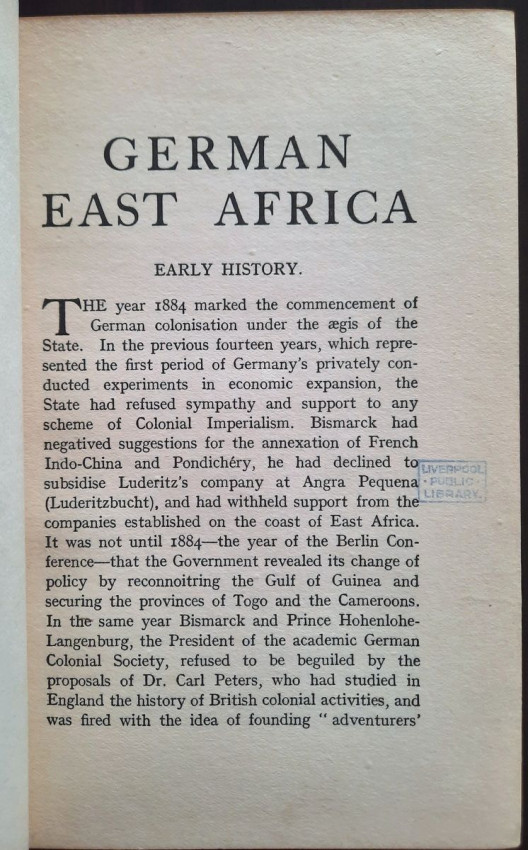
"The creation of a German colony in East Africa was the conception of a private individual, and he embarked upon the enterprise with a privately subscribed capital of less than £10,000. The scheme was submitted to Prince Bismarck, who not only refused his support, but went out of his way to announce that the State would not be responsible for the life of the private individual or for the safety of any property he might acquire on the African mainland opposite the Island of Zanzibar. Why should the Imperial Chancellor, who was responsible for the seizure of South-West Africa, the Cameroons and Togoland, have been so scrupulously careful to discountenance any extension of Germany's African Empire on the East Coast? It may be that he had no faith in Dr. Carl Peters, and anticipated the failure of his mission, or he may have felt that it was too soon to reveal his designs regarding a region in which British influence was paramount. Whichever explanation may be correct, Bismarck washed his hands of the intrepid adventurer and his affairs, and called Europe to witness the correctness of his attitude. He unbent somewhat towards Dr. Peters when he returned to Berlin in 1885 with a sheaf of treaties, which caused him to be recognised as the lessor of a territory as large as Southern Germany, and the Imperial Charter which was conferred upon his German East Africa Company shortly afterwards bore the signature of Bismarck under that of the Emperor...
In 1899 Commissioner von Wissmann was sent out to raise a force of Zulus and Soudanese, wherewith to pacify the natives. The Reichstag passed a new law purporting to have for its object the suppression of the slave trade in East Africa, and the sum of £100,000, which was voted for the enforcement of the measure, went to finance von Wissmann's campaign. The Commissioner tackled his task with amazing vigour and thoroughness, but, even with money and mercenaries at his command, the revolt would not have been stamped out by the end of the year if Great Britain - always ready to ally herself against the slave traders - had not despatched a squadron to co-operate with the German fleet in establishing a blockade of the Zanzibar coast. Having restored order in the disaffected districts, the German East Africa Company, in 1890, proposed to ratify all agreements covering the territories already acquired, by the payment of a further sum of £200,000 to the Sultan. The negotiations were conducted by the representatives of the Company, and it was not until the Reichstag passed a credit of £525,000 for the completion of the purchase and the maintenance and development of the new " colony " that England awoke to the fact that a territory with an area of some 364,000 square miles had been made a protectorate of the German Empire...
In the following pages I have not considered it necessary to devote much space to the examination of the missionising efforts of the German administrators. My purpose has rather been to describe, for the benefit of future British settlers, traders and investors in Germany's East African colony, the nature and resources of the territory that General Smuts and his army are acquiring for the Empire, and the lines upon which the German authorities have developed them, in the past thirty years, at a calculated outlay °f £50,000,000. Dr. Peters, who, having served his purpose as the cat's paw of the Chancellor, was recalled and disgraced in 1895, was tolerably conservative in his estimate of the value of the territory he had acquired for the Fatherland. "Take it all in all," he wrote, "it is not a colony of the first class. As a whole, it maybe described as a good agricultural country"."
(from the "Preface" by the Author)
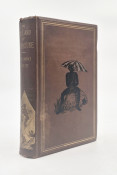
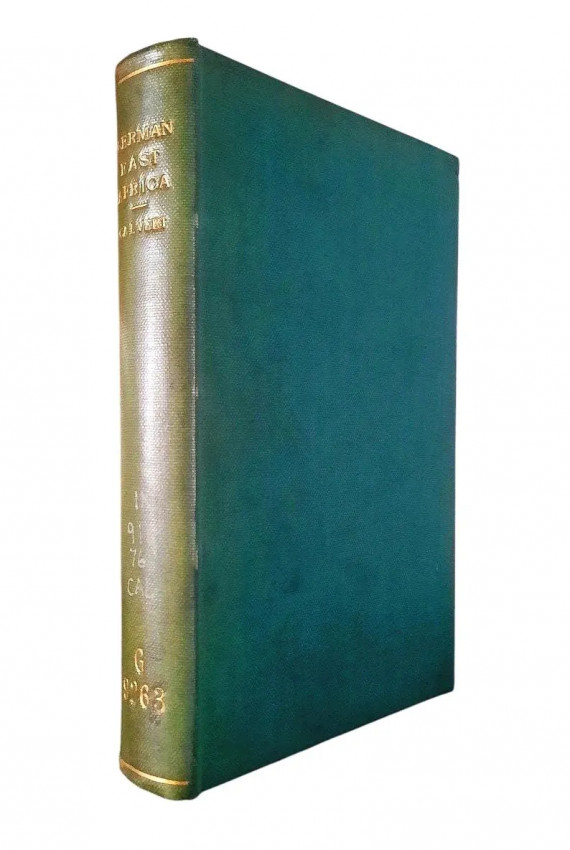
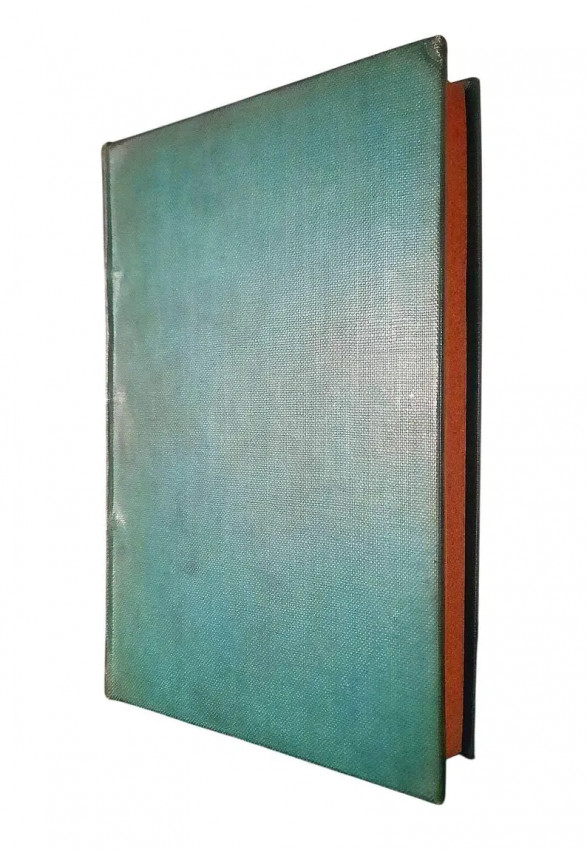
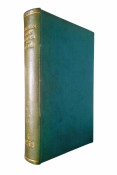
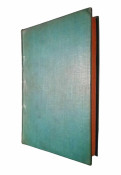
Publisher's green cloth hardcover. Gilt title to the spine; Text in Englich; Collation - Title page, xxix, 122 pages, with 219 plates (photographic illustrations, maps and profile diagrams) on 132 pages. Frontispiece missing; Ex-library copy with library number to the spine and blind stamp to the rear board, library label to the rear paste down. Library stamps to the half-title and title page, several small library stamps to the white margin of the text block. Binding is tight, firm and secure, with minor shelf wears and wears from the use. Some rubbing, extremities little bumped, minor discolouration and stains to the boards and spine. Joints and hinges are perfectly whole and secure. Text block/pages clean and very bright, no foxing or markings throughout, with slight yellowing more to the margins. Plates with occasional fingerprints and a few minor surface tears. All plates with a library blind stamp. A sound copy.
IMPORTANT informations regarding shipping: Shipping to South Africa possible via national post ($40) or Fedex/DHL Express service ($80-120). Shipping to EU & UK via registered Airmail trackable parcel ($30-40). Shipping to US via DHL/Fedex ($80-120). For other countries please ask.
- Binding Condition: Very good
- Overall Condition: Very good
- Size: 18,5 x 12,5 cm