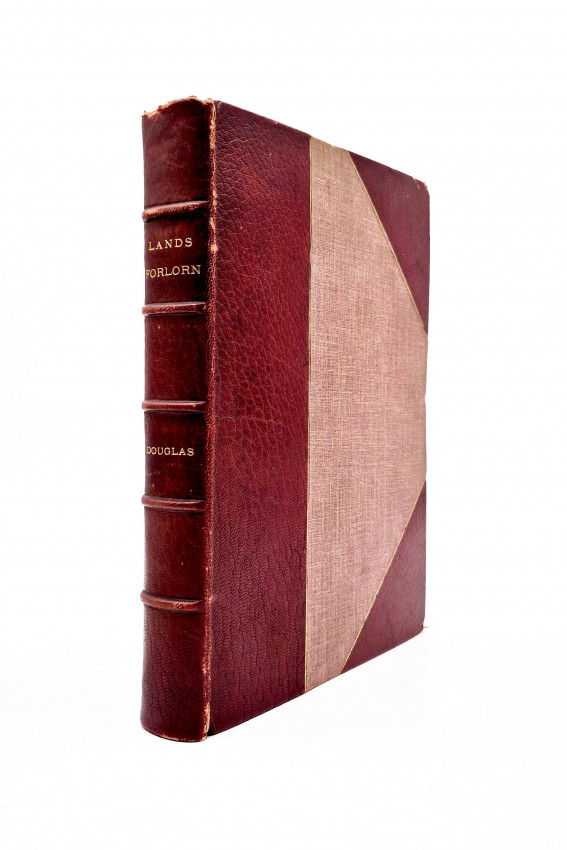
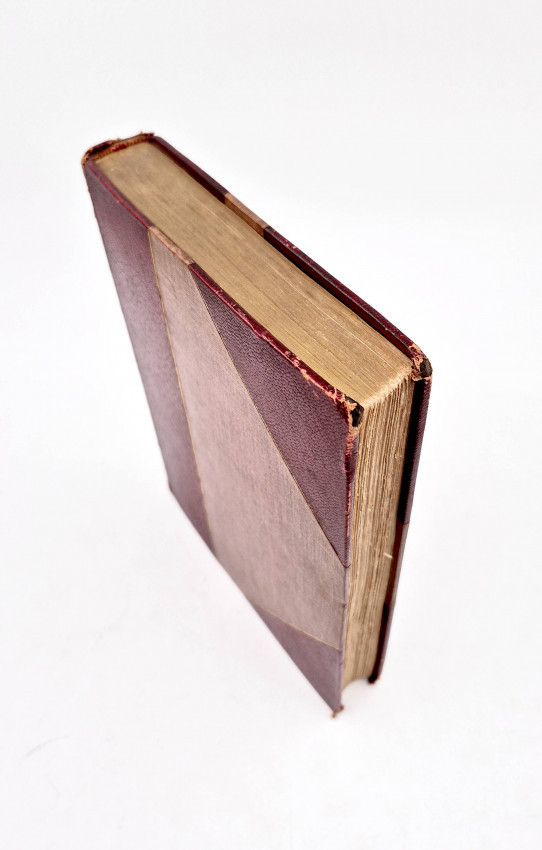
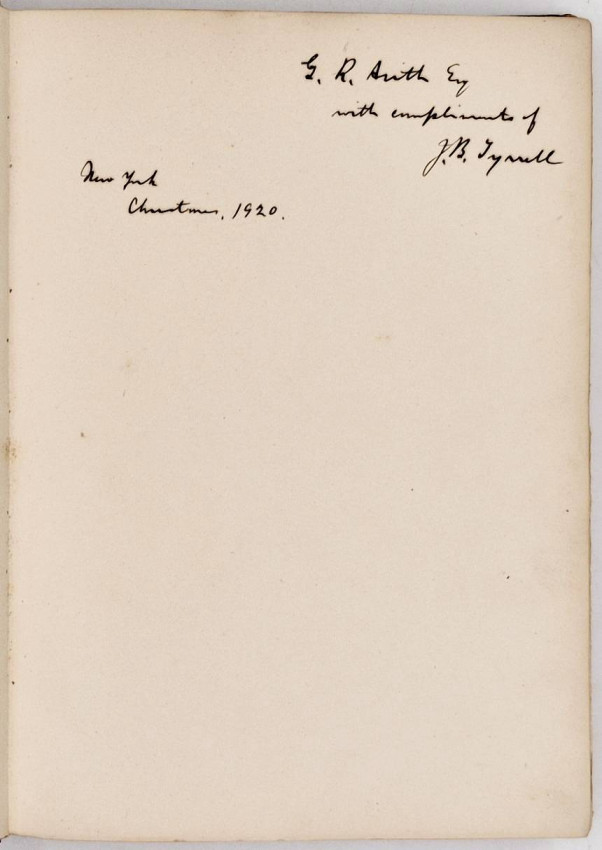
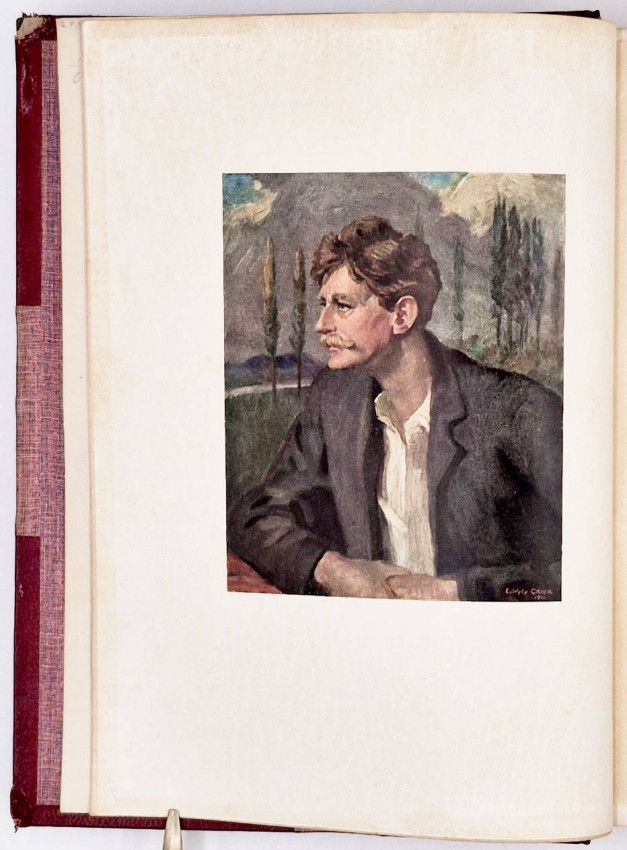
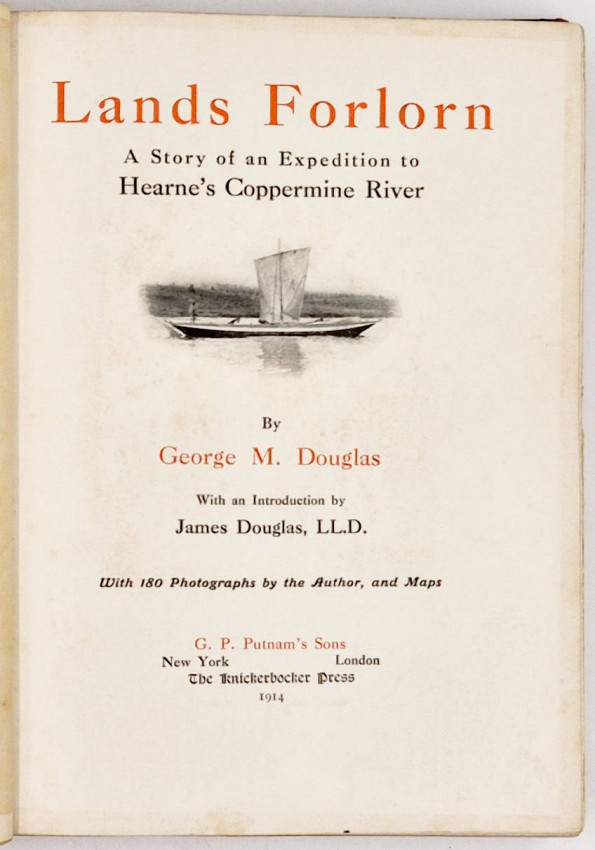
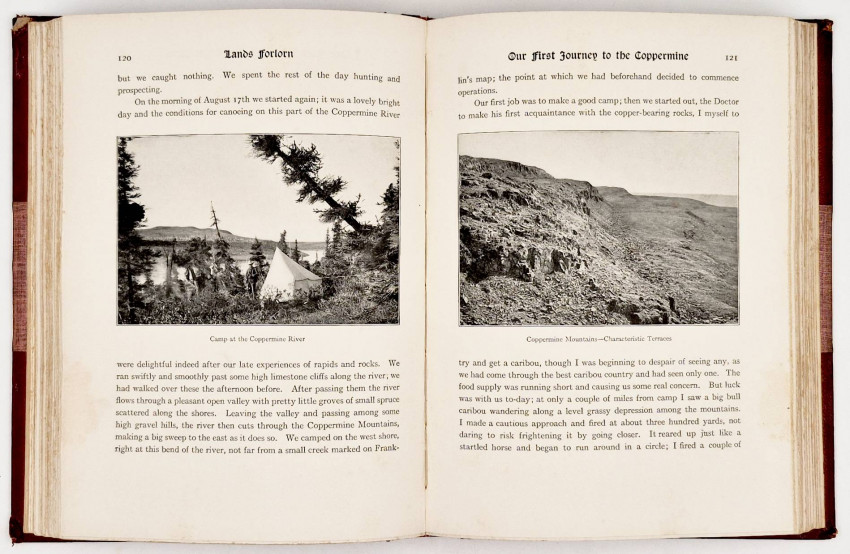
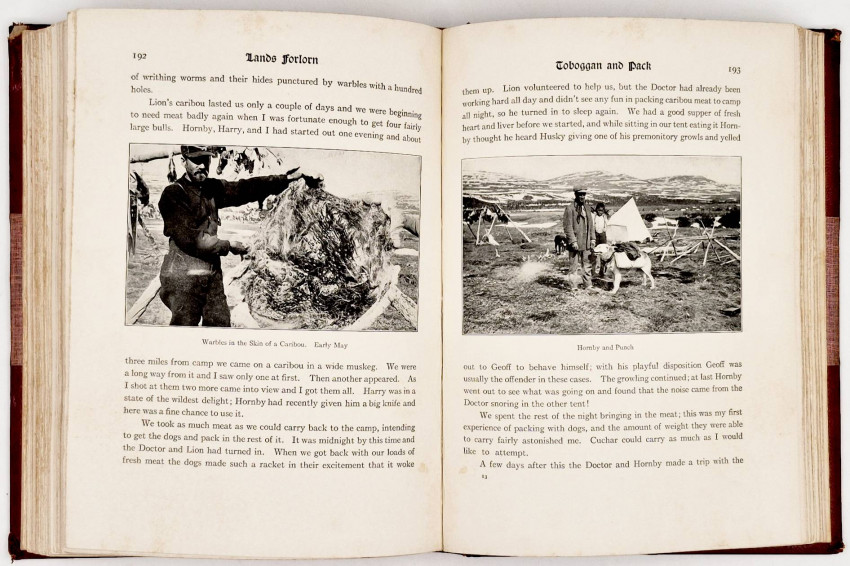
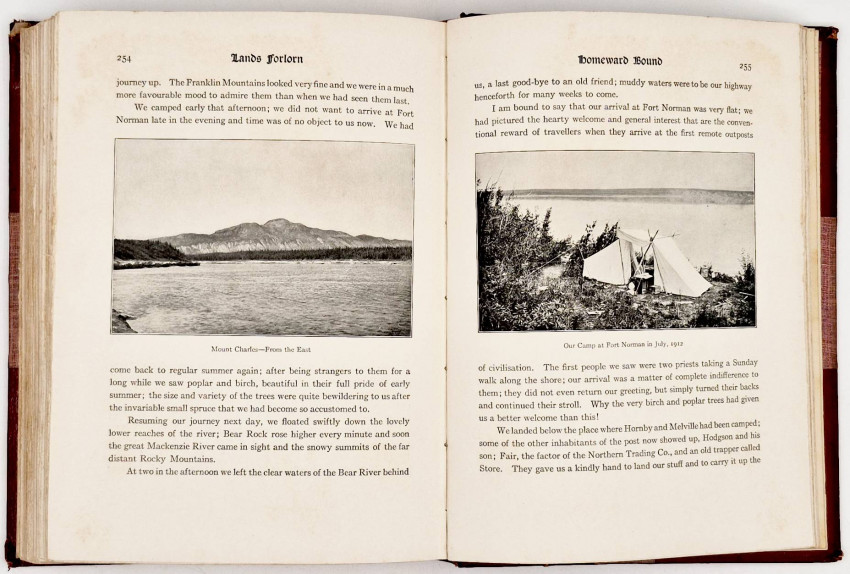
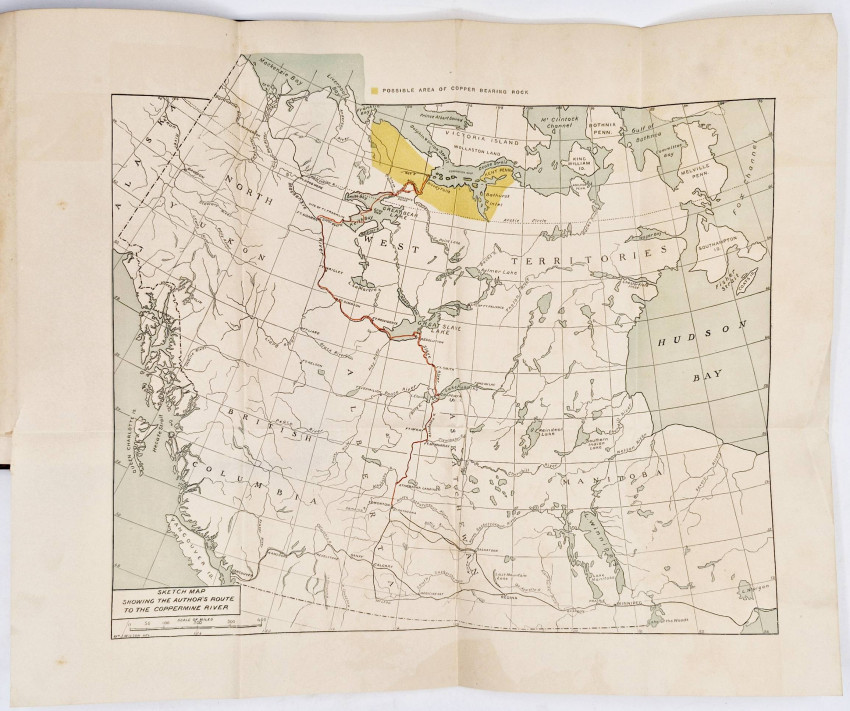
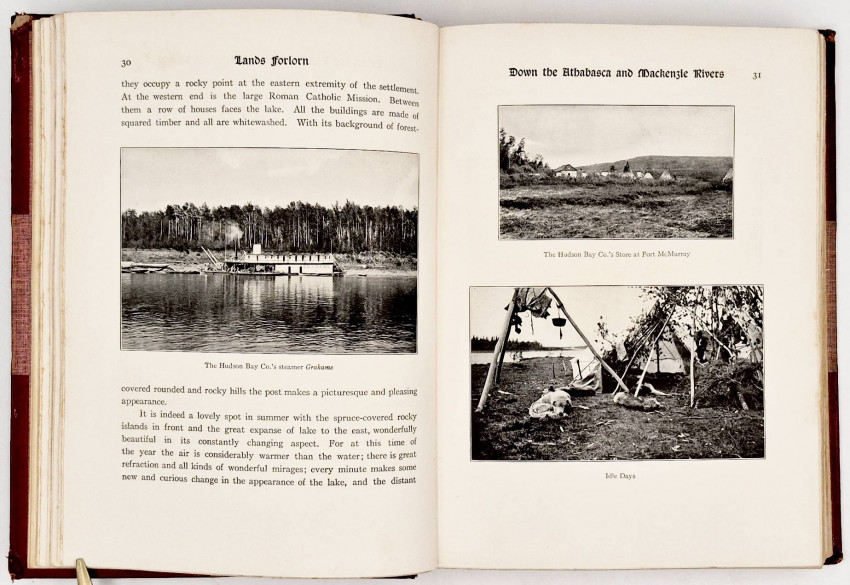

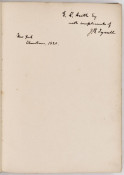

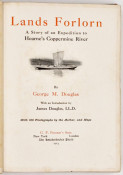
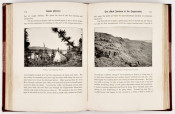
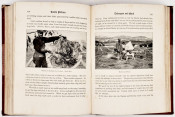
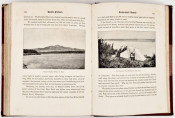
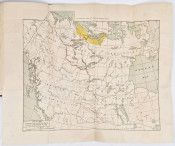
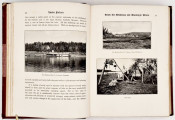
First Edition: xv, (i blank), 285 pages, colour frontispiece portrait of the author from a painting by E. Wyler Grier, illustrated throughout with photographs by the author, two folding maps at the end, bound in three quarter red morocco gilt a little worn at the top and bottom of the spine and at the corners, top edge gilt, other edges uncut, presentation inscription on the front free endpaper, a very good copy.
The inscription reads: 'G.R. Airth Esq., with compliments of J.B. Tyrrell, New York, Christmas, 1920.'
Lands Forlorn is an important account of George Mellis Douglas's 1911–12 expedition to the Coppermine River and Arctic coast of Canada, undertaken principally to investigate the region's copper deposits. Douglas's expedition produced an important photographic record of the Canadian Arctic and its Inuit inhabitants, while his exploration contributed to knowledge of the extensive mineral resources of the Coppermine watershed. It remains a classic account of early twentieth-century exploration of the Canadian North.
Of significance is the presentation inscription from Joseph Burr Tyrrell (1858–1957), the eminent Canadian geologist, explorer and palaeontologist. Tyrrell was himself one of the great explorers of the Canadian Barren Lands and a major contributor to the geological and geographical knowledge of northern Canada. His particular association with the Coppermine region, including his publication The Coppermine Country (1912) and his later editorial work on the journals of Samuel Hearne, makes his presentation of Douglas's account especially apt.
George R. Airth was Managing Director of the Anglo-French Exploration Company, an important British mining and finance company with major interests in South Africa and elsewhere.
The Company was founded in the late nineteenth century as a mining and finance enterprise, principally concerned with finding opportunities for capital investment in mining.
New York & London, G.P. Putnam's Sons, The Knickerbocker Press, 1914
The Knickerbocker Press was the printing and manufacturing arm of G. P. Putnam's Sons, rather than a separate publisher. The Putnam family established their own printing operation in 1874, initially at 182 Fifth Avenue in New York; it subsequently developed into the Knickerbocker Press.
- Overall Condition: Very good
- Size: 8vo (235 x 170 mm)