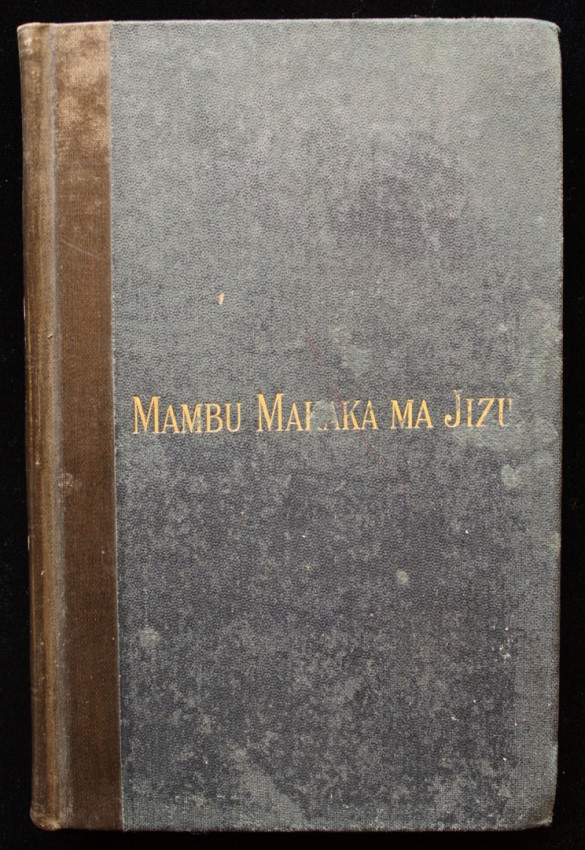
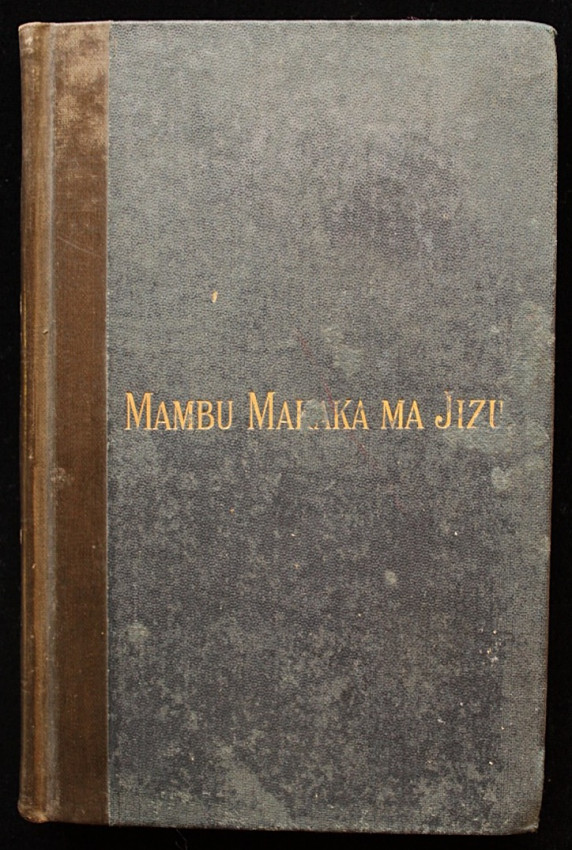
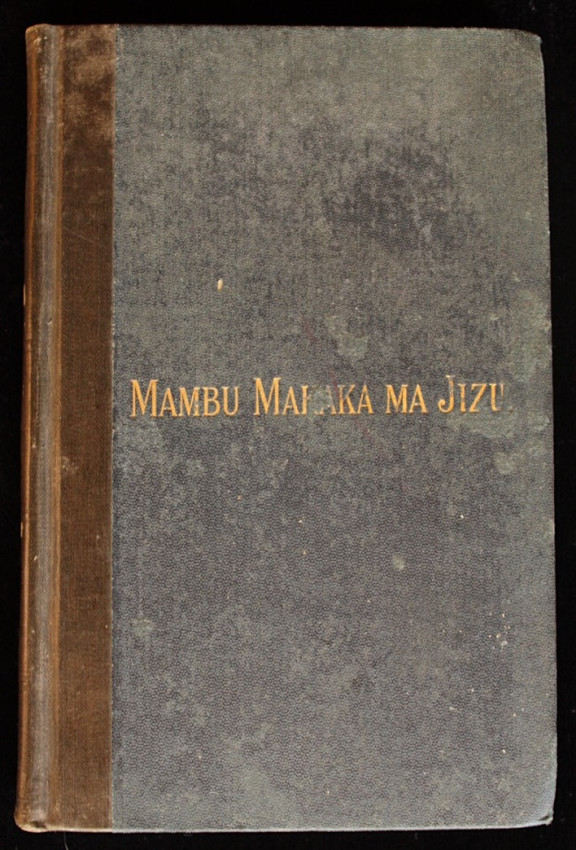
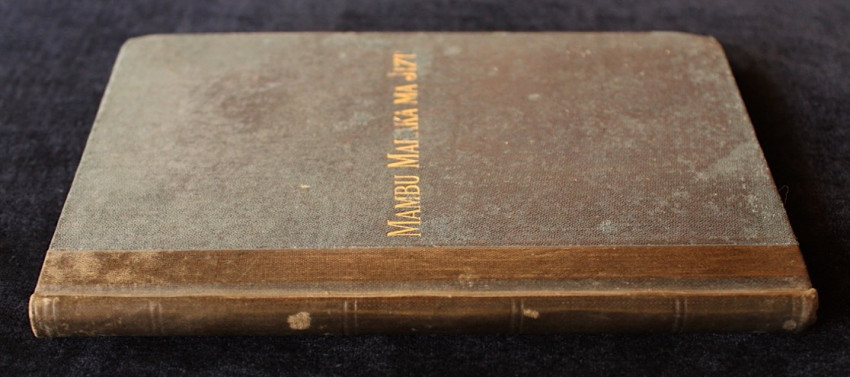
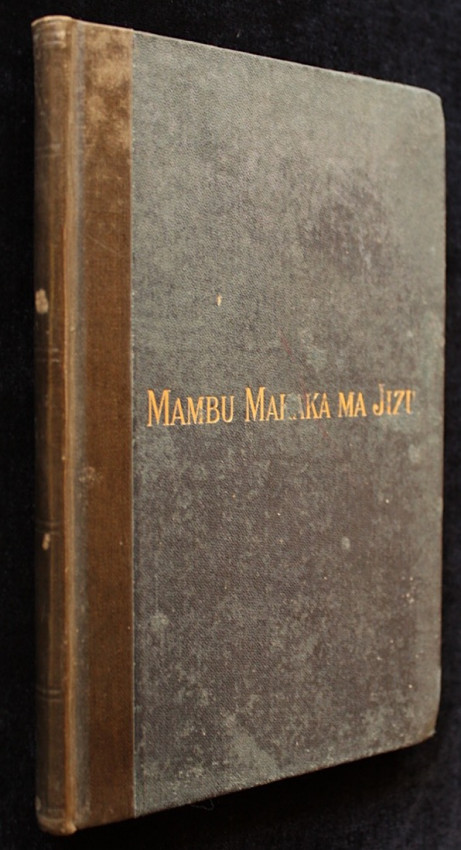
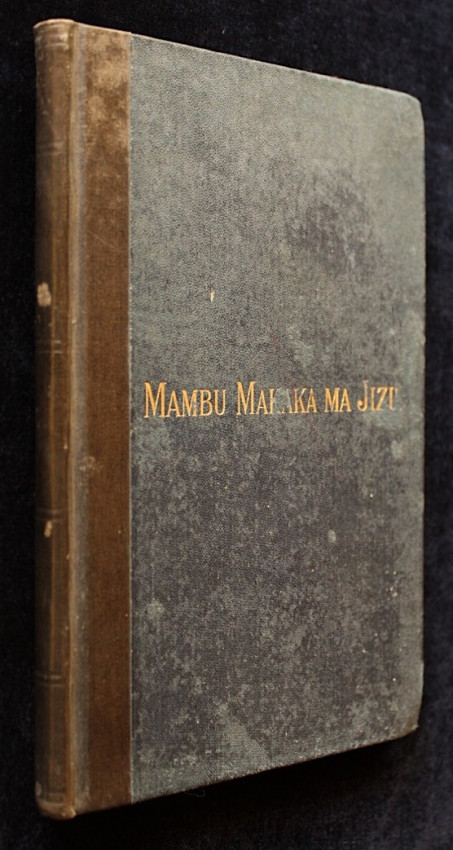
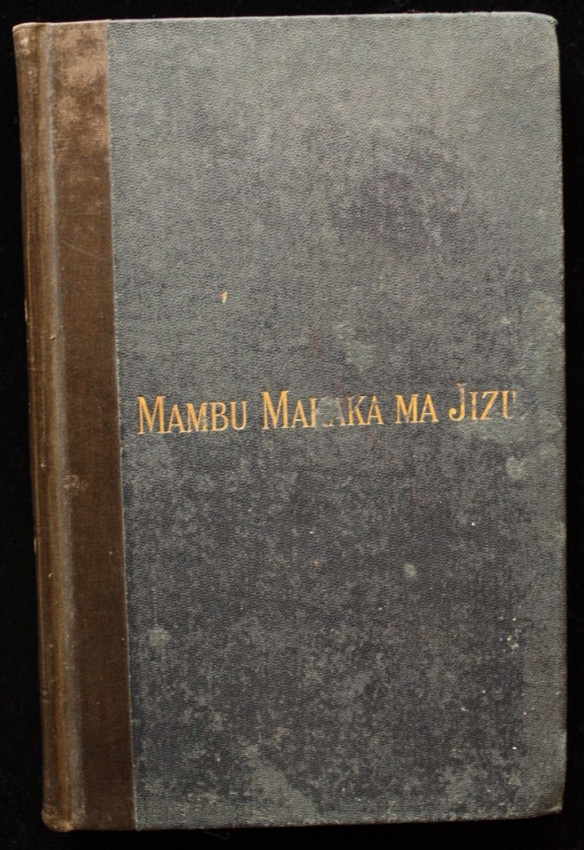
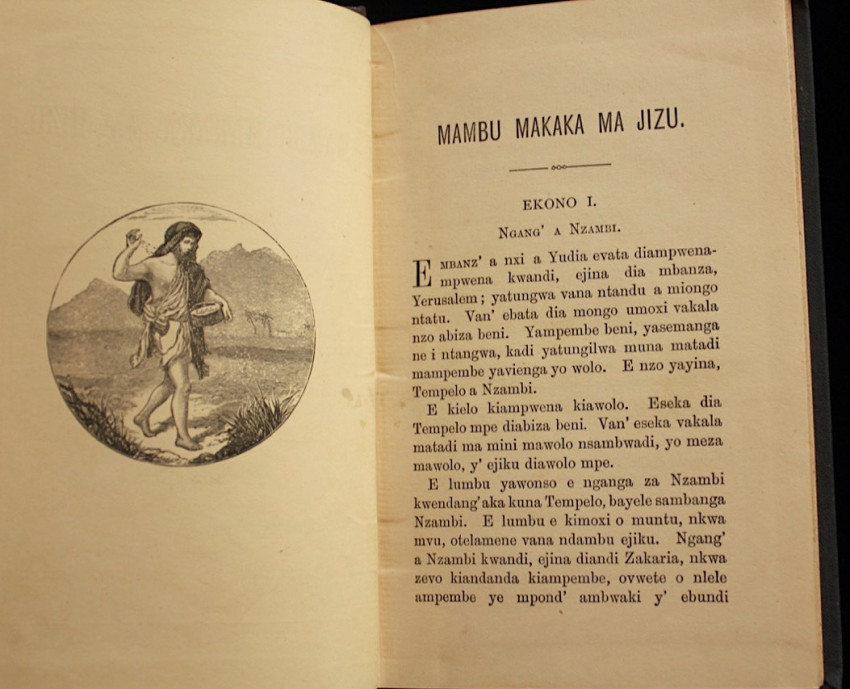
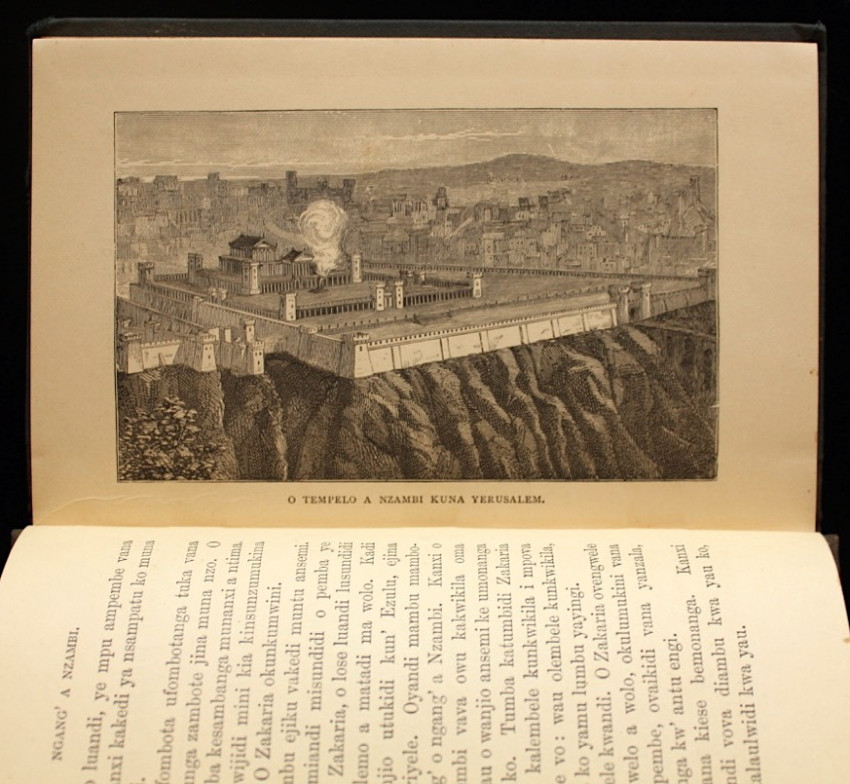
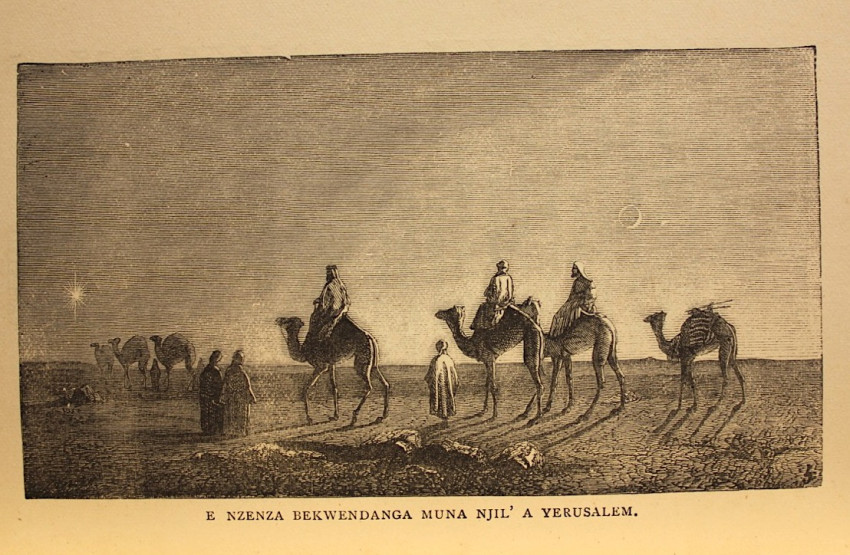
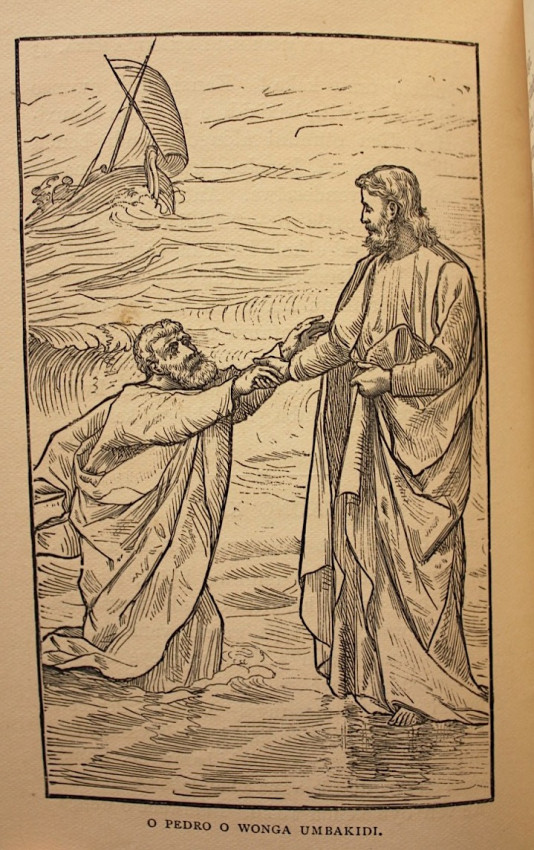
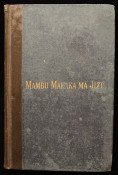
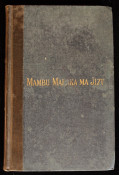
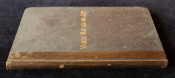
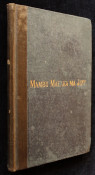
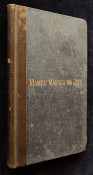
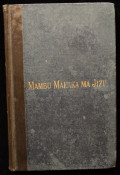
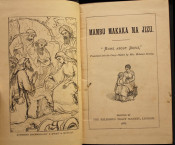
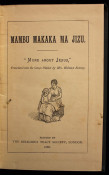
Publisher's blue cloth hardcover with brown cloth spine and gilt titles on front panel.
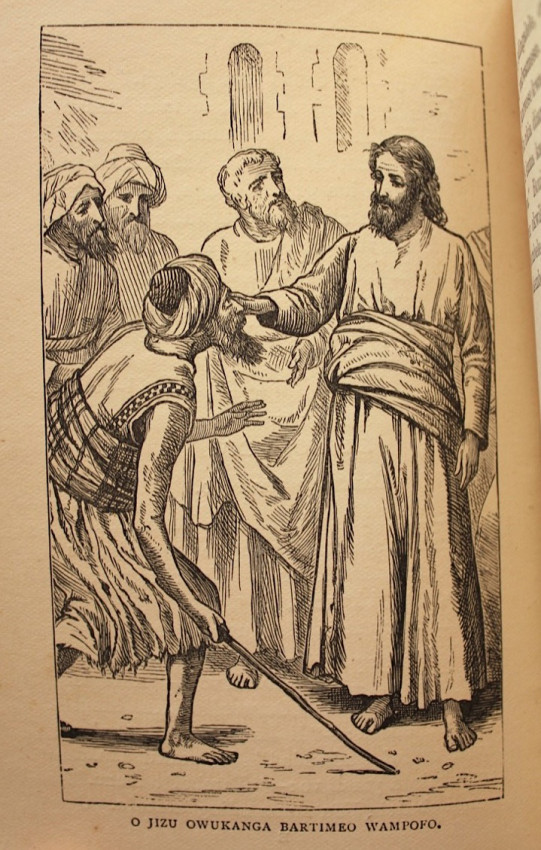
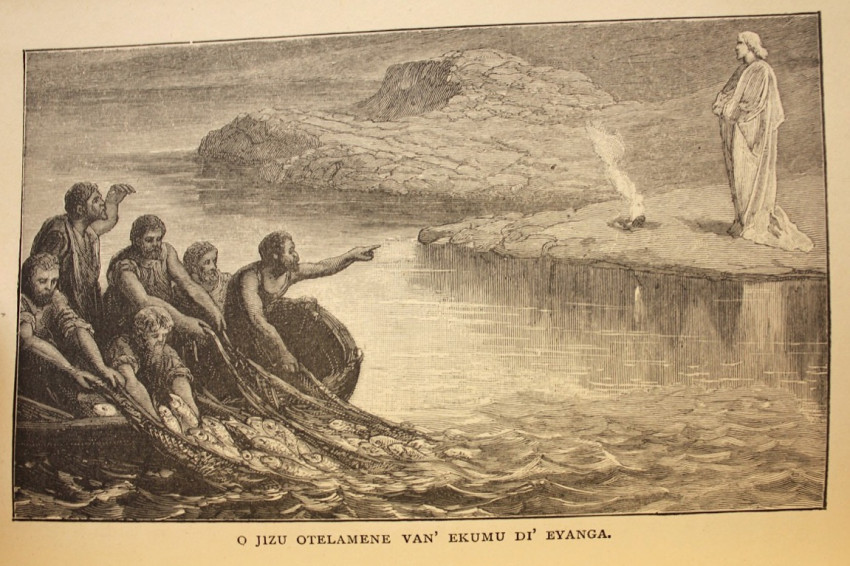
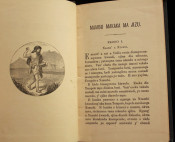
88pp. Illustrated.
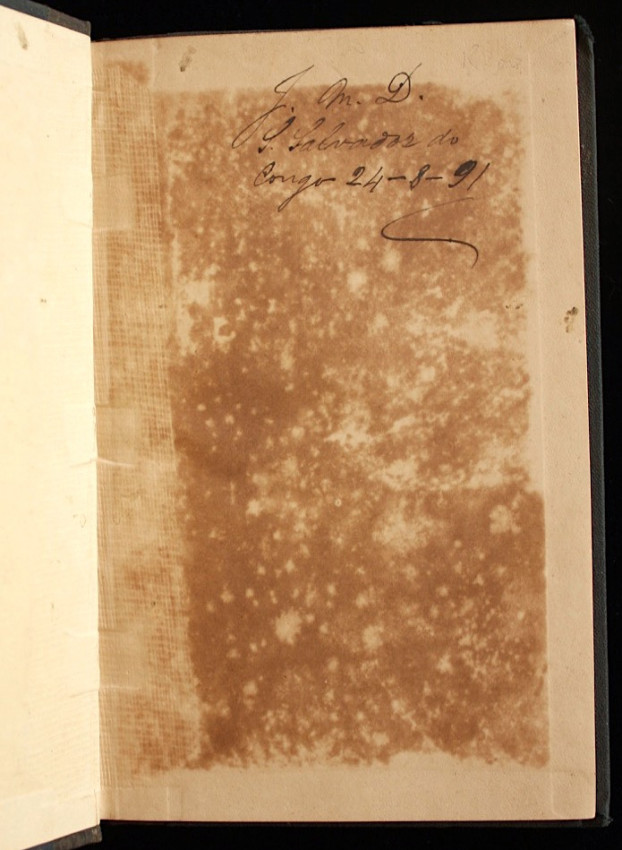
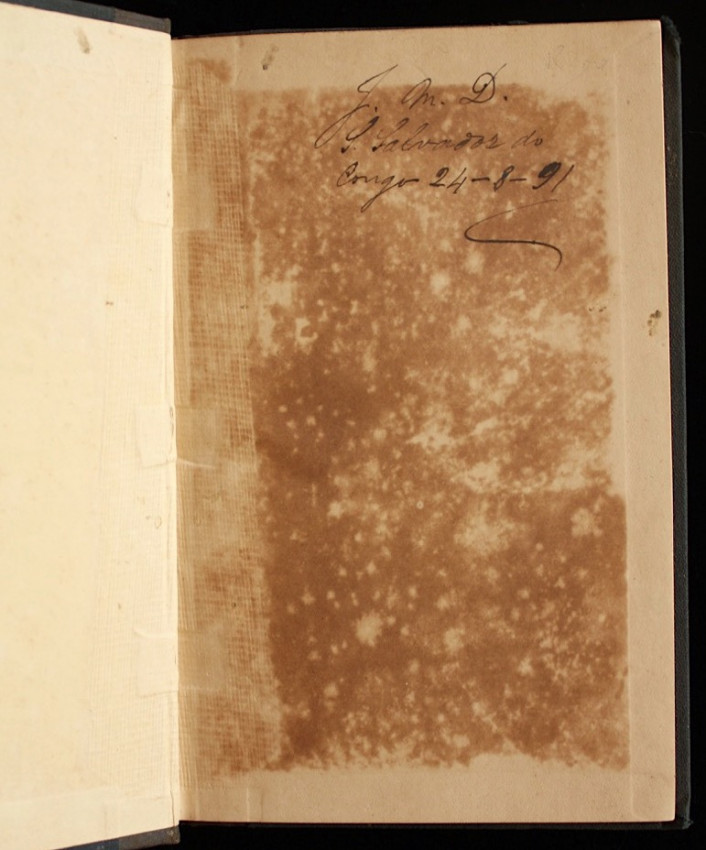
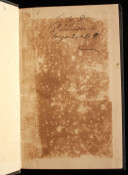
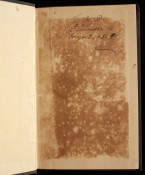
Contents clean with some discolouration on the front and rear endpapers.
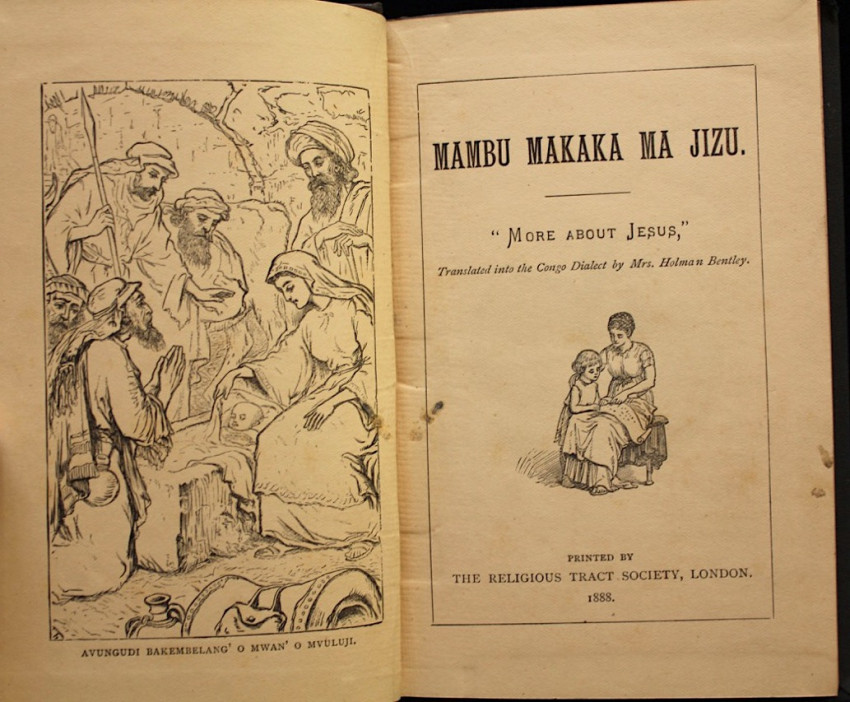
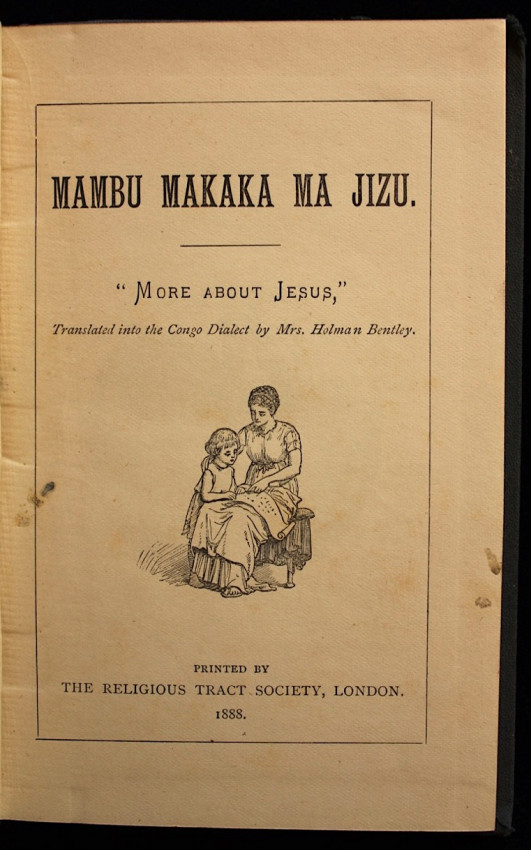
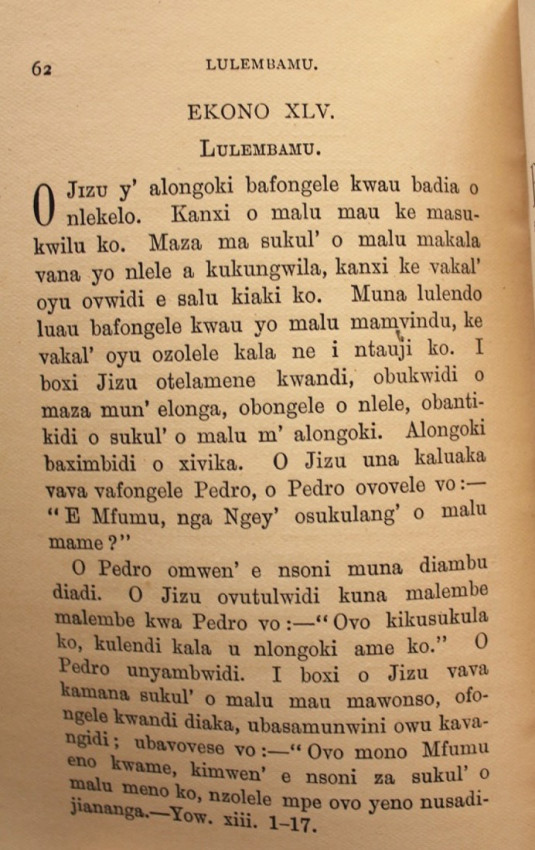
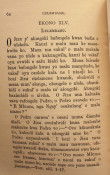
The translator of this little missionary work was Mrs. Holman Bentley (Hendrina Margo Bentley née Kloekers), the wife of William Holman Bentley, an English missionary of the Baptist Missionary Society to the Congo. Among his notable works is Dictionary and grammar of the Kongo language as spoken at San Salvador, the ancient capital of the old Kongo Empire, Central Africa.
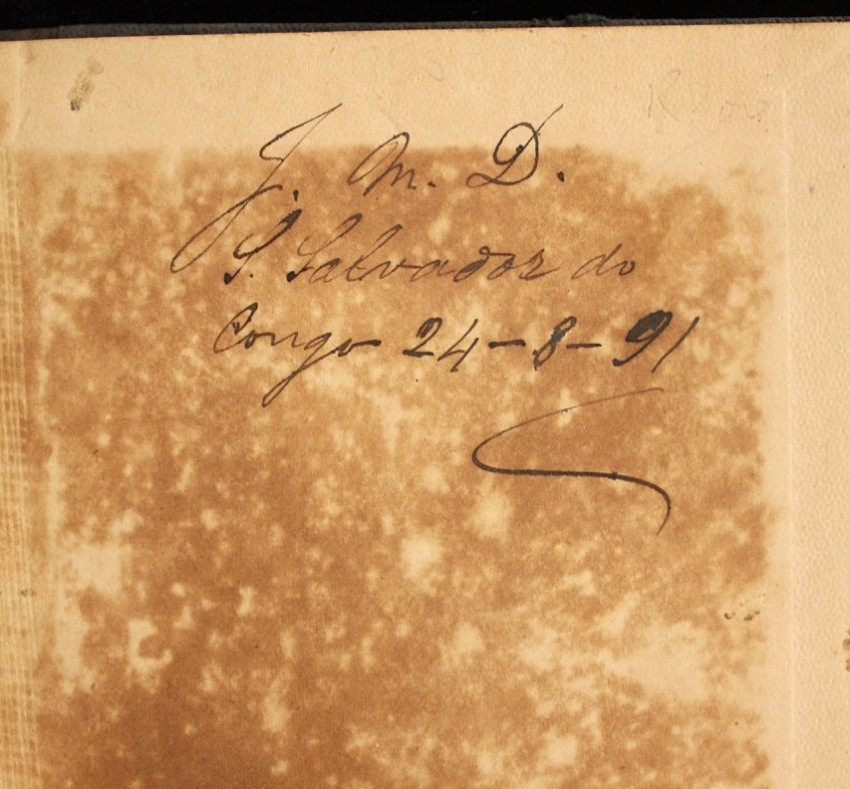
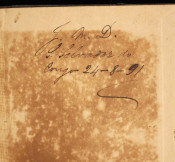
It is interesting to note that the previous owner's inscription on the front endpaper reads "J.M.D. Sao Salvador do Congo 24/8/91." Sao Salvador do Congo is the capital of Angola's northwestern Zaire province (now known as M'banza-Kongo). The inscription indicates that this book was at the mission station run by the Bentley's during the time that they were active there, and perhaps Mrs. Holman Bentley even distributed this book herself, along with other copies, among her students.
In view of the fact that great focus is placed nowadays on the achievements of extraordinary women who have been overlooked by history due to gender bias of the Victorian Era, the biography of Bentley's wife and the translator of this work, Hendrina Margo Kloekers, is well worth mentioning as she is very conspicuous compared to her female contemporaries.
Hendrina Margo Kloekers (1855-1938) was born in Shanghai to the Rev. Henderikadius Kloekers, a Dutch missionary of the Dutch Missionary Society in China. Her mother died when she was only three years old and she was subsequently brought up and educated by different families in China, England and the Netherlands. Initially she was a difficult child and her Chinese nannies used to call her the little foreign devil. She was placed in the care of an American missionary family in Chefoo City and under their influence her nickname soon changed to little star. When her father married an English lady, Margo moved with her family to London where she continued her studies. It was during this period that she declared that she wanted to become a missionary like her father. Her English education made her a refined woman and she would often complain, during visits to her grandparents in the Netherlands, that she could never get used to the rowdy habits of Dutch youths. Her father married a third time and and the age of fifteen Margo was baptised, along with her stepsister Jacoba, in the ice cold waters of a Dutch canal. It was so cold that they had to break the surface ice to enter the water. Her father didn't want her to marry a farmer and neither did he like the idea that she should become a musician, despite her obvious musical talents and beautiful singing voice, so she studied English literature. Her desire was to eventually become a missionary in China but the Baptist Missionary Society did not allow unmarried women to become missionaries in Asia. It was in the mission house of the BMS that she met her husband, Holman Bentley. Bentley was famous for being the first westerner to reach Stanley Falls in the Congo from the west coast in 1881. They were married in 1885 and for the occasion Margo wore a dress given to her father as a gift by the emperor of China for his services to him during the Taipeng uprising. As a married woman she could now continue with missionary work and decided to accompany Bentley to the Congo. At this time Bentley was working on a dictionary and grammar of the Kikongo language. He was experiencing difficulties with his sight and Margo acted as his literary assistant. Her studies in Old Saxon English proved very useful as, on many occasions, she was able to correct grammatical inaccuracies in Bentley's work. In 1886 they were at Wathen Mission Station in the Congo, not far from present day Kinshasa. Her first objective was to establish a school - this school was still in use in the late 20th century. Not only did she assist her husband in translating the New Testament into Congolese, but she also wrote numerous of her own Congolese tales, produced translations, wrote a book on mathematics in Congolese and even composed and published songs in Congolese.
Margo was greatly admired by the women of the district, who fondly called her Misisi, as she cared for their children and regularly enquired about their lives. She proved to be a great asset to her husband, as he used her influence with the locals to get into contact with isolated tribes in order to spread the Gospel. On one occasion, whilst travelling upriver by steamboat, they encountered the isolated Bolobo tribe. The party wanted to go ashore but a furious mob of warriors appeared on the river bank and started shouting and making threatening gestures. Margo suddenly appeared on deck with her baby and soon their anger subsided and gave way to extreme curiosity. They had never before seen a white woman or a white baby and immediately entreated the crew to come ashore. Now the baby got all the attention and was quickly grabbed from the mother's arms. In stead of panicking, however, Margo calmly followed the "kidnappers" to retrieve her child. So deep was her faith in the Almighty.
When Stanley's humanitarian expedition arrived at Wathen station in 1887 Margo observed that their true reason for being there was not so much a humanitarian one as an attempt to gain a foothold in the Congo ivory trade. In 1890 Wathen station received a famous visitor, the author Joseph Conrad but unfortunately the Bentley's weren't there to receive him as they were on an expedition. Conrad mentions the Bentleys in his diary. After ever increasing attacks of fever the Bentleys returned to Europe in 1898. Holman Bentley died in 1905 and Margo wrote his biography which was published in 1907 William Holman Bentley, a pioneer on the Congo. In her later life she toured the Netherlands and Europe and gave regular lectures on the Congo and its people.
Margo was undoubtedly a pioneer. When she arrived at Wathen mission station it was still only a savage hinterland located in one of the most inhospitable corners of the Earth, grimly dubbed "white man's grave" by the Victorians. She was the first European woman the local people ever saw. She was driven by her zeal to educate and was, together with her husband, the first to codify the Congolese language. - (Information on the life of Margo Bentley obtained from: https://groningersindecongo.jouwweb.nl)
- Binding Condition: Very Good
- Overall Condition: Very Good
- Size: 12mo.