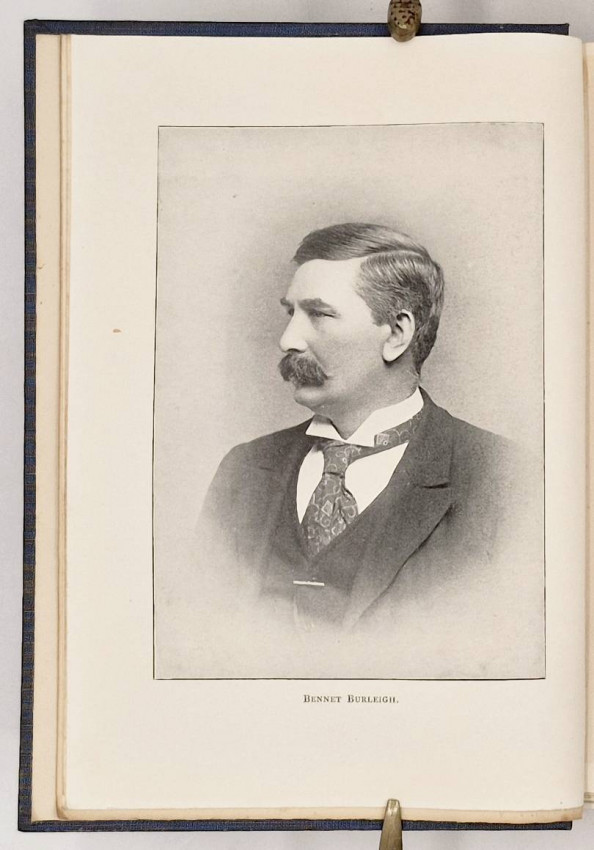
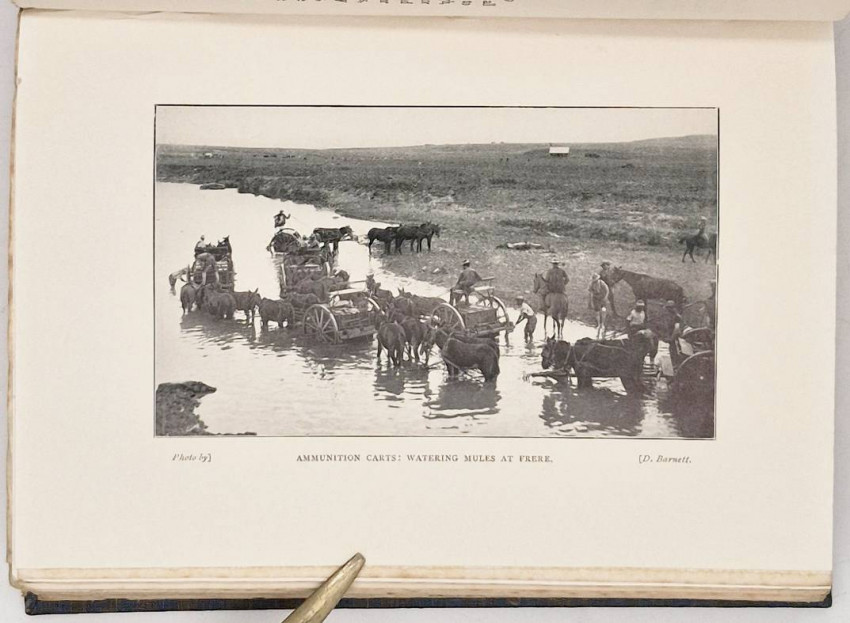
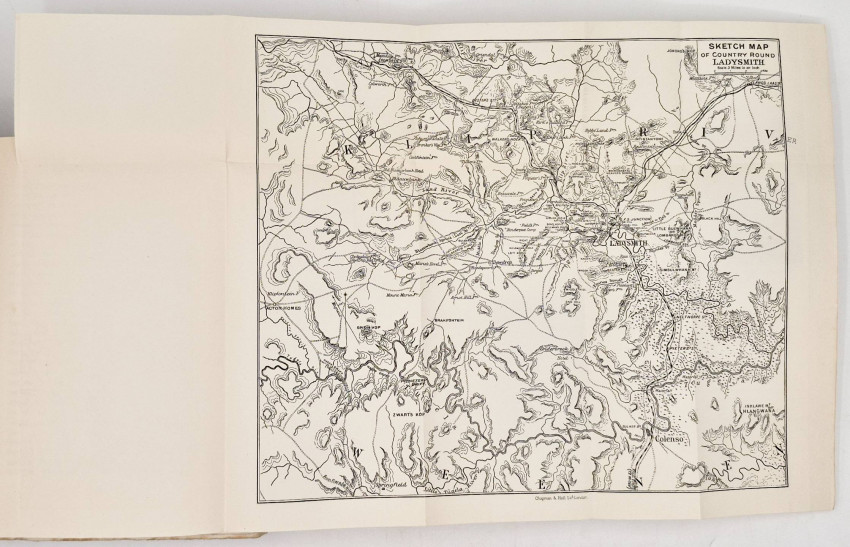
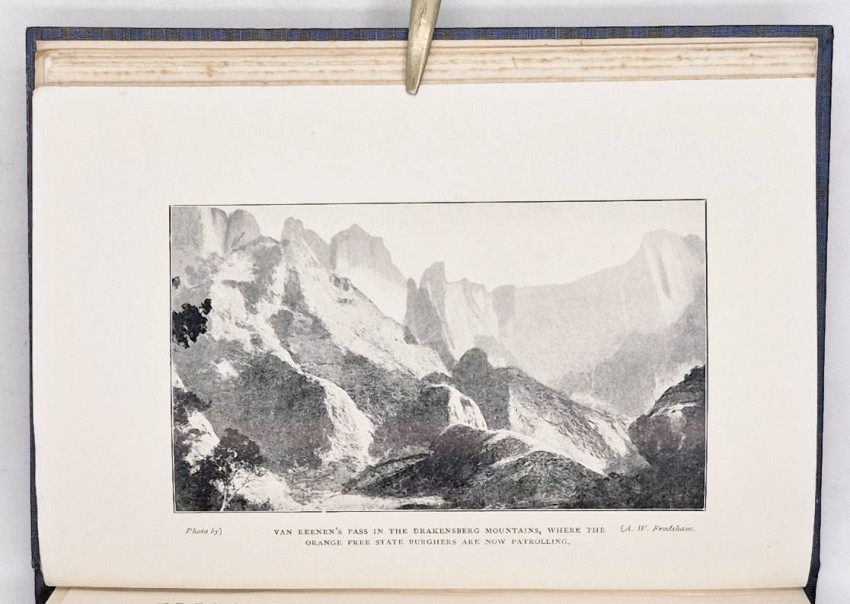
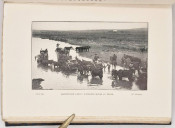
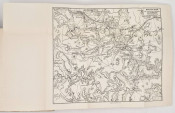
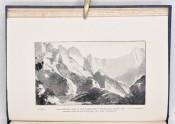
First Edition: 418 pages, frontispiece portrait, 12 plates, 3 folding maps, original pictorial grey cloth, edges uncut, a very good copy.
Mendelssohn (Sydney) South African Bibliography, volume 1, pages 228/9, 'Most of the subject-matter of this volume appeared in the columns of the Daily Telegraph, of which Mr Burleigh was the Special Correspondent during the South African War. The narrative gives a full account of the Natal Campaign, particularly with respect to the battle of Elandslaagte and Buller's four successive attempts to relieve Ladysmith.'
From the Introduction: 'Burleigh left the Natal Front soon after Buller's failure at Vaal Krantz and transferred himself to the Western Front with Lord Roberts. In an appendix will be found an account written by Mr. McHugh, a correspondent of the Daily Telegraph who was imprisoned in Ladysmith after the great attack made by the Boers on January 6th.'
Oxford Dictionary of National Biography (https://www.oxforddnb.com/display/10.1093/ref:odnb/9780198614128.001.0001/odnb-9780198614128-e-38628): 'Burleigh [formerly Burley], Bennet (1840–1914), journalist and soldier, was born in Glasgow on 10 August 1840.....In 1882 Burleigh was employed by the British news agency Central News as a war correspondent in Egypt. He successfully reported the campaign there, achieving a notable scoop on the capture of Cairo. He was then hired for the Daily Telegraph by its managing editor, John Merry Le Sage. This was the turning point of Burleigh's career: he worked for the Telegraph, reporting over twenty campaigns, until he belatedly retired in 1913...... At the height of his reputation Burleigh reported the 1899 South African crisis and the opening Natal battles of the South African War. When Sir George White withdrew into Ladysmith and the siege was imminent the other correspondents decided to remain there. Burleigh, knowing he could report more elsewhere, left. He reported Sir Redvers Buller's campaign until after the failure at Vaal Krantz in February 1900, then Roberts's offensive and later the guerrilla war. In his reporting he included—insofar as the censor permitted or could be evaded—criticism of the War Office, and British generalship, tactics, and matériel. He emphasized the horror of Spion Kop and demanded an inquiry into the disaster. In 1900 he published Natal Campaign. At the end of the war he achieved another scoop, reporting by an apparently innocent cable the agreement on peace terms.'
- Overall Condition: Very good
- Size: 8vo (210 x 150 mm)