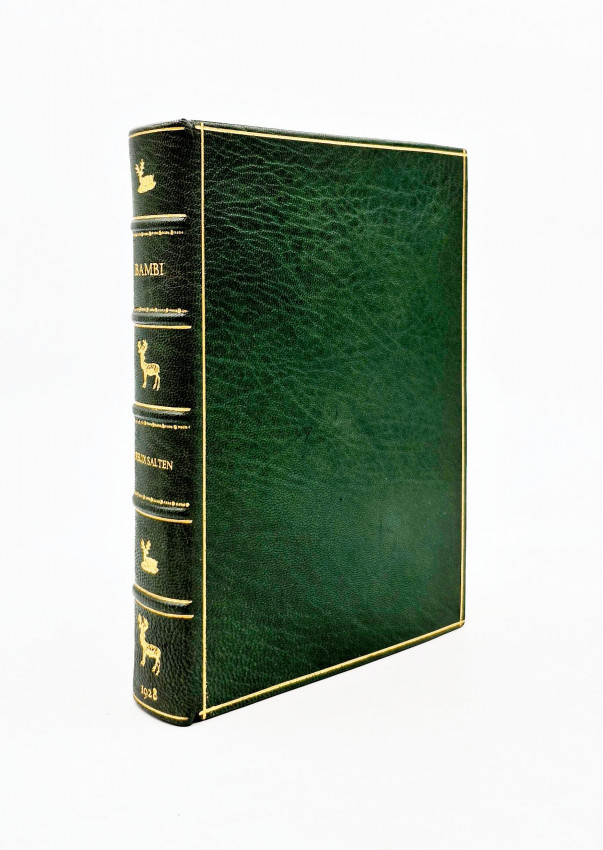
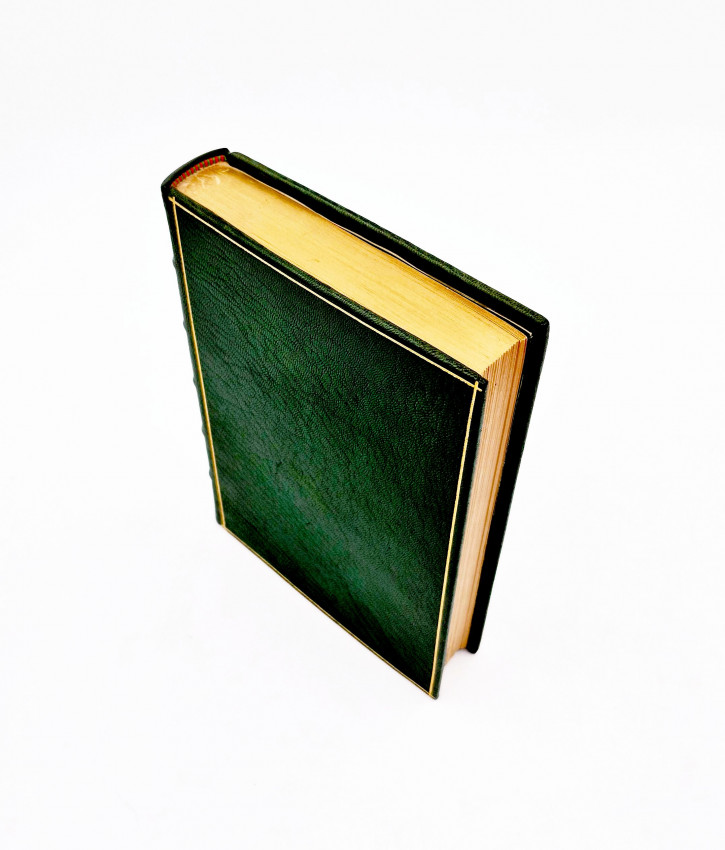

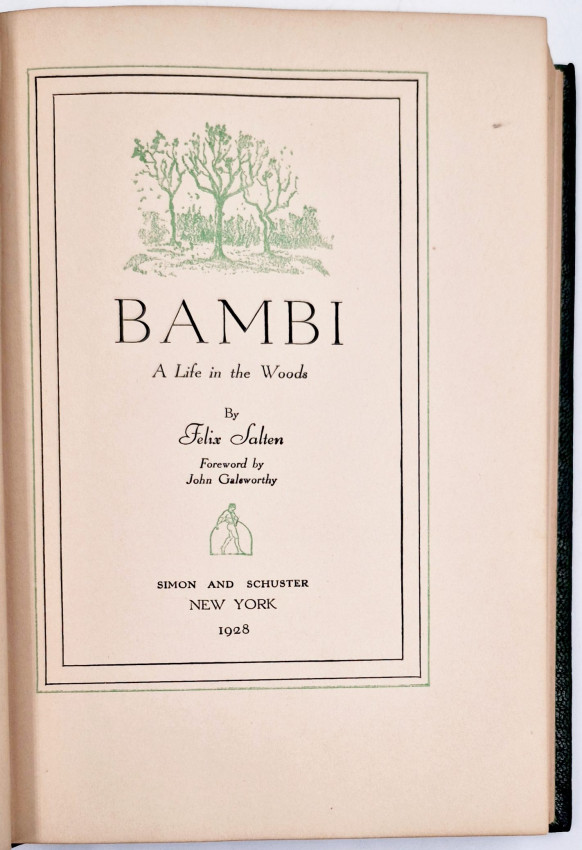
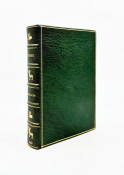
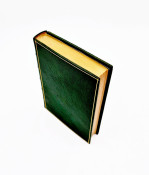
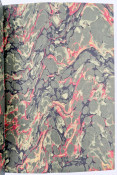
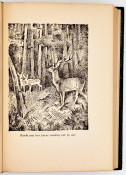
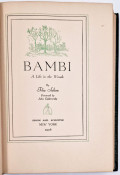
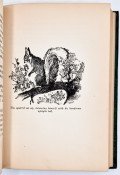
First Edition in English: 293, (i) pages, handsomely bound in full green Morocco titled and decorated gilt on the spine in panels between raised bands, top edge gilt, a fine copy.
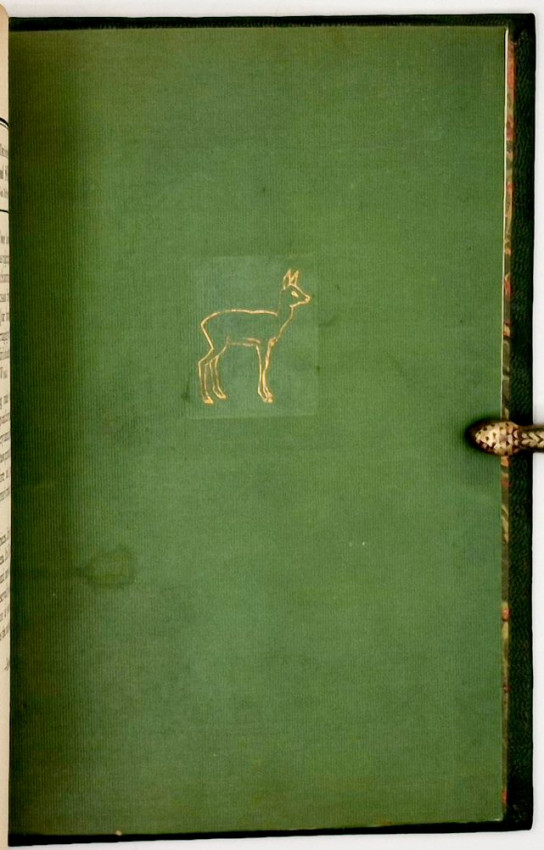
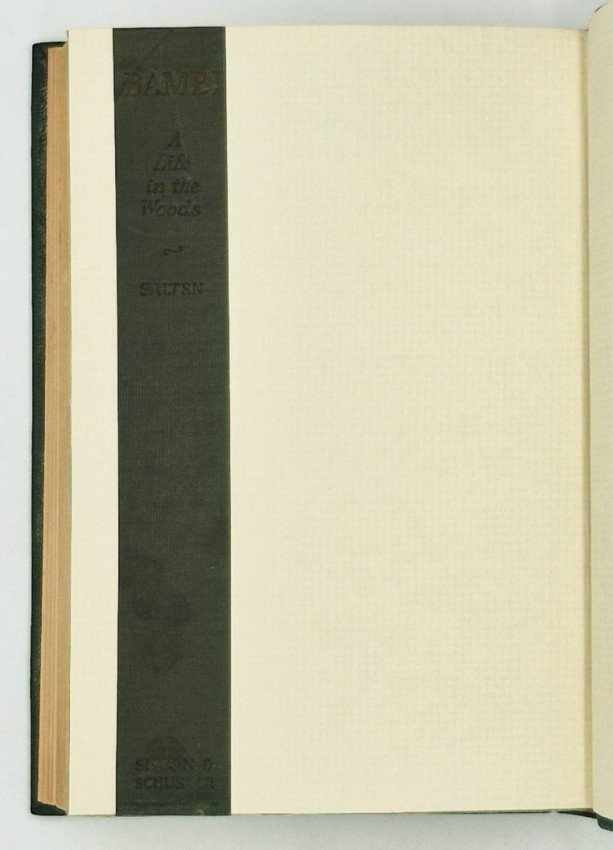
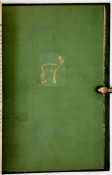
The original publisher's green cloth from the upper cover, with a gilt device of a deer, and the spine laid down at the end of the volume.
First published in Vienna in 1923 as Bambi: Eine Lebensgeschichte aus dem Walde, was issued five years later in a translation by the young Whittaker Chambers — then an obscure journalist, who later achieved a very different kind of fame first as a spy for the Russian intelligence services and later, becoming disillusioned by Joseph Stalin's rule and by Communism more broadly, defected from the Soviet spy ring and eventually found employment at Time magazine, where he rose to become a senior editor. The foreword is by John Galsworthy, who won the 1932 Nobel Prize for Literature, who declared Bambi 'the most poignant love story of the forest I have ever read.'
'Salten's novel is a work of far greater moral seriousness and literary ambition than its popular afterlife might suggest. Written in the shadow of rising European antisemitism — Salten was a prominent figure in Viennese Jewish intellectual life, and the book was banned and burned by the Nazis in 1935 — Bambi is at once a meditation on innocence and experience, on the terror of Man, and on the irreversible passage from childhood into the knowledge of mortality. It has never been out of print.' (Claude AI)
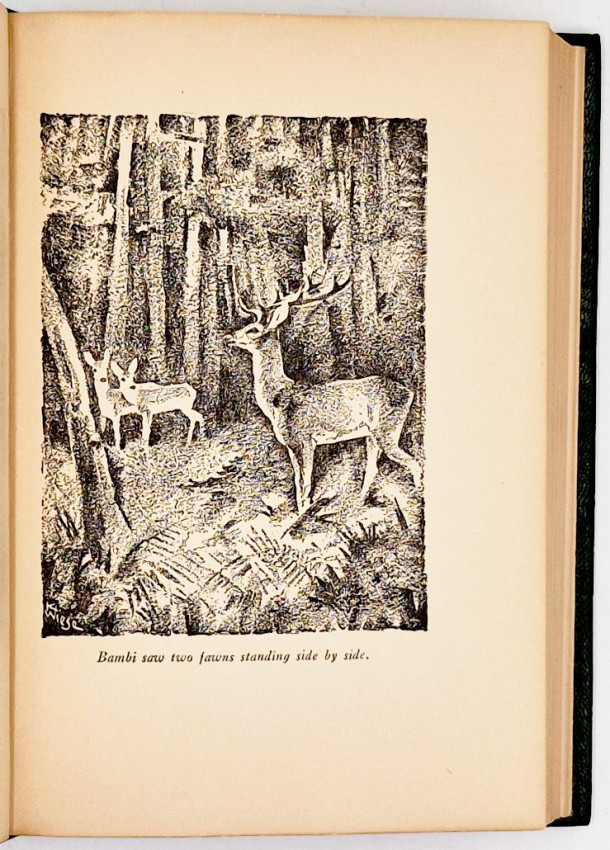
"Don't follow me any further, Bambi," he began with a calm voice, "my time is up. Now I have to look for a resting place." Bambi tried to speak. "Don't," said the old stag cutting him short, "don't. In the hour which I am approaching we are all alone. Good-by, my son. I loved you dearly." Page 287.
- Overall Condition: Fine
- Size: 8vo (204 x 138 mm)