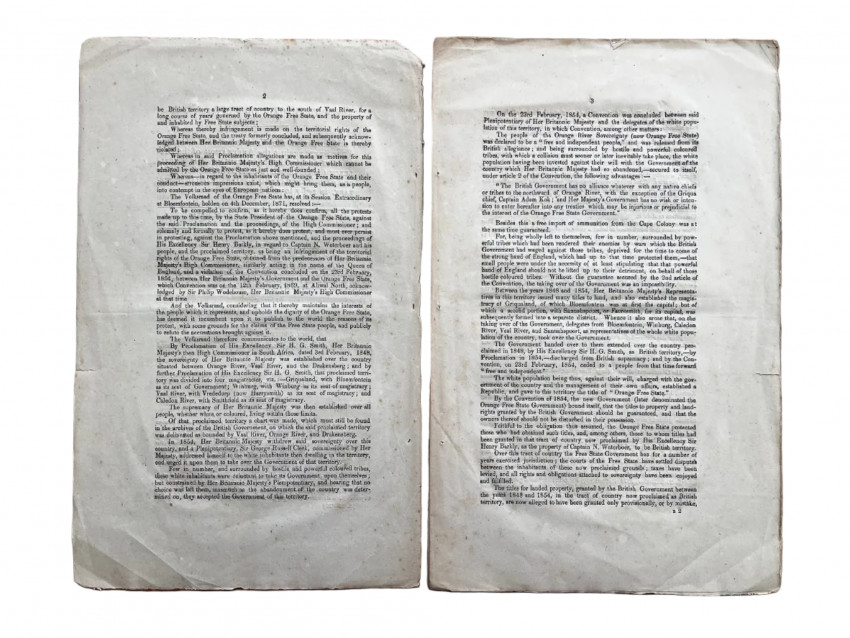
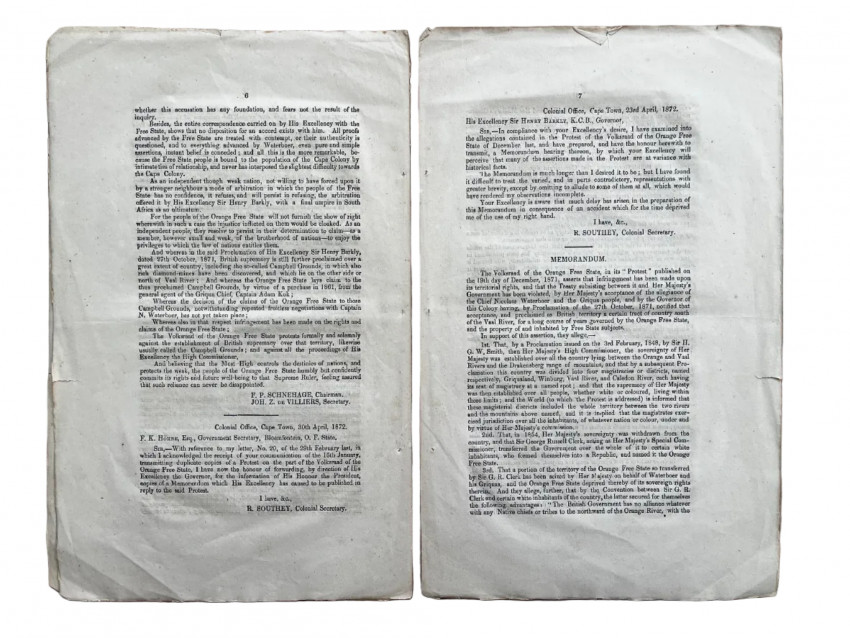
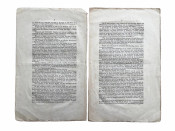
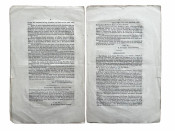
16 pages, unbound
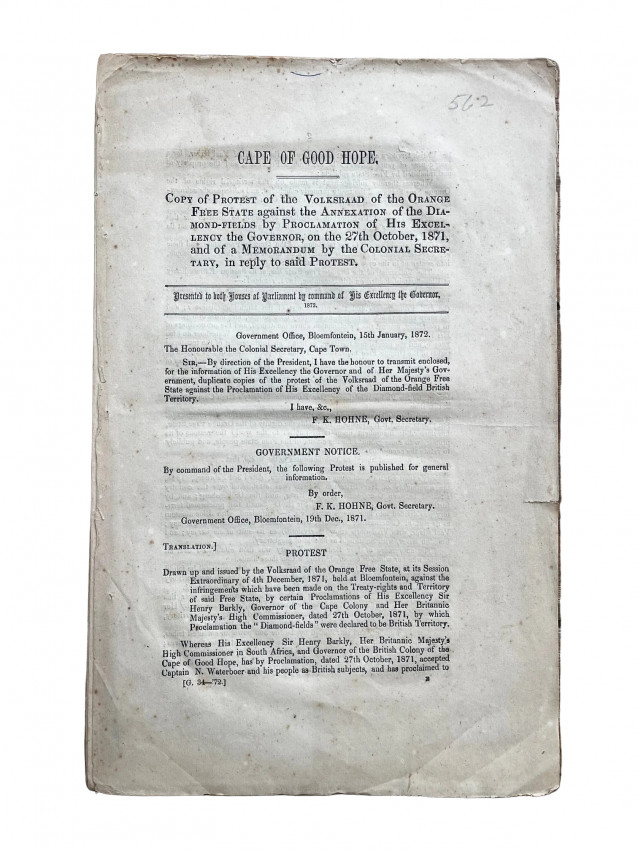
"After diamonds were discovered in the Northern Cape, a battle began about the ownership of the land. The Griquasand Tlhapingwho occupied the area claimed exclusive rights to the area. In addition, both Boer Republics (the Transvaal and the Orange Free State) claimed rights to the area.
A long argument between these parties followed until Sir Henry Barkly, the Governor of the Cape, was asked to mediate. He set up a committee headed by the Lieutenant-Governor of Natal, Robert Keate, to decide on borders. For seven months this committee heard evidence from all four groups who were making a claim. On the basis of this evidence, the committee decided who had rights to the land in an agreement known as the Keate award.
The Keate award favoured the Griquas claim. This meant that the land which eventually contained Kimberley and the richest diamond fields in the world was given to the Griquas.
In the end this agreement helped the Griquas very little. Their leader, Nicholas Waterboer didn't have the power to control the diggers. In the early 1870s the population of Kimberley already numbered 30 000. There was intense rivalry between diggers as they fought over claims. This rivalry often led to racial conflict."
From SA History Online, https://sahistory.org.za/archive/all-glitters-rock-which-future-will-be-built-emilia-potenza
- Size: 4to., 340 x 218mm